
Europe has moved its sovereign AI infrastructure plan from policy to procurement, opening a tender for large-scale compute sites designed to train and serve frontier models. The opportunity is significant, but funding, energy supply and dependence on non-European accelerators remain unresolved.
NEW DELHI, August 1, 2026, 9:42 PM IST — The European Union has opened bidding for as many as seven AI gigafactories, offering up to €10 billion in EU and national public funding for facilities intended to sharply expand the bloc’s capacity to train, fine-tune and run advanced artificial intelligence models.
The European Commission wants the public commitment to attract another €20 billion from companies and investors. According to the tender details and reporting by The Associated Press, a planned gigafactory would operate at least 100,000 advanced AI processors and deliver roughly four times the computing power of Europe’s strongest AI factory today.
The procurement matters now because Europe’s AI debate is shifting from rules to infrastructure. The bloc has built a network of 19 smaller AI factories, but it still depends heavily on foreign cloud platforms and chips for frontier-scale workloads. If the projects are financed and delivered, they could create a new option for European model builders, research institutions, regulated industries and public-sector teams that need substantial compute under EU data, security and governance requirements.
What the EU has opened
The European Commission’s AI Gigafactories programme is structured as a public-private initiative. The formal tender allows companies, public bodies, investors and other partners to bid through consortia or special-purpose vehicles. Applications close on November 12, with selection decisions expected in early 2027 and construction planned to begin later that year.
The call is split into two lots and two development phases. Specialist publication IT Pro reported from the tender that the first lot can support up to four projects, while a second lot can support as many as three larger projects. EU funding for an individual project could reach €500 million across both phases in the first lot and €1 billion in the second. Host member states are expected to match EU support, and private participants are expected to supply additional capital.
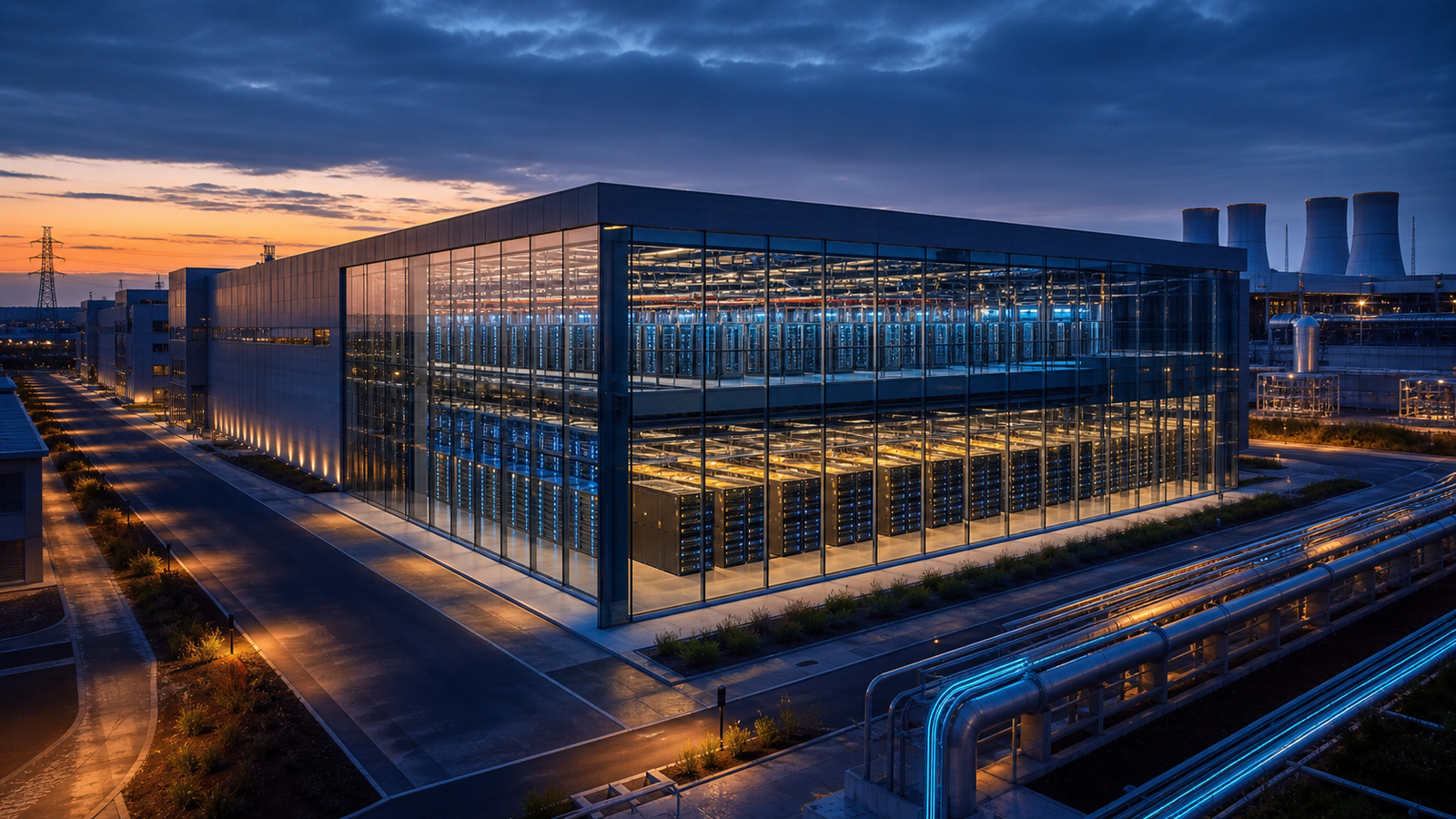
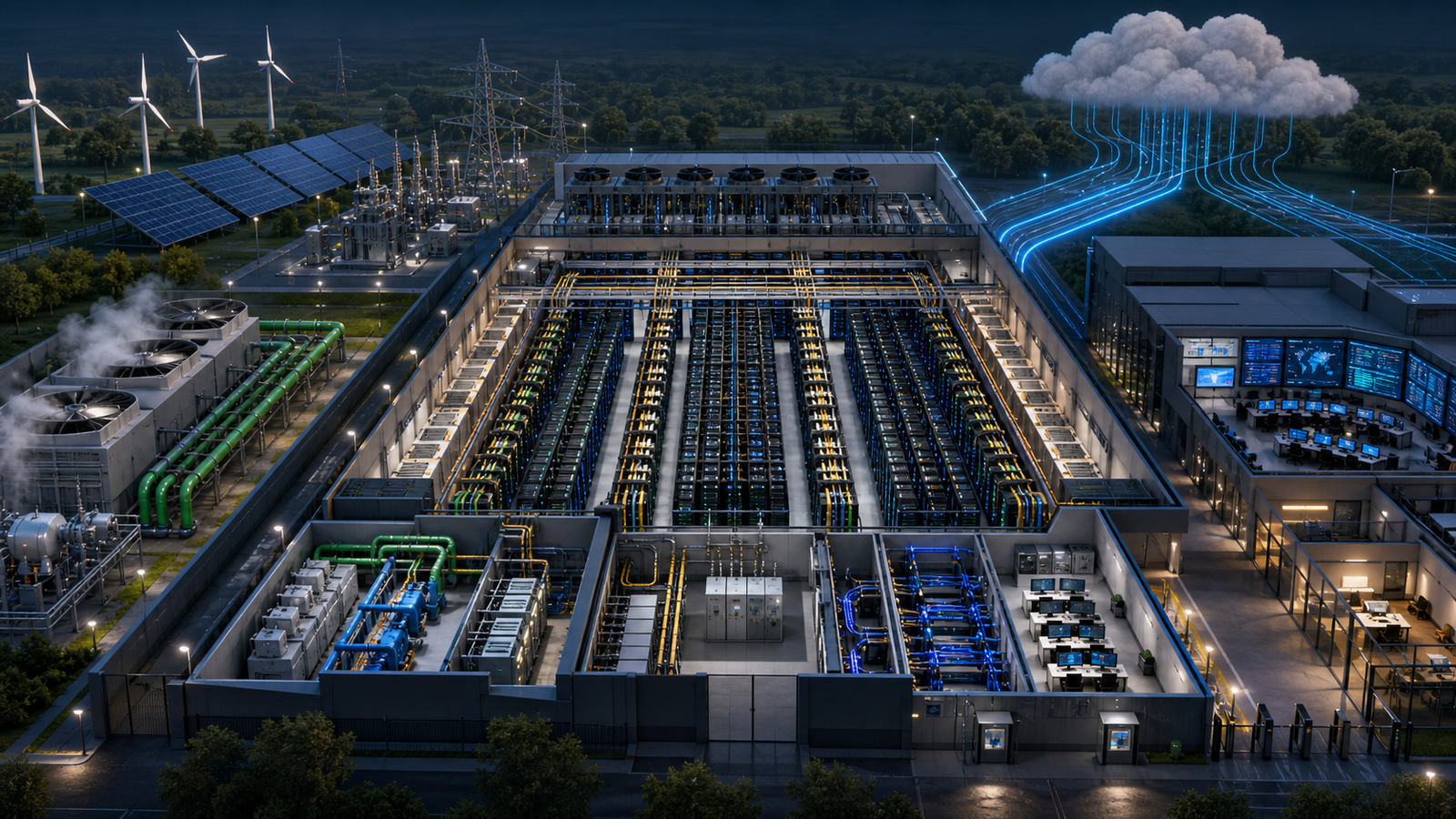
The proposed sites would combine accelerators, high-speed networks, cloud software, energy-efficient data centres, secure user environments and specialist AI services. The Commission says the infrastructure should support model training, inference and fine-tuning, not only academic supercomputing.
This is still a competitive call, not an announcement that seven facilities have been built or fully funded. The tender defines the path and maximum public support; it does not settle where the sites will be, who will operate them or which users will receive capacity.
From 19 AI factories to frontier-scale clusters
The gigafactory plan sits above the EU’s existing network of 19 AI factories, which pair supercomputers with support for startups, researchers and industry. The Commission says seven gigafactories would more than double the computing power available through that network.
Scale changes the engineering problem. A cluster of 100,000 or more accelerators requires more than installing servers. Operators need high-throughput storage, low-latency interconnects, resilient power and cooling, secure multi-tenant access, workload scheduling, observability and recovery procedures that work across an unusually large failure domain.
For platform teams, the relevant comparison is a regional cloud and supercomputing service rather than a single model-training project. Shared access will require clear service levels, quota policies, identity boundaries, data residency controls and portable interfaces. Those operational details have not yet been published and will determine whether the facilities are useful to developers beyond a small group of frontier-model builders.
Why developers and cloud teams should care
The immediate effect is not cheaper GPU capacity. Bids close in November, decisions are expected next year, and the first operations are not expected before 2028. The practical signal is that European AI infrastructure is becoming a funded procurement market with requirements spanning hardware, cloud platforms, security and operations.
Cloud providers, systems integrators and platform vendors can expect demand for orchestration, telemetry, data pipelines, identity management, confidential computing and workload portability. Teams serving regulated customers should watch how the tender turns EU data-protection, AI safety and cybersecurity obligations into technical controls.
Model and application teams should avoid assuming that sovereign infrastructure automatically produces sovereign software. European facilities may provide local compute and governance, but applications will still depend on model licences, data provenance, evaluation systems and operational practices. Those are core concerns in LLMOps, where deployment, monitoring and lifecycle controls matter as much as training hardware.
Teams building retrieval applications also need to separate compute location from data permission. Running a model in an EU facility does not by itself make every source document appropriate for use. Access control, retention and lineage remain part of a sound RAG architecture.
The sovereignty gap is not solved
The Commission says predictable demand from gigafactories could stimulate European processor design and, eventually, domestic manufacturing. In the near term, however, the projects are likely to rely on advanced processors from suppliers such as Nvidia and AMD. Le Monde reported that Commission officials acknowledge Europe does not currently produce the leading chips required at this scale.
That creates a narrower form of sovereignty: Europe could gain more control over where compute is operated and how access is governed while remaining exposed to foreign accelerator supply chains and parts of the cloud software stack. Procurement rules, interoperability requirements and exit provisions will therefore be as important as raw processor counts.
The funding plan also carries uncertainty. The public package consists of EU and host-country contributions, while private participants are expected to invest twice the public amount. Le Monde reported that much of the proposed EU contribution depends on the bloc’s next long-term budget, which member states have not finalized.
Power, water and delivery risk
Large AI clusters place concentrated demands on grids, cooling systems and local water supplies. The Commission says bids will be assessed for environmental sustainability, including energy and water arrangements. It has not yet demonstrated how seven selected projects will secure new low-carbon power without adding pressure to local prices or grid reliability.
Those constraints can change site selection, construction schedules and operating costs. They can also influence architecture: distributed facilities may ease some local bottlenecks but introduce network latency and coordination challenges. The tender allows both single-site and distributed proposals within a member state, as well as cross-border configurations.
For DevOps and infrastructure leaders evaluating future use, the sensible approach is to track operational commitments rather than headline capacity. Key questions include who receives access, which clouds and orchestration layers are supported, how workloads move between facilities, what failure and recovery targets apply, and whether pricing is competitive after power and networking costs.
What happens next
Applicants have until November 12 to form consortia, choose sites and submit financing and infrastructure plans. The Commission expects decisions in early 2027, construction to start later in 2027 and selected facilities to become operational within roughly 18 months of construction beginning.
Until operators, sites and financing are confirmed, the seven-gigafactory target should be read as the EU’s procurement ambition. The confirmed development is that the formal call is now open, with defined funding bands and capacity requirements. The unresolved question is whether Europe can turn that framework into reliable, accessible AI cloud capacity while meeting its budget, supply-chain and sustainability goals.
Sources
Primary programme information comes from the European Commission’s AI Gigafactories page and the EU Funding and Tenders Portal. Funding, planned processor scale and regional capacity context were cross-checked with The Associated Press. Tender structure and timing were checked against IT Pro. Supply-chain, budget and sustainability uncertainties were checked against Le Monde.


