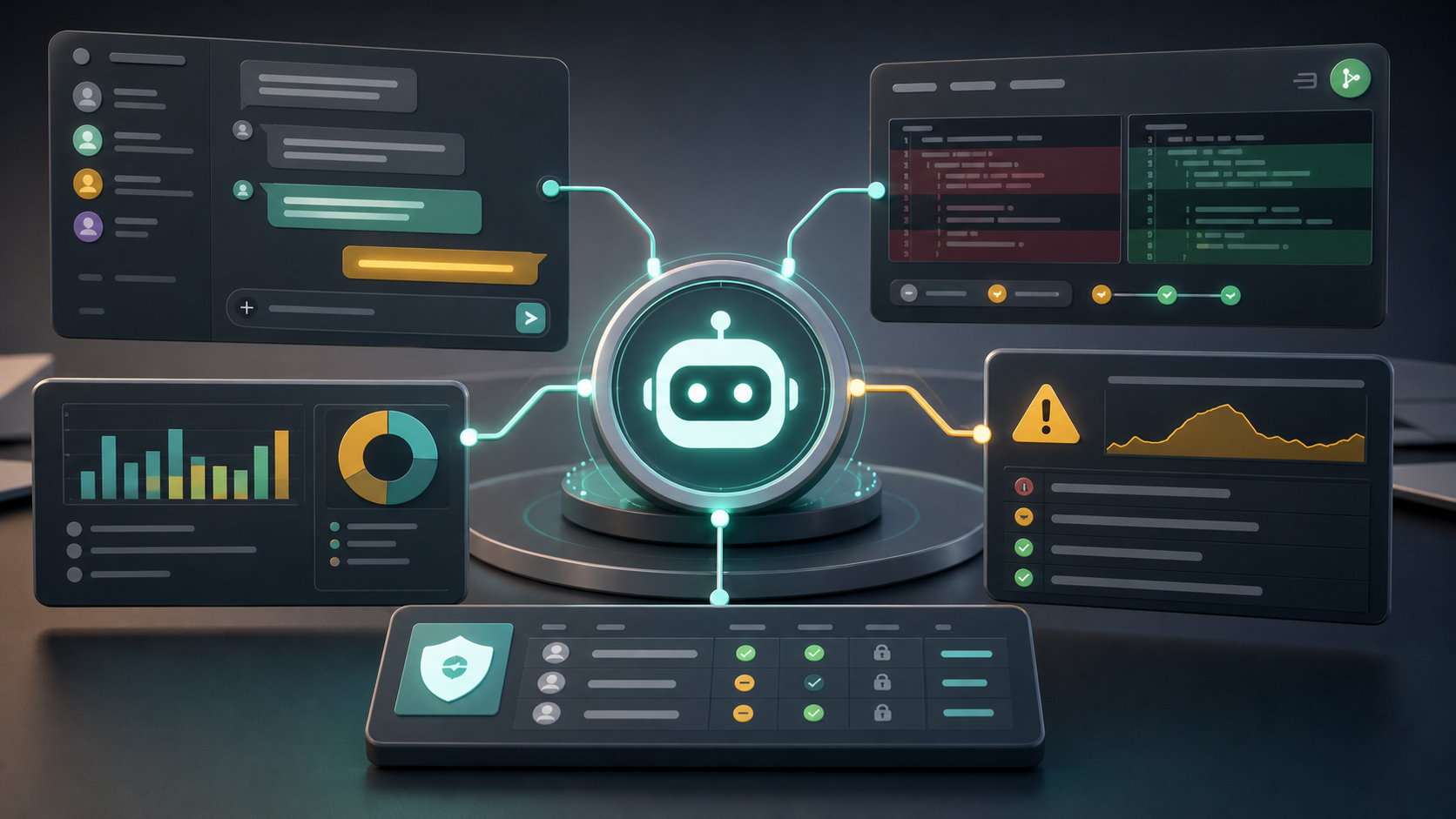

Bengaluru, June 24, 2026, 6:15 p.m. IST – Anthropic’s latest Claude update turns a familiar workplace surface into a more serious AI operations question: what happens when an AI agent is no longer a private assistant, but a persistent teammate inside a shared Slack channel with access to code, tickets, documents and data systems?
The company introduced Claude Tag on June 23 and followed it on June 24 with a technical explanation of an agent identity access model. The product is in public beta for Claude Enterprise and Claude Team customers and is designed to let people tag @Claude inside Slack, assign work and keep the resulting task state visible in the channel.
For GravityDevOps readers, the important part is not the chat interface. It is the change in operating model. AI agents are moving from single-user coding sessions into shared engineering workflows where they may investigate incidents, summarize deployment context, open pull requests, query warehouses or follow up on unresolved threads. That makes identity, least privilege, logging and human approval central platform concerns.
What was confirmed
Anthropic said Claude Tag starts in Slack and can be granted access to selected channels, tools, data and codebases. The company described it as an evolution of Claude Code, with a shared Claude identity inside a channel, persistent context from the channels it is allowed to observe and the ability to plan tasks over time.
Anthropic also said the beta is available to Claude Enterprise and Team customers. Administrators can specify the tools and information Claude may access, set spend limits and view logs of what @Claude has done and who requested each task.
The company claimed that an internal version of Claude Tag now creates 65 percent of its product team’s code. That is a vendor-reported internal figure, not an independently benchmarked productivity result, so engineering leaders should treat it as a signal of Anthropic’s own operating pattern rather than a universal expectation.
TechCrunch reported that Claude Tag is intended to act as an always-on teammate in Slack, while The Verge and Fortune also covered the launch as part of a broader push to put AI agents into enterprise collaboration workflows.
Why the June 24 access model matters
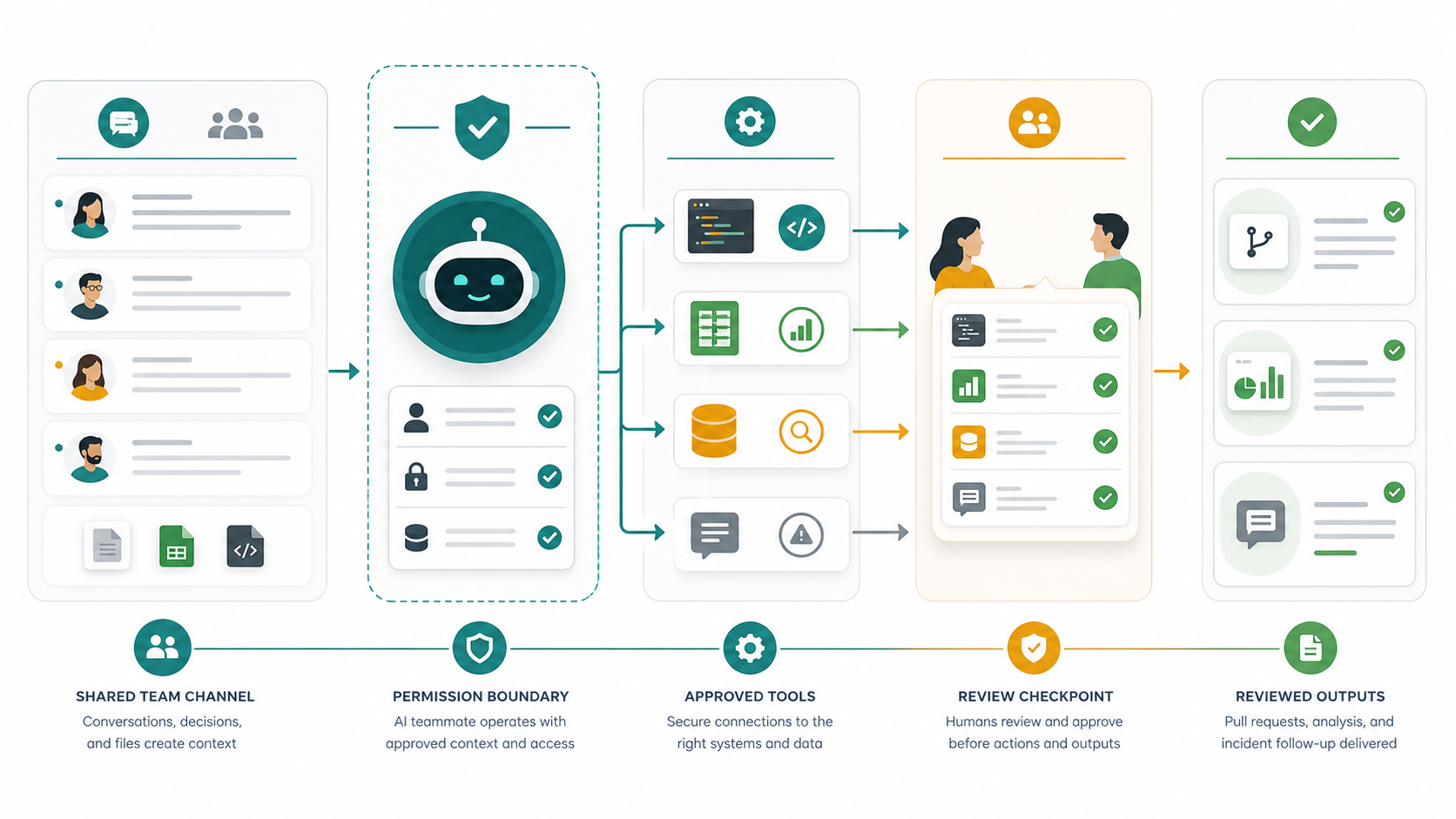
In its June 24 post, Anthropic argued that the old act-as-the-user permission model breaks down for team-wide agents. In its proposed agent identity model, Claude does not simply inherit one employee’s account. Instead, an administrator provisions agent-specific accounts and credentials for the systems Claude can touch.
That distinction matters for platform teams. If a channel-level AI agent can open pull requests, query an observability stack or inspect production data, it needs a permission boundary that is understandable during an audit and revocable during an incident. A shared agent also needs logs that show whether work was initiated by a human, a scheduled routine or the agent’s own ambient behavior.
Anthropic’s model gives private channels distinct Claude identities, while public channels share a workspace-level identity. The company says memory and access stay inside those boundaries, and that outbound traffic to hosts an admin has not allowed is blocked. It also says agent actions are recorded, including routines, memory writes and network calls made with agent credentials.
Those controls are directionally useful, but they do not remove the operational burden. Enterprises still have to decide which repos, data stores, alert channels and ticketing systems are appropriate for an AI teammate. They also have to decide where human approval is mandatory before any production change.
Practical impact for DevOps and cloud teams
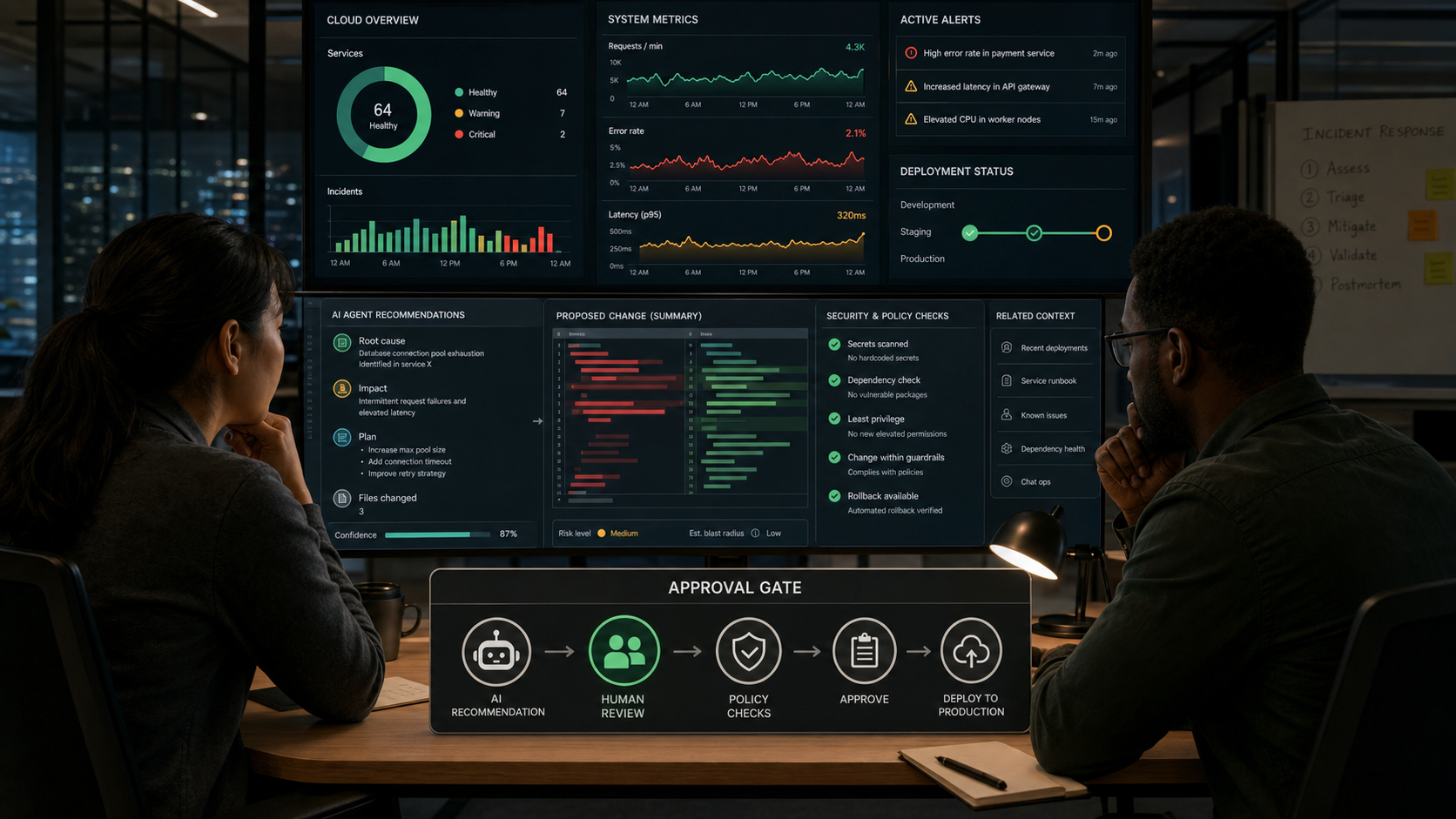
For DevOps teams, Claude Tag points to a near-term future in which chatops becomes one of the main control planes for AI work. A channel can become the place where an engineer asks an agent to investigate a latency spike, compare it with a deployment, draft a root-cause summary and prepare a pull request. That workflow is useful only if the permissions, logs and review gates are designed before the first production incident.
Teams evaluating tools like this should focus on five questions. First, what identity does the agent use in each connected system? Second, can its access be scoped per channel, environment and repository? Third, are all reads, writes and memory updates logged in a way security teams can review? Fourth, can high-risk actions require explicit approval at the moment of execution? Fifth, what happens when the agent is wrong but confident?
This is also an LLMOps issue. Agent prompts, standing instructions, plugin folders and tool permissions become part of the production configuration surface. They should be reviewed like infrastructure policy, not treated as informal chat settings. GravityDevOps has covered related foundations in guides to prompt engineering, RAG and CI/CD tooling; this news is another step toward those practices converging in day-to-day engineering work.
How it fits the broader agent push
Anthropic is not alone in pushing AI deeper into engineering workflows. AWS said last week that AWS Security Agent now includes threat modeling, pull request scanning with remediation, Kiro power integration, a coming Claude Code plugin and MCP integration for AI-powered IDEs. AWS positioned those features around code review, design review, threat modeling and remediation inside existing developer workflows.
The connection is clear: AI vendors are not just shipping smarter chatbots. They are building agents that sit beside the tools where software delivery happens. Some agents will live in IDEs and terminals. Others will live in Slack channels or security consoles. The architectural questions are starting to look similar across products: identity, scope, auditability, cost limits, human review and rollback.
Balanced read
Claude Tag is meaningful because it recognizes that real software work is multiplayer. Engineers rarely debug, deploy or approve changes in isolation. If an AI system is going to be useful in those flows, it needs access to team context and it needs to leave a trail.
The risk is that broad context can quietly become broad authority. A Slack-native agent with repo access, warehouse access and persistent memory may save hours during incident response, but it can also become a confusing new privileged actor if governance is bolted on after adoption.
The practical takeaway is to pilot shared AI agents in limited channels first, preferably with read-heavy tasks, explicit audit review and non-production approval gates. Expand access only after teams can explain exactly what the agent can see, what it can change and how to disable it quickly.
Sources
This roundup is based on Anthropic’s Claude Tag announcement, Anthropic’s agent identity post, the Claude Tag documentation, launch coverage from TechCrunch, The Verge and Fortune, plus AWS’s Security Agent update.


