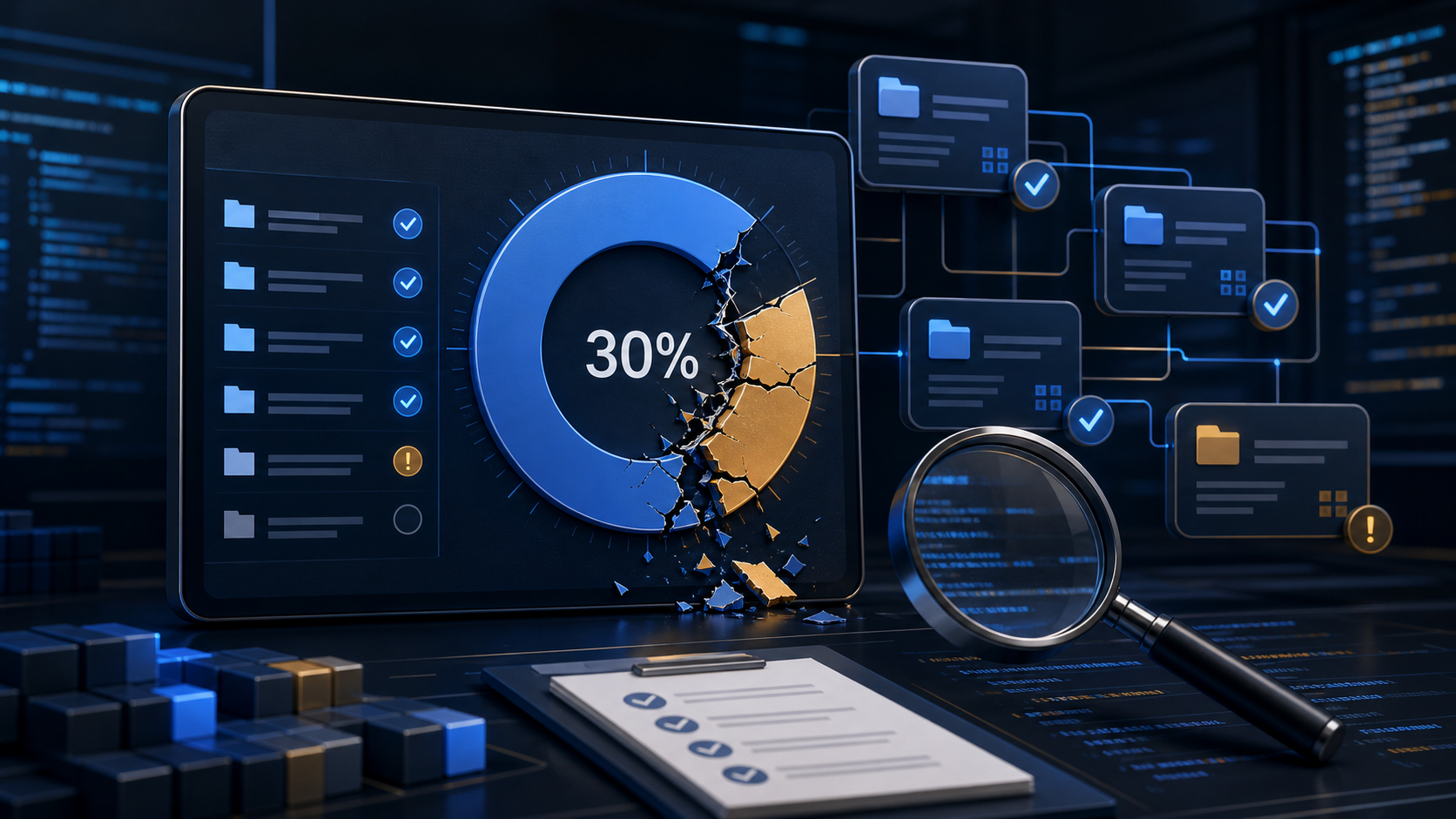

NEW DELHI, July 13, 2026, 8:55 PM IST — OpenAI has withdrawn its recommendation of SWE-Bench Pro as a leading test for AI coding systems after an audit concluded that roughly 30% of the benchmark’s public tasks contain defects capable of distorting model scores.
The reversal matters beyond model leaderboards. Developers, platform teams and technology buyers increasingly use coding-benchmark results to shortlist assistants, set rollout expectations and justify changes to software-delivery controls. OpenAI’s findings are a warning that a single headline score may say as much about the test harness as it does about an agent’s ability to make reliable changes in a real repository.
What OpenAI confirmed
In a research post published July 8, OpenAI said it audited the 731-task public split of SWE-Bench Pro using a model-assisted analysis pipeline, repeated investigator-agent reviews and independent assessments by five experienced software engineers. Its automated pipeline flagged 200 tasks, or 27.4%, as broken; a separate human annotation effort identified 249 tasks, or 34.1%.
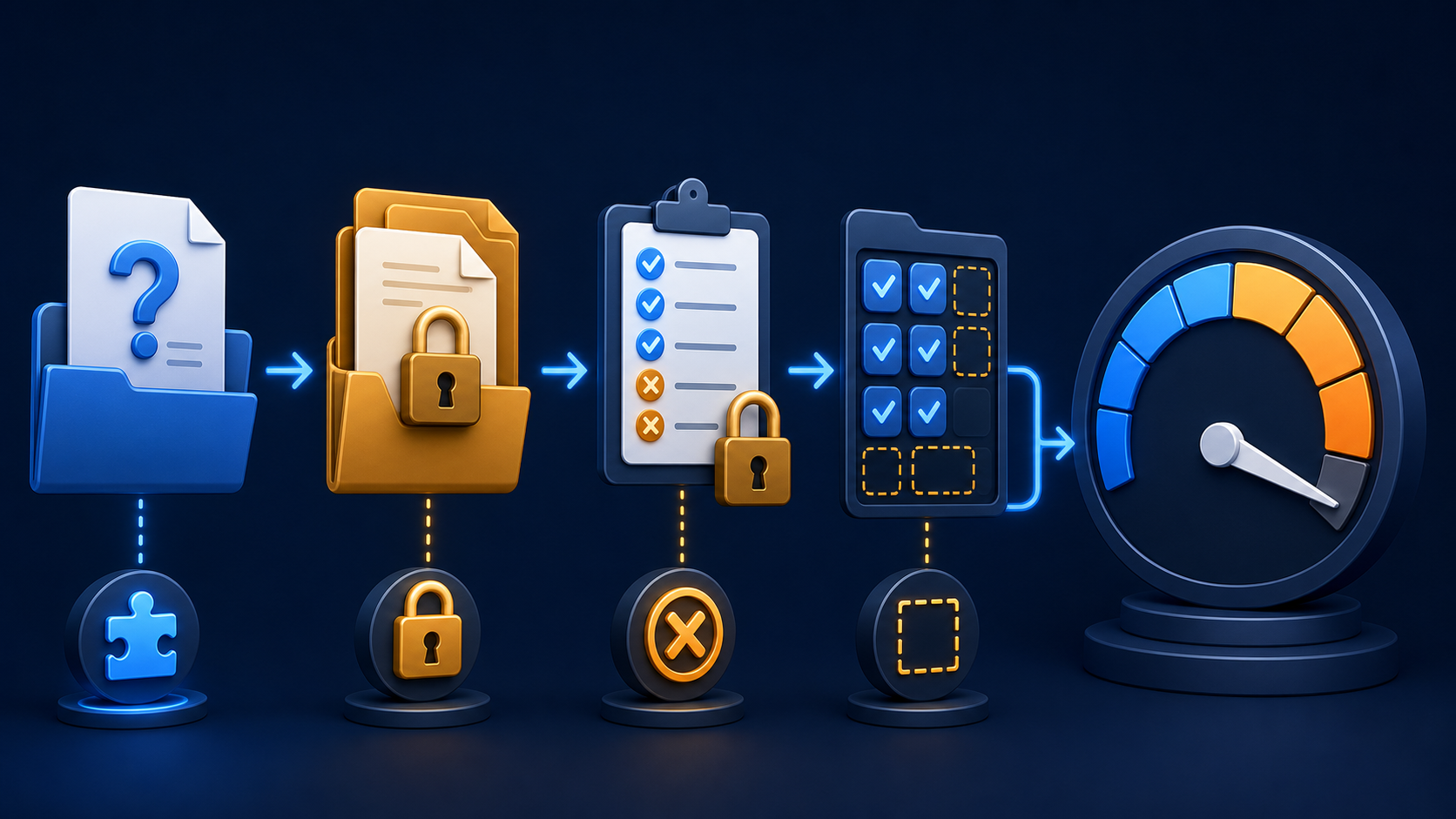
OpenAI grouped the problems into four categories: tests that require implementation details absent from the prompt; prompts that omit requirements enforced by hidden tests; tests with too little coverage to reject incomplete fixes; and prompts that point models toward behavior that conflicts with the grader.
Based on those two reviews, the company estimated that about 30% of the tasks are defective and explicitly retracted its earlier recommendation to adopt SWE-Bench Pro. It called for new coding evaluations built by experienced software developers and designed to test capabilities rather than familiarity with a benchmark.
Why the benchmark came under scrutiny
SWE-Bench Pro was introduced as a harder, longer-horizon successor to earlier software-engineering evaluations. Its tasks are derived from changes in public and private repositories and ask an agent to implement a feature while preserving existing behavior. The benchmark’s authors described it as a more realistic test of complex, repository-level work than earlier suites.
OpenAI had endorsed Pro in February after concluding that SWE-bench Verified was increasingly contaminated by training data and affected by flawed or underspecified tasks. The new audit means the proposed replacement now carries its own material measurement caveat.
The shift in reported performance made the quality of the measuring instrument especially important. OpenAI said frontier-model pass rates on the public split rose from 23.3% to 80.3% in eight months. Its analysis argues that some of the remaining failures—and some apparent successes—reflect task defects rather than clean differences in coding capability.
The audit does not prove that every published SWE-Bench Pro result is useless, nor does it establish the exact error rate across private tasks. OpenAI’s detailed counts concern the public split, and the approximately 30% figure is the company’s estimate based on its own methodology. Scale AI’s original paper and public leaderboard remain useful context, but comparisons now require task-level inspection and disclosure of evaluation settings.
What developers and platform teams should change
Engineering leaders should avoid choosing a coding agent from one leaderboard column. A defensible evaluation should combine several independent benchmarks with a private test set drawn from the organization’s own repositories, languages, dependency patterns and delivery constraints.
For each trial, teams should preserve the issue text, repository state, agent trace, proposed patch, test output, token use, elapsed time and human-review outcome. That makes it possible to separate a genuinely correct change from a patch that merely satisfies a narrow grader. It also supports the observability and repeatability expected in a mature LLMOps practice.
Production-oriented trials should measure more than task completion. Useful checks include regression rate, security findings, unauthorized file changes, dependency churn, rollback success, review time and the percentage of patches maintainers accept without substantial rewriting. Teams using retrieval to ground agents in internal documentation should also test whether the system cites current, authoritative material; GravityDevOps’ RAG guide explains the underlying retrieval pattern.
CI pipelines remain the enforcement boundary. Agent-generated changes should enter the same branch protections, static analysis, software-composition checks, integration tests and deployment gates as human changes. Faster code generation does not justify weaker controls. Teams comparing delivery platforms can use the existing CI/CD tools comparison as a starting point for mapping those gates.
The broader evaluation problem
Benchmark maintenance is becoming an engineering discipline of its own. More capable agents can expose ambiguous specifications and brittle tests that weaker models never reached, while public datasets face contamination as tasks, patches and discussions circulate online.
OpenAI’s audit also demonstrates a potentially useful feedback loop: models can help identify suspicious evaluation cases at scale, while experienced engineers make the final judgment. That approach may reduce audit cost, but it does not remove conflicts of interest when a model vendor evaluates a benchmark used to compare its products with competitors. Independent replication, public task-level evidence and versioned datasets remain essential.
For buyers, the immediate conclusion is narrower than “benchmarks are broken.” Leaderboards are screening tools, not acceptance tests. The closer an evaluation comes to a team’s real repositories, review standards and deployment risks, the more useful it becomes for deciding whether an AI coding agent is ready for production.
Sources
OpenAI, Separating signal from noise in coding evaluations; OpenAI, Why SWE-bench Verified no longer measures frontier coding capabilities; the SWE-Bench Pro authors’ research paper; and The Stack’s independent report.


