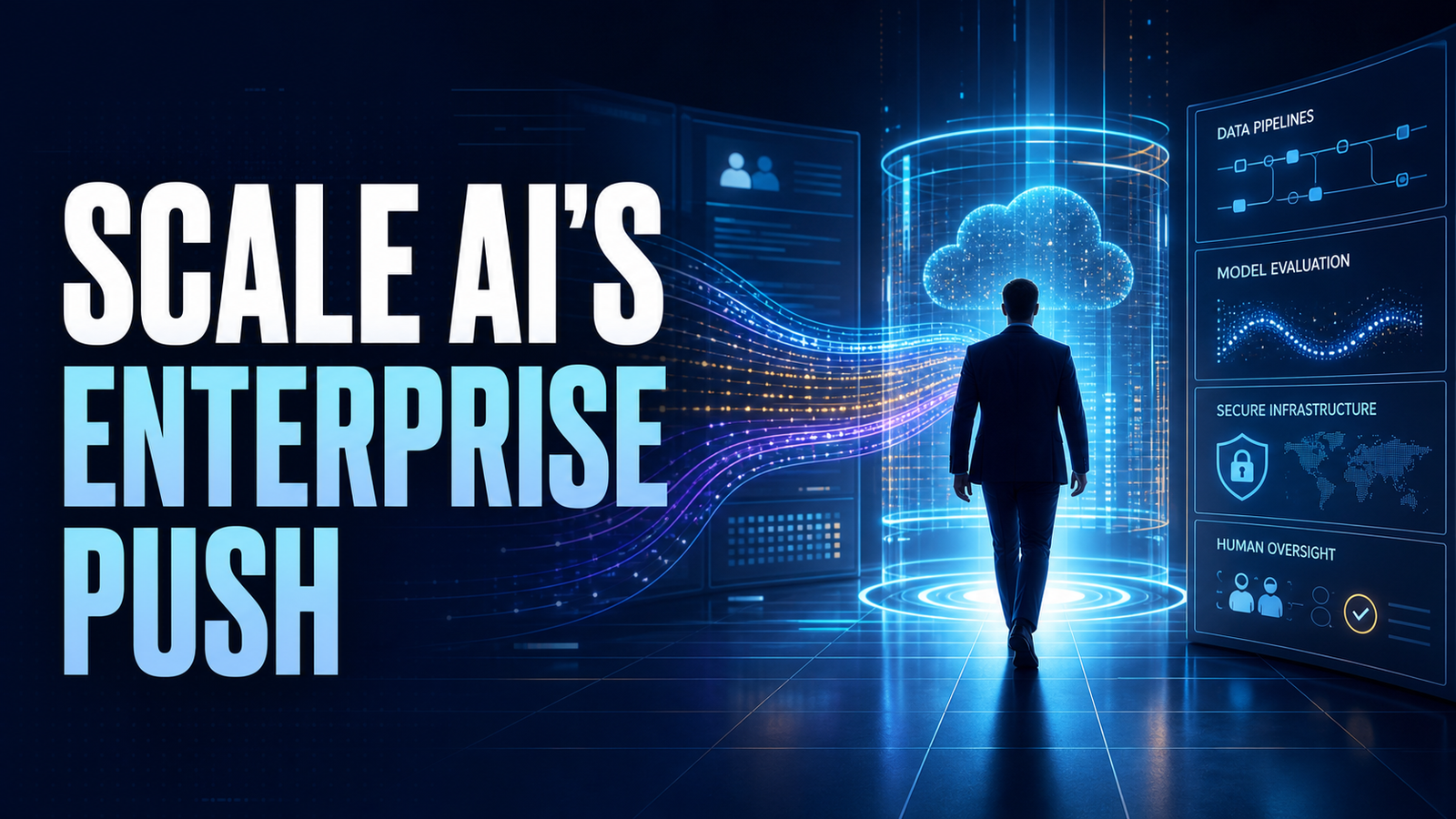

Scale AI’s reported choice of Google Cloud COO Francis deSouza points to a broader enterprise push built around model evaluation, governance and production AI systems—not only training data.
NEW DELHI, August 2, 2026, 4:05 PM IST — Scale AI has hired Google Cloud Chief Operating Officer Francis deSouza as its new chief executive, Axios reported, placing an enterprise cloud and security veteran at the helm as the AI infrastructure company expands beyond its original data-labeling business.
The appointment matters to developers, platform engineers and technology buyers because Scale increasingly describes itself as a full-stack provider for building, evaluating and overseeing production AI applications. A leadership change alone does not guarantee a product shift, but deSouza’s background in cloud operations and security strengthens the signal that Scale wants a larger role in enterprise AI delivery.
What is confirmed
Axios reported that deSouza will replace interim CEO Jason Droege and that his final day at Google Cloud is August 7. Google Cloud’s leadership profile identifies deSouza as its COO and president of security products, responsible for scaling operations as well as the company’s security portfolio.
Scale has not published a detailed product roadmap tied to the reported appointment. Its existing corporate material, however, says the company now spans training data, model evaluations, red teaming and applied AI systems for enterprise and government customers. Scale says it has processed 15 billion human decisions used in model development and evaluation, a company-supplied figure that has not been independently audited in the sources reviewed for this article.
The leadership transition follows Meta’s 2025 investment in Scale, which valued the company at more than $29 billion. Scale’s founder Alexandr Wang joined Meta’s AI work, while Droege became interim chief executive. Scale said at the time that it would remain an independent company and continue serving customers.
Why Scale is moving beyond data labeling
Training-data preparation remains important, but production AI programs now create a different operational problem. Teams must test whether a model follows policy, track regressions across model versions, route sensitive workloads correctly and demonstrate that an application behaves consistently after deployment.
Scale’s January 2026 strategy update said its enterprise applications business had recorded its strongest bookings quarter and was expected to double during the year. Axios reported that Scale expects the applications business to overtake the data business within 18 months. Those projections are forward-looking company claims, not completed results.
This is the practical context behind the CEO choice: enterprise AI spending is shifting from isolated model experiments toward controlled applications connected to internal data and business workflows. The companies that own evaluation, human feedback and governance layers may gain influence even when customers use models from several providers.
What platform and DevOps teams should watch
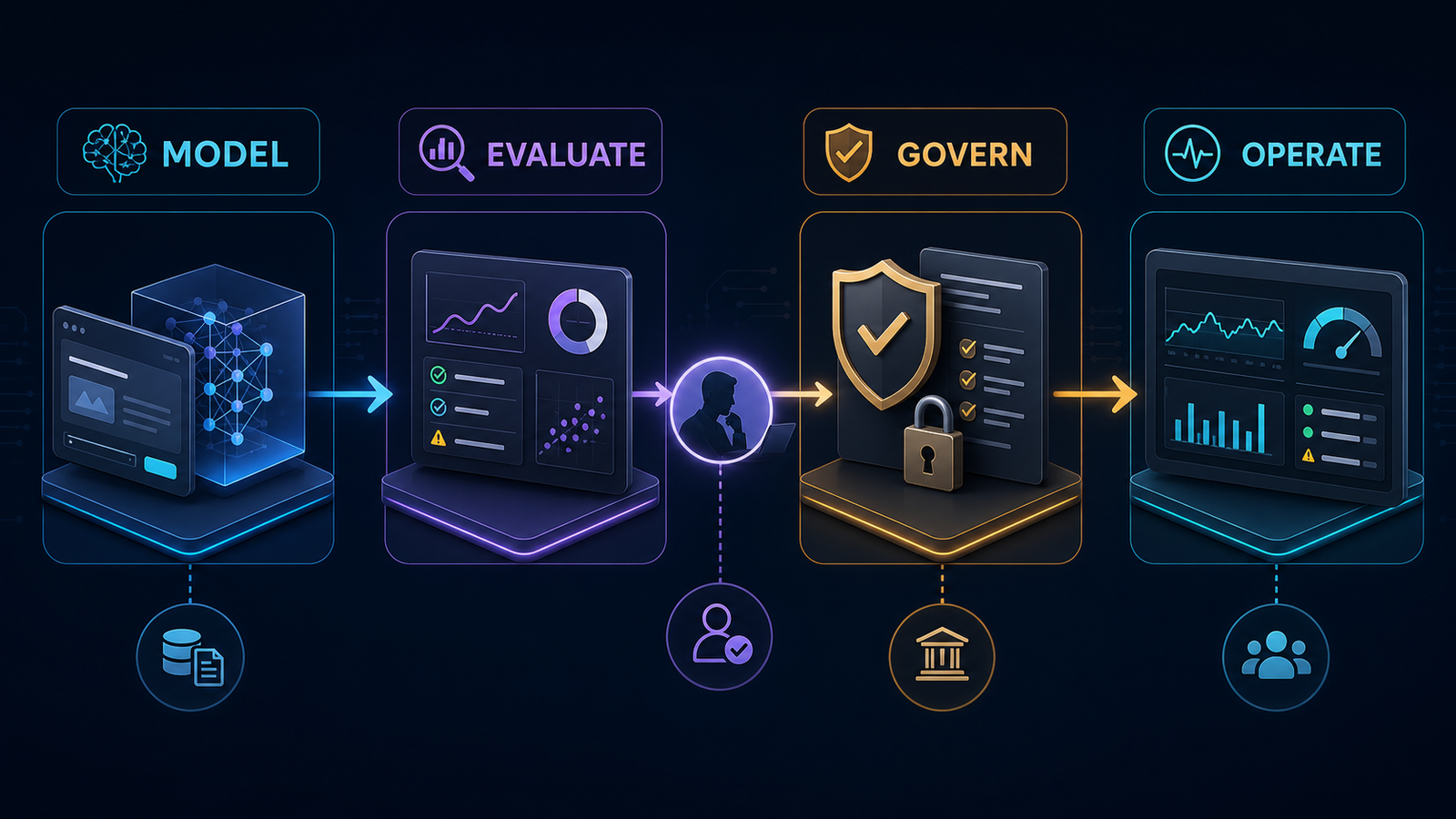
For engineering organizations, the immediate issue is not whether Scale becomes another cloud platform. It is whether evaluation and oversight services become a standard part of the delivery pipeline for AI applications.
Teams evaluating Scale or similar vendors should ask how test datasets are versioned, where prompts and outputs are retained, how human reviewers access sensitive material, and whether evaluation results can be exported into existing observability and release systems. They should also verify regional data controls, identity boundaries and incident-response responsibilities before placing proprietary code or customer data into an external evaluation workflow.
A useful architecture keeps the model provider, application runtime and evaluation evidence loosely coupled. That makes it easier to compare models, reproduce a failed release and change vendors without losing the audit trail. GravityDevOps readers building this layer can review the site’s guides to LLMOps, retrieval-augmented generation and prompt engineering for developers.
A balanced view of the enterprise opportunity
Scale has a credible foundation in human feedback and model testing, and deSouza brings experience across cloud operations, cybersecurity and regulated technology. Those assets could help the company sell a broader reliability platform to large organizations.
There are also unresolved questions. Scale must show that it can serve customers that compete with Meta, protect sensitive evaluation data and integrate with multi-cloud environments without creating another proprietary control plane. Customers should treat the leadership news as a strategic indicator, not proof that new products, service levels or compliance capabilities are available.
The next evidence will come from product releases, reference architectures and customer deployments under the new leadership. For technical buyers, the central takeaway is narrower: evaluation and governance are becoming first-class infrastructure decisions as AI applications move into production.
Sources
This report draws on Axios reporting on the appointment, Google Cloud’s leadership profile for Francis deSouza, Scale AI’s company and product overview, Scale’s 2026 strategy update and Scale’s 2025 Meta transaction announcement.


