

NEW DELHI — August 24, 2026, 2:05 PM IST
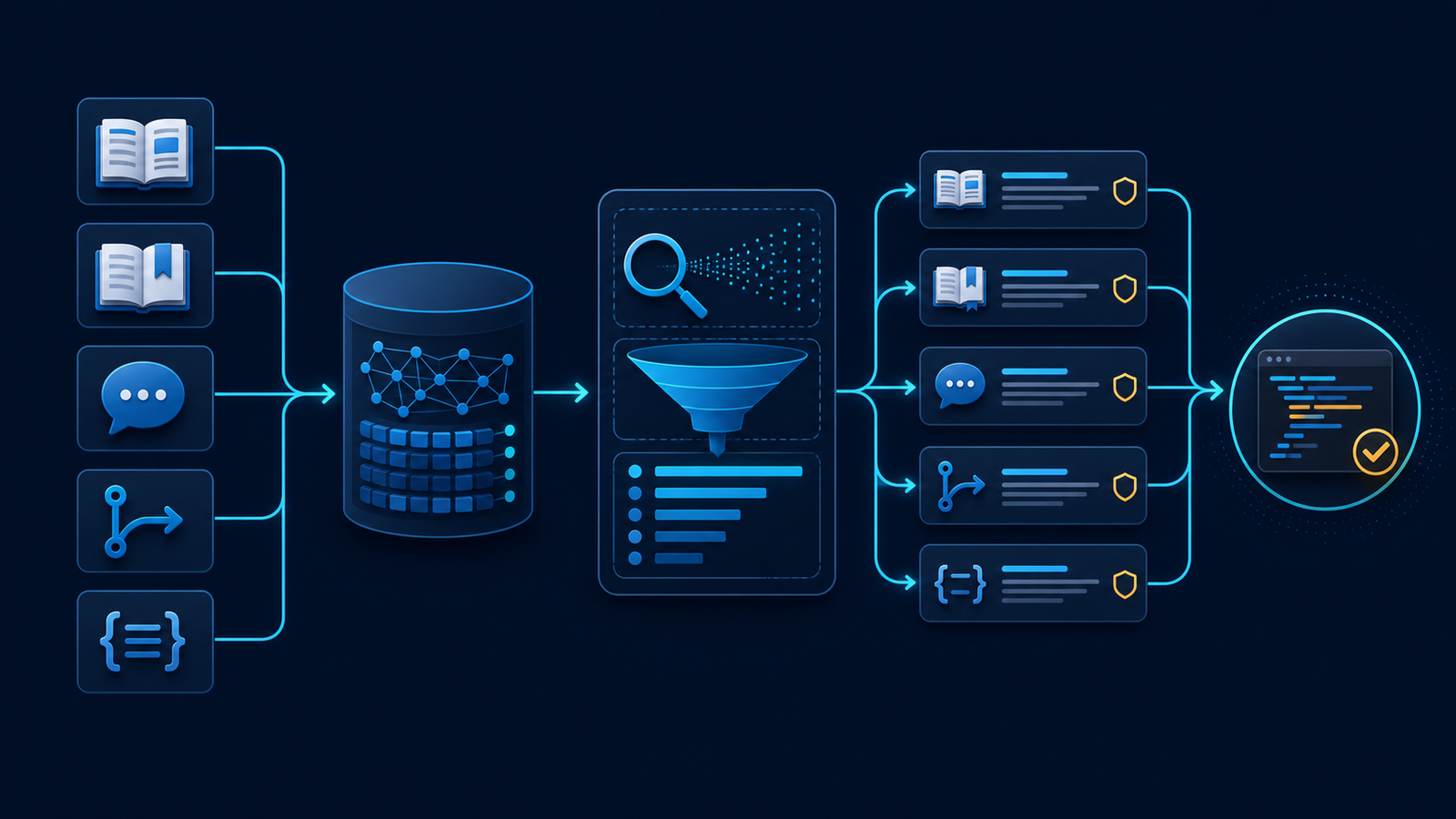
Firecrawl has launched a specialized search index for coding agents, giving software-development systems a single retrieval surface for documentation, repository READMEs, issues, pull requests, OpenAPI specifications and agent skills.
The release shifts attention from the model generating code to the evidence it retrieves before making a change. That matters because a capable coding model can still produce a confident but obsolete answer when its search tool surfaces an old tutorial instead of the current documentation or the pull request that fixed a bug.
Firecrawl said the Developer Index contains more than 70 million artifacts and is continuously refreshed, with most sources updated daily. It is available through the company’s API, command-line interface, Model Context Protocol integration and software development kits. The company also released DevDex, a benchmark designed to measure whether search systems return the right repository, documentation page, issue or pull request for a developer question.
A search layer organized around developer artifacts
General web search ranks pages for people. Firecrawl’s new endpoint instead returns developer artifacts with matched passages, stable identifiers and metadata such as artifact type, repository popularity and license. API users can filter results by repository, source, language, topic, license and other fields.
The distinction is operationally important. An agent investigating a failing dependency does not only need a page that mentions the error. It may need the issue where the failure was reproduced, the pull request that closed it and the current documentation that describes the supported configuration.
Firecrawl says the dedicated endpoint can provide those passages without requiring a second scrape. The company charges two credits for up to 10 developer-search results and offers a rate-limited keyless path for initial use. It also says the index does not store source code and is not intended to replace general web search.
That narrower boundary is useful but incomplete. Repository discussions and documentation can be stale, incorrect or superseded, while license metadata does not by itself decide whether retrieved material may be copied into a product. Teams still need source allowlists, freshness checks and review rules for generated patches.
DevDex turns retrieval into a testable component
Alongside the product, Firecrawl published DevDex with 1,179 developer-search tasks across three tracks: repository discovery, documentation lookup, and issue or pull-request resolution. The public repository includes 594 tasks, roughly half of the full set, plus the evaluation harness and deterministic scoring code under an MIT license.
Firecrawl reports an overall Recall at 10 score of 0.631 for its Developer Index, compared with 0.577 for Parallel, 0.546 for Mintlify, 0.537 for Exa and 0.454 for the benchmark’s native web-search control. Recall at 10 asks whether the known-correct artifact appears within the first 10 citations.
The breakdown is more informative than the ranking. Firecrawl’s index scored 0.660 on issue and pull-request retrieval and 0.472 on documentation. Parallel led repository discovery at 0.819, while native web search reached 0.807 on that track. Firecrawl’s own index scored 0.761 there.
Those are Firecrawl’s results, not an independent audit. The company created the benchmark, operates the product and holds back about half of the dataset. It used the same Claude Opus 4.8 driver, one search tool per test arm and deterministic URL matching rather than a model judge. The published methodology makes scrutiny possible, but buyers should reproduce the public subset and add tests drawn from their own stack before treating the leaderboard as a procurement result.
What developers and platform teams should watch
For coding-agent operators, the release makes retrieval a measurable production dependency rather than an invisible tool call. The useful service-level indicators are not just API uptime. Teams should track the share of searches that lead to cited evidence, the age and authority of selected sources, search latency, cost per completed task, patch acceptance and rollback rates.
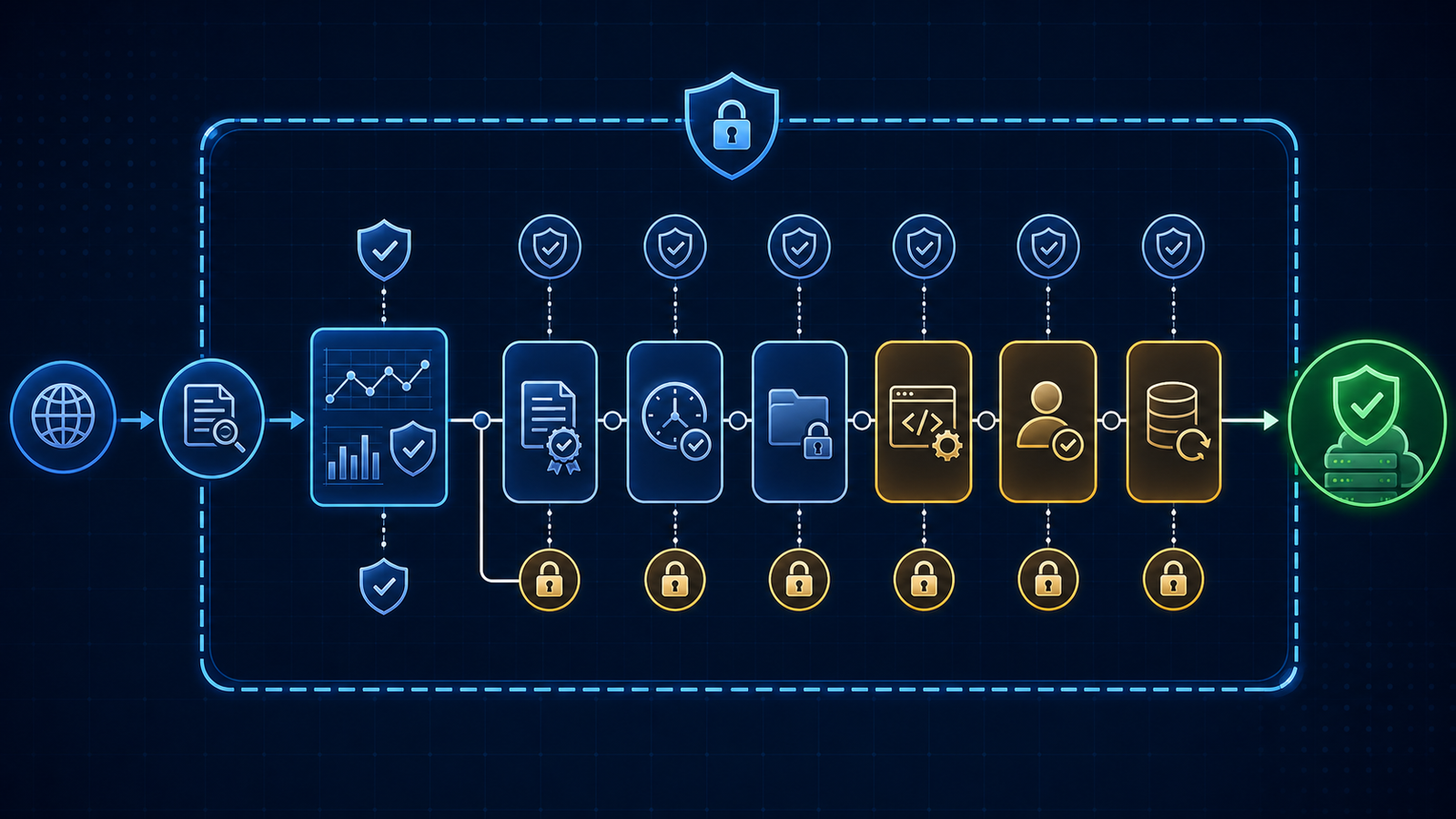
Platform teams should also separate retrieval from execution. A search hit can inform an agent, but it should not grant permission to change a repository, rotate a secret or deploy to production. Read-only search credentials, repository-scoped write permissions, protected branches, CI checks and human approval for high-impact changes remain the control plane.
The same separation matters for prompt injection. Issues, pull requests and documentation are untrusted inputs. An agent should treat instructions found inside retrieved text as data, not as authority to call tools. Content provenance, source labeling and output validation belong in the retrieval pipeline, especially when an agent can mutate infrastructure.
GravityDevOps readers building retrieval-augmented systems can place the launch in the broader context of RAG architecture and LLMOps. Teams working on agent instructions should also keep prompt-engineering practices separate from enforceable infrastructure policy.
A useful release, with a benchmark caveat
Firecrawl’s launch reflects a broader change in AI infrastructure: coding agents increasingly need retrieval systems designed for machine tool loops rather than human browsing sessions. Indexing issues, fixes and documentation together could reduce wasted searches and outdated answers, particularly in long-running debugging work.
The open harness is the strongest part of the announcement because it gives teams a way to test that premise. The reported lead is still a vendor claim, and a generic benchmark cannot capture private repositories, internal runbooks or an organization’s own risk controls. The practical question is therefore not whether one index wins every search. It is whether a retrieval layer improves task success on a team’s actual workloads without weakening provenance, access control or review.
Sources: Firecrawl launch announcement, Developer Index product page, DevDex open-source benchmark, and DevDex benchmark report.


