

NEW DELHI, October 3, 2026, 12:20 p.m. IST — Anthropic is committing $100 million to train 10,000 engineers who can take Claude projects from a business idea through security review and into production, a move that puts deployment skills—not another model benchmark—at the center of its latest enterprise push.
The company launched its Claude Frontier Academy on Friday with engineers from Accenture, Bain, Capgemini, Commonwealth Bank of Australia, Deloitte, McKinsey, Morgan Stanley and Novo Nordisk in the first cohorts. Anthropic says the program will expand to 10,000 “Frontier Deployed Engineers” by the end of 2027.
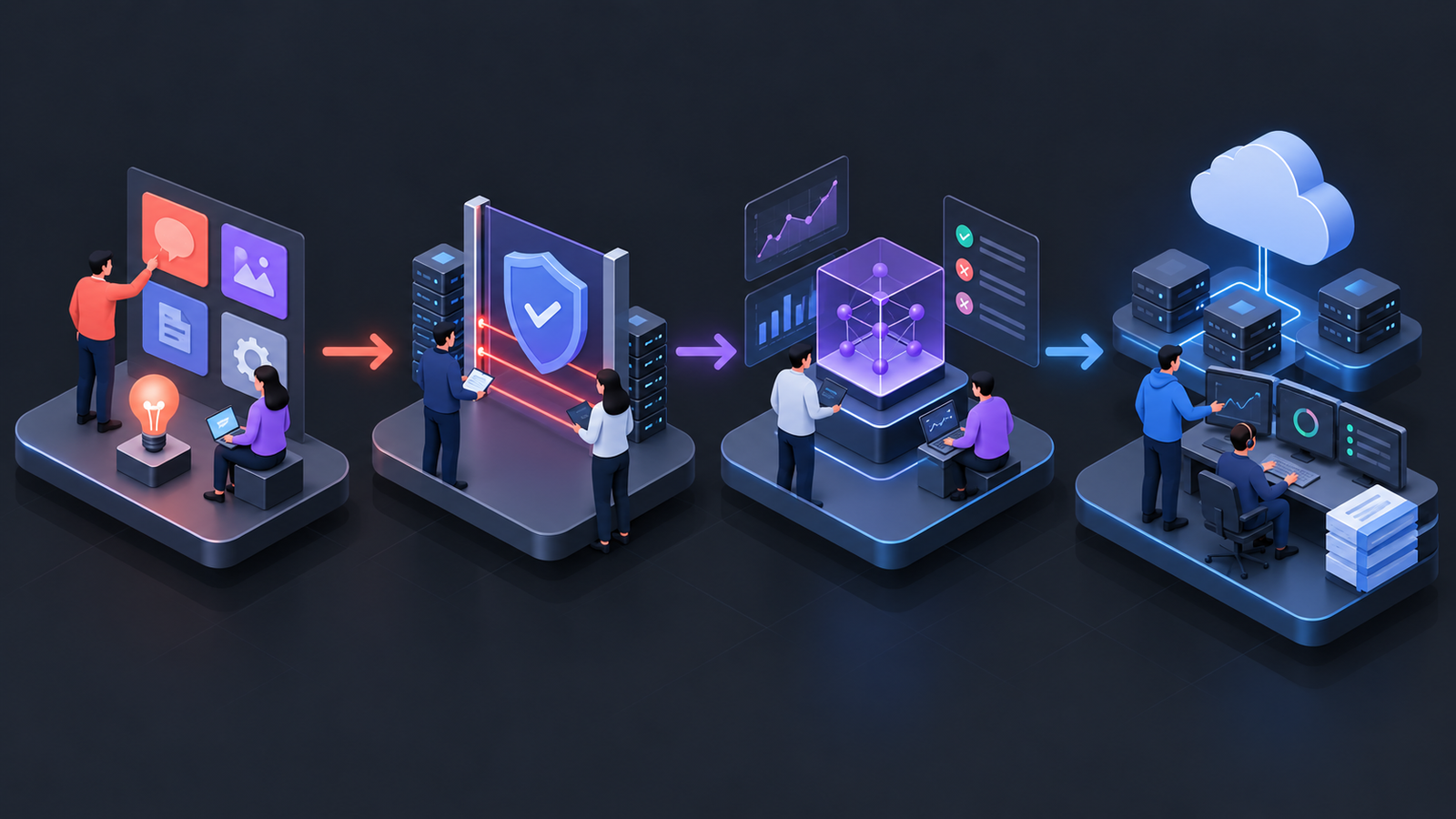
For platform and DevOps teams, the announcement matters because it defines the emerging AI deployment role around controls and handover as much as model use. Participants must arrive with a named project, work through a simulated enterprise deployment, pass a practical assessment and then lead a real 12-week implementation inside their organization. The curriculum explicitly covers use-case selection, security review and operational handoff.
What Anthropic confirmed
According to Anthropic’s announcement, candidates are expected to be experienced software engineers with strong fundamentals and a record of building with large language models, although prior work on AI agents is not mandatory. Organizations nominate participants, who begin with several days of in-person work alongside Anthropic engineers and licensed instructors.
Engineers who pass the initial graded exercise receive a resident credential before starting the 12-week deployment. A second assessment leads to the Frontier Deployed Engineer credential, with the first completions expected in early 2027. Cohorts are already running in San Francisco, New York and London, and participation is currently by nomination through Anthropic account or partner teams.
The $100 million figure and 10,000-engineer target come from Anthropic. The company has not published a detailed spending schedule, cohort capacity, pass rate or independent evaluation method. Those omissions make it too early to judge whether the academy can reach its scale target or whether its credential will transfer cleanly to projects built on other model providers.
From certification to production ownership
The program is more substantial than a self-paced product course. CRN reported that Anthropic intends the residency for engineers at both customer organizations and solution providers, including smaller specialist firms, not only the global consultancies named at launch.
That emphasis reflects a common enterprise bottleneck: a proof of concept can be built quickly, while production delivery still requires identity design, data access controls, evaluation, cost limits, incident ownership and a support model. A useful deployment lead must connect those disciplines rather than treat the model endpoint as the finished system.
Commonwealth Bank, one of the first participating companies, separately confirmed its engineers are joining the academy. In Anthropic’s announcement, the bank said its teams had produced up to three times more code changes over the past year while using AI tools. That is a company-reported productivity observation, not a controlled benchmark, and it does not by itself measure code quality, reliability or business value.
What platform teams should take from the launch
The immediate lesson is not that every organization needs an Anthropic credential. It is that production AI ownership is becoming a distinct engineering function. Teams evaluating a similar role should define its remit across four areas: choosing a measurable use case, designing access and security boundaries, establishing continuous evaluations, and transferring the service into normal operations with clear alerts, budgets and rollback paths.
Those responsibilities align with established LLMOps practices. They also go beyond prompt construction: prompt engineering is one input to a production system, while release gates, observability, data governance and incident response determine whether it can run safely at scale.
Vendor-specific instruction can shorten the path to a first deployment, but it can also create concentration risk. Platform leaders should ask whether the architecture, evaluation data and runbooks remain portable across models; whether graduates can explain failure modes rather than only operate Claude tooling; and whether the deployment has an accountable owner after the residency ends.
A strategic distribution move as well as a training program
The academy builds on Anthropic’s partner network, where the company says professionals across 46,000 firms have earned more than 175,000 Claude certifications and nearly 4,000 people have completed its Basecamp program. The new residency narrows the focus to engineers expected to lead live deployments.
That makes the initiative both a talent investment and a distribution strategy. Training engineers inside consultancies, banks and life-sciences companies can create more teams able to recommend and implement Claude. The practical test will be whether those projects survive security review, reach measurable production outcomes and remain maintainable after Anthropic’s direct support recedes.
For developers and operations teams, that is the useful signal in the announcement: enterprise AI adoption is shifting from access to execution. The scarce capability is increasingly the engineer who can join model behavior, cloud controls, business context and operational accountability into one supportable service.
Sources
Primary details come from Anthropic’s Claude Frontier Academy announcement, with independent program reporting from CRN and participant confirmation from the Commonwealth Bank newsroom.


