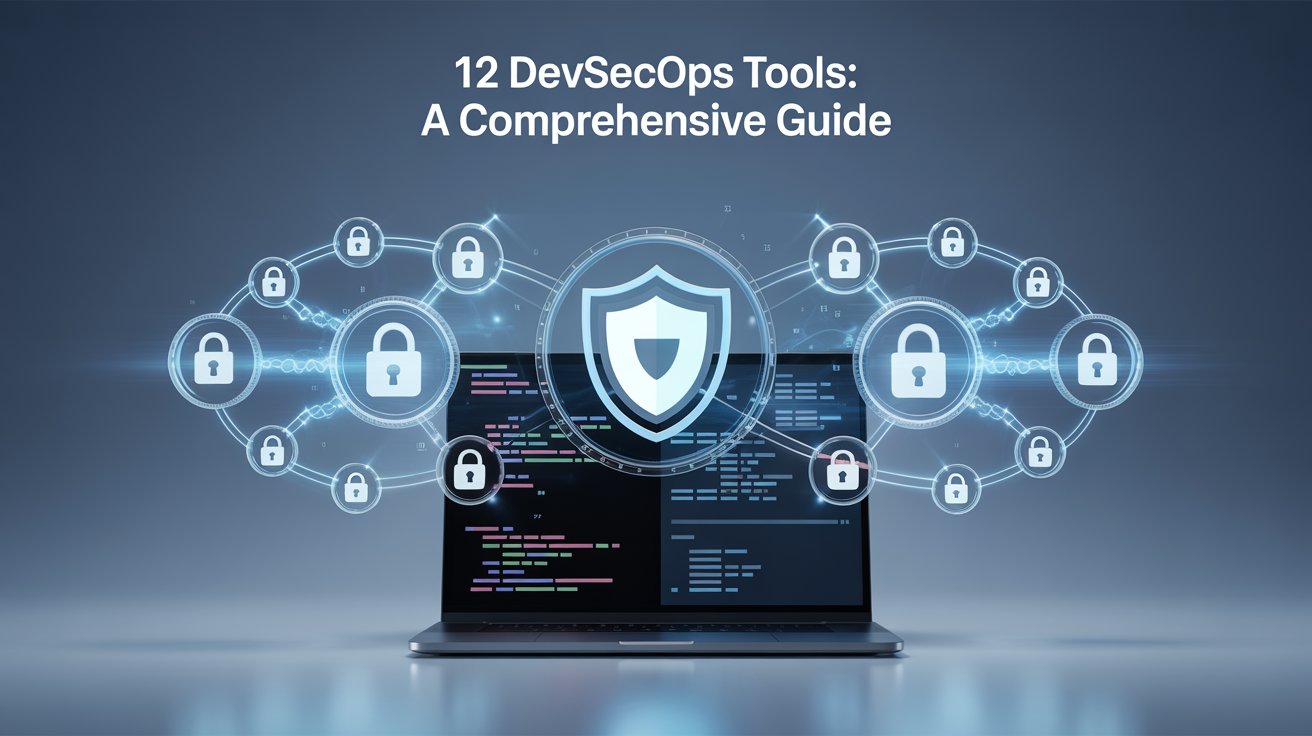

Quick Answer: DevSecOps integrates security into every stage of the DevOps pipeline (“shift left”). The essential DevSecOps tools for 2026 cover code scanning (SAST), dependency and image scanning (SCA), IaC scanning, secrets management, policy as code, and supply-chain security. Below is a categorized guide with the leading tools in each area.
What is DevSecOps?
DevSecOps is the practice of building security into the software delivery lifecycle rather than bolting it on at the end. Security checks run automatically in the CI/CD pipeline, so vulnerabilities are caught early — when they’re cheapest to fix. See what DevSecOps means.
1. SAST — Static Application Security Testing
Scans source code for vulnerabilities before it runs.
- SonarQube — code quality and security analysis.
- Semgrep — fast, customizable static analysis.
- Snyk Code — developer-friendly SAST.
2. SCA — Software Composition Analysis
Finds known vulnerabilities (CVEs) in your open-source dependencies.
- Snyk Open Source and Dependabot — dependency vulnerability alerts and fixes.
- OWASP Dependency-Check — open-source SCA.
3. Container & Image Scanning
- Trivy — popular all-in-one scanner for images, filesystems, and IaC.
- Grype — fast container vulnerability scanner.
- Docker Scout — built into the Docker toolchain. See our Docker security scanning guide.
4. IaC Scanning
Detects misconfigurations in Terraform, Kubernetes, and cloud templates.
- Checkov — scans Terraform, CloudFormation, and Kubernetes manifests.
- tfsec / Trivy IaC — Terraform security scanning.
- KICS — IaC misconfiguration detection.
5. Secrets Management & Detection
- HashiCorp Vault — central secrets storage and dynamic secrets.
- Cloud secret managers — AWS Secrets Manager, Azure Key Vault, GCP Secret Manager.
- GitLeaks / TruffleHog — detect secrets accidentally committed to Git.
6. Policy as Code & Supply-Chain Security
- Open Policy Agent (OPA) and Kyverno — enforce security policies automatically.
- Cosign (Sigstore) — sign and verify container images.
- SBOM tools (Syft) — generate a Software Bill of Materials for supply-chain transparency.
7. Runtime & Cloud Security
- Falco — runtime threat detection for containers/Kubernetes.
- Cloud-native security posture tools — AWS Security Hub, Microsoft Defender for Cloud.
Building a DevSecOps Pipeline
A practical 2026 pipeline runs: secret detection → SAST → SCA → build → image scan → IaC scan → policy check → sign artifact → deploy. Each gate fails the build on critical findings, so insecure code never reaches production.
Conclusion
DevSecOps is no longer optional in 2026 — security must be automated into the pipeline. Start with dependency and image scanning (Trivy, Snyk), add secrets management (Vault), then layer in IaC scanning and policy as code. Explore related guides on Docker security scanning and managing secrets in Docker.
Frequently Asked Questions
What is the difference between SAST and SCA?
SAST scans your own source code for vulnerabilities; SCA scans your third-party/open-source dependencies for known CVEs.
Which DevSecOps tool should I start with?
Trivy is a great first tool — it scans images, filesystems, and IaC in one place and integrates easily into CI/CD.
What is “shift left” security?
Moving security testing earlier in development so issues are caught when they’re cheapest and easiest to fix.

