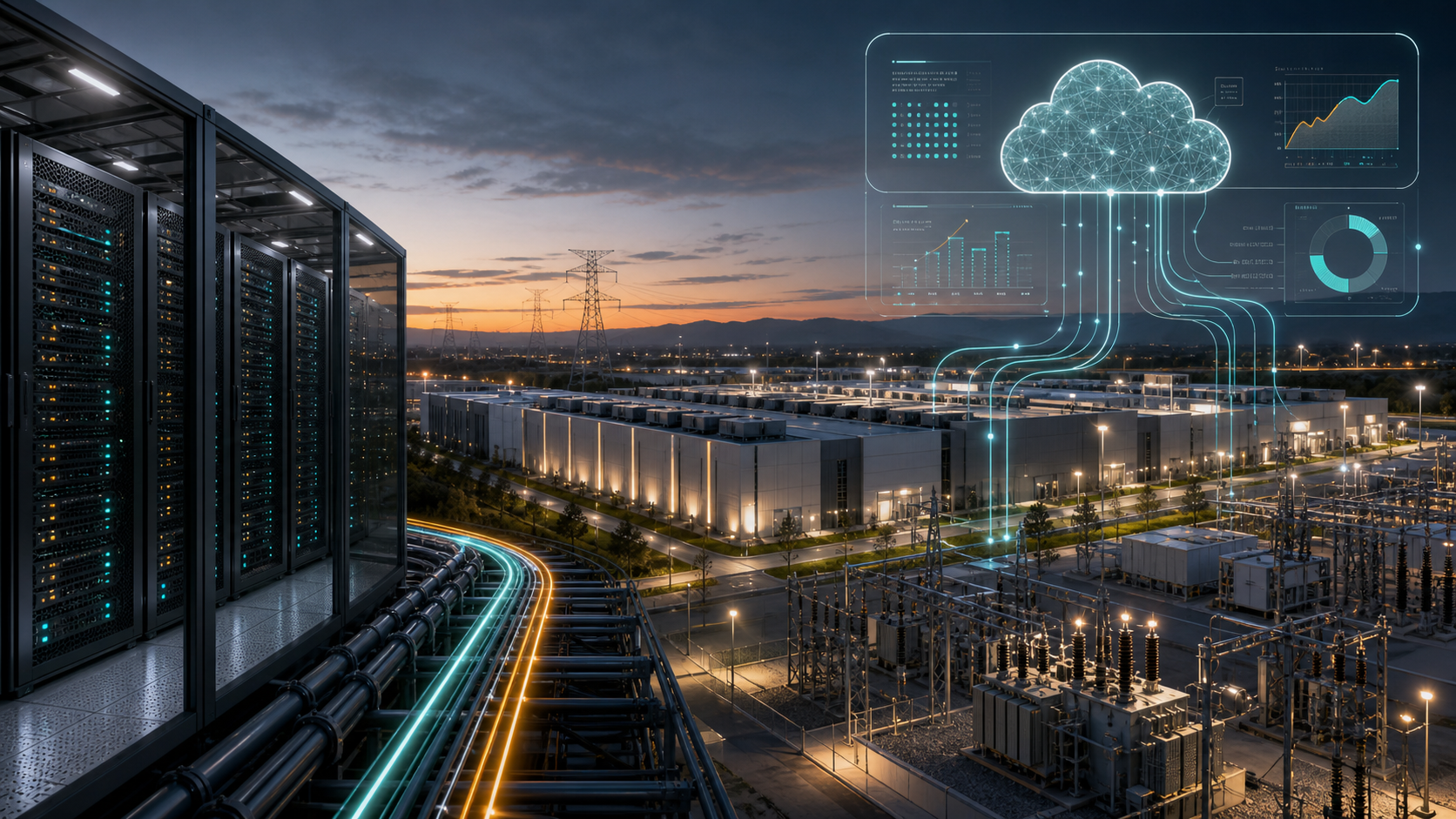

New Delhi, July 6, 2026, 11:55 p.m. IST. Anthropic has signed a 20-year lease for a large AI infrastructure campus in Kentucky, according to a TeraWulf filing and company announcement published Monday, in a deal that puts physical compute capacity at the center of the evening’s AI infrastructure news.
TeraWulf said its Raylan Data subsidiary will provide Anthropic with about 401 MW of critical IT load at the Justified Data campus in Hawesville, Kentucky. The company expects initial capacity to come online in the second half of 2027 and the full campus to ramp by early 2028. The lease is expected to generate about $19 billion of contracted revenue over the initial term, subject to the normal execution risks attached to a large data-center buildout.
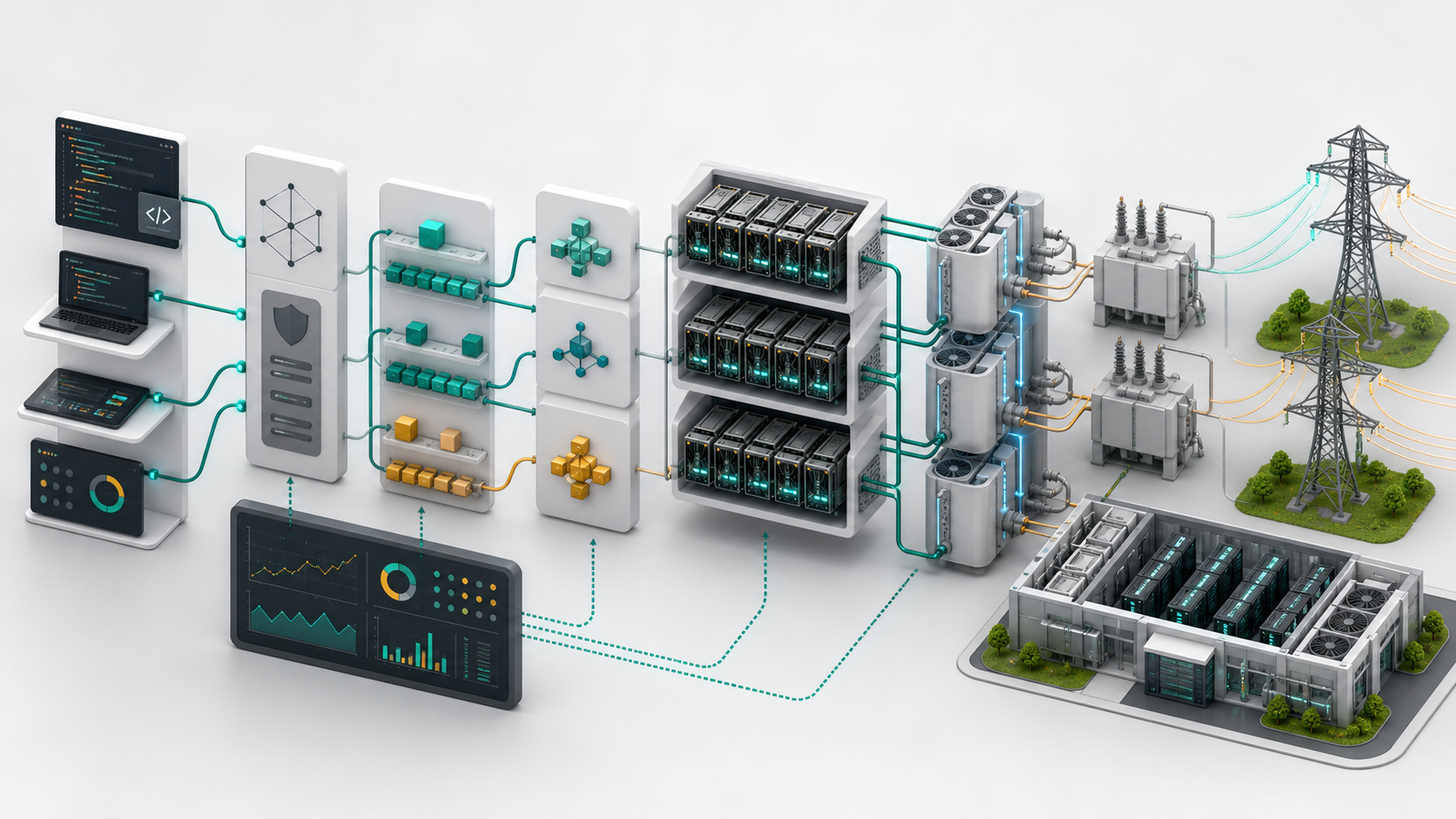
The news matters beyond one data-center lease because frontier AI capacity is increasingly being bought like industrial infrastructure: long-duration land, power, cooling, interconnection and financing commitments, not only elastic cloud instances. For developers and platform teams building on model APIs, that changes the reliability conversation. Model availability, quota pressure, latency and regional rollout schedules now depend partly on projects that take years to permit, energize and operate.
What TeraWulf confirmed
In a July 6 Form 8-K, TeraWulf said the lease covers high-performance computing operations at its Justified Data campus and gives Anthropic two successive five-year renewal options after the first 20-year term. TeraWulf also said Anthropic’s rent obligations will begin as each phase is delivered.
The accompanying press release said the campus will be developed in phases, with about 401 MW of critical IT load at full buildout. TeraWulf framed the deal as validation of its strategy to develop, own and operate large AI infrastructure campuses where power availability and operational control are major differentiators.
The company separately announced that it will sell its 50.1 percent ownership interest in the Abernathy Joint Venture to an investor group led by Fluidstack. TeraWulf said that transaction will monetize about $450 million of invested capital at a premium and free capital for wholly owned AI infrastructure opportunities.
Independent coverage from Business Insider described the Kentucky site as a former industrial location in Hawesville and noted the broader shift of data-center developers from crypto mining toward AI workloads. Reuters, in coverage syndicated by The Economic Times, also framed the agreement as part of TeraWulf’s transition away from reliance on bitcoin mining.
Why this is part of a bigger compute race
The TeraWulf lease follows other signals that Anthropic is locking in long-term capacity for Claude. In April, Anthropic said it had expanded its partnership with Google and Broadcom for multiple gigawatts of next-generation TPU capacity expected to come online starting in 2027. In that same announcement, Anthropic said it runs Claude on a mix of AWS Trainium, Google TPUs and Nvidia GPUs, and pointed to hardware diversity as a resilience strategy.
The timing is important. AI labs are no longer competing only on model benchmarks, coding scores or product launches. They are also competing on access to power, chips, cooling systems, grid interconnections, construction schedules and financing partners. Those constraints do not move at the speed of software releases.
That does not mean the Kentucky campus will change Claude capacity immediately. TeraWulf’s own filing points to late 2027 and early 2028 delivery milestones. For now, the deal is best read as a forward-looking capacity commitment, not evidence of near-term API availability or performance gains.
What developers and platform teams should take from it
The practical lesson is not that every team should track data-center leases daily. It is that AI application architecture should assume capacity is finite, regionally uneven and subject to commercial prioritization. When a product feature depends on a frontier model, the system needs more than a happy-path API call.
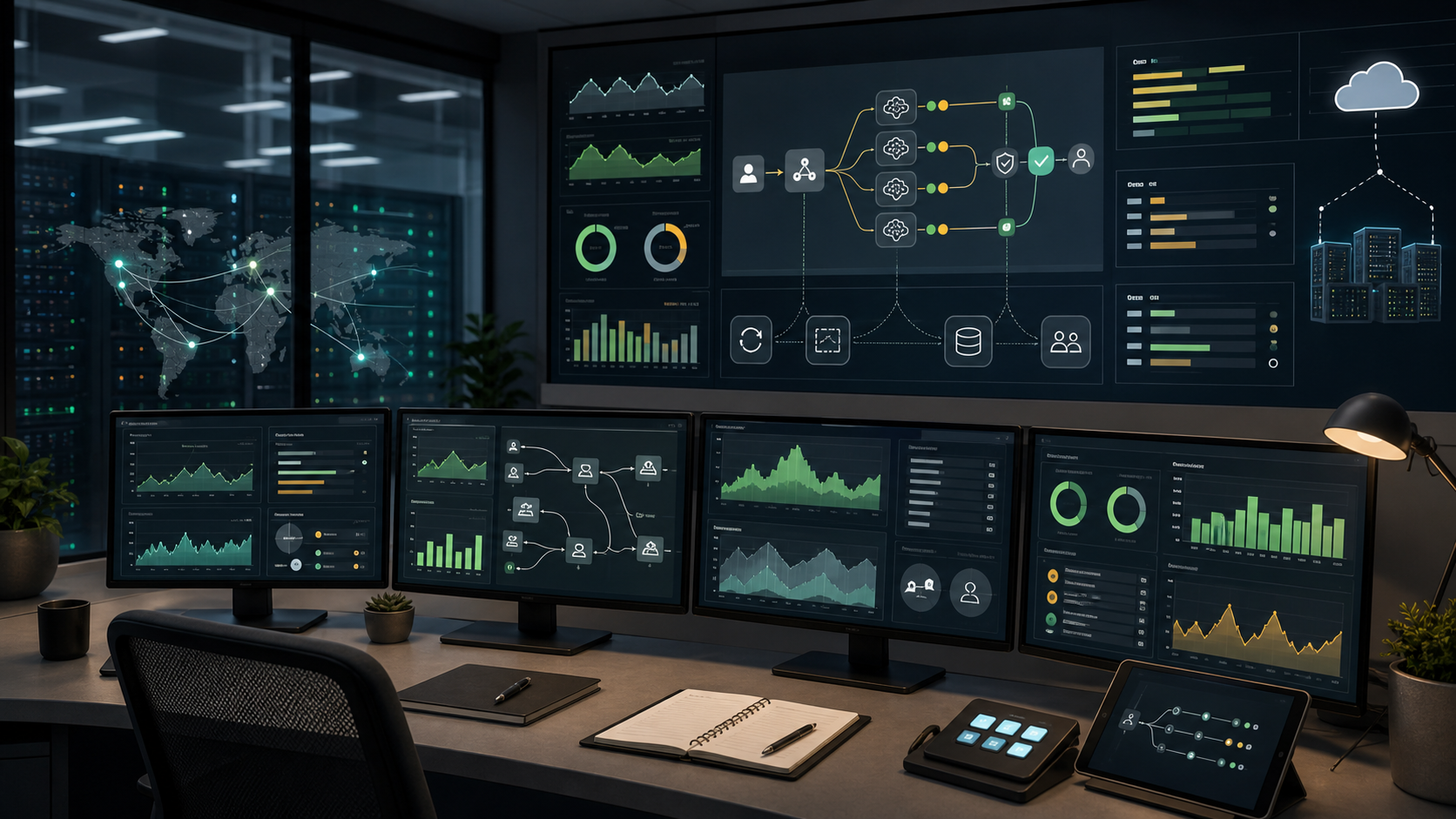
Teams should design AI workloads with explicit rate-limit handling, queueing, backoff, graceful degradation and user-visible fallback behavior. High-volume batch jobs should be scheduled with budget and quota controls rather than allowed to compete with interactive production traffic. Observability should separate model latency, provider errors, policy blocks, retry storms and application bugs so incidents are not collapsed into a vague “AI is slow” diagnosis.
For enterprise platform teams, vendor evaluation should now include capacity questions. Which regions are supported? What happens when a provider constrains usage? Are there separate limits for training, fine-tuning, retrieval-heavy workflows and agentic tool use? Can the team route lower-risk workloads to smaller or cheaper models when a premium model is constrained? What contractual commitments support business-critical throughput?
Cloud strategy implications
The lease also reinforces a multi-cloud and multi-hardware reality. Anthropic says Claude is available through AWS, Google Cloud and Microsoft Azure, but underlying capacity is still allocated across specific chips, sites and partners. For buyers, cloud marketplace availability should not be confused with unlimited interchangeable capacity.
DevOps and cloud engineers should treat model providers as production dependencies. That means measuring service-level behavior, setting internal consumption policies, logging model and provider versions, tracking cost per workflow and maintaining an incident playbook for degraded AI features. Where workloads are sensitive to latency, data residency or regulated data handling, teams should ask where traffic is processed and what failover options exist.
Teams that run their own AI infrastructure face the same lesson from the other side. GPU clusters, inference gateways and vector stores are not purely software stacks. They depend on procurement lead times, energy availability, networking, cooling density and operations staff. The TeraWulf-Anthropic deal is a large example, but the architectural pattern applies at smaller scale too.
What remains uncertain
The main uncertainty is execution. Large data-center campuses can face delays from grid interconnection, equipment supply, financing, permitting, cooling systems and local infrastructure work. TeraWulf’s filing includes standard forward-looking risk language, including risks around power availability, electrical infrastructure and timely project execution.
There is also a visibility gap. The announcement confirms the lease and expected capacity schedule, but it does not disclose how Anthropic will allocate that capacity across training, inference, research, enterprise customers or cloud partners. It also does not independently prove lower prices, higher model limits or improved uptime for developers.
The more defensible conclusion is narrower: frontier AI companies are making large, long-duration commitments for physical infrastructure because demand has outgrown the idea that capacity can simply be added on short notice. For GravityDevOps readers, that means AI reliability planning now belongs in the same conversation as cloud architecture, capacity engineering, SRE and vendor risk management.
Short FAQ
Does this lease mean Claude users get more capacity now? No. TeraWulf said initial capacity is expected in the second half of 2027, with full ramp by early 2028. Any near-term effect on Claude limits or availability was not confirmed.
Why should DevOps teams care about a data-center lease? Because AI features are becoming production dependencies. If capacity, region availability or provider limits change, application behavior, cost and reliability can change too.
What should teams do next? Review AI-dependent workflows for quota handling, fallback models, retry controls, latency monitoring, cost budgets and incident playbooks. The goal is not to avoid frontier models; it is to operate them with the same discipline used for other critical cloud services.
Sources
This article is based on TeraWulf’s July 6 Form 8-K, TeraWulf’s accompanying press release, Anthropic’s April compute partnership announcement, Business Insider’s same-day coverage and Reuters coverage syndicated by The Economic Times.


