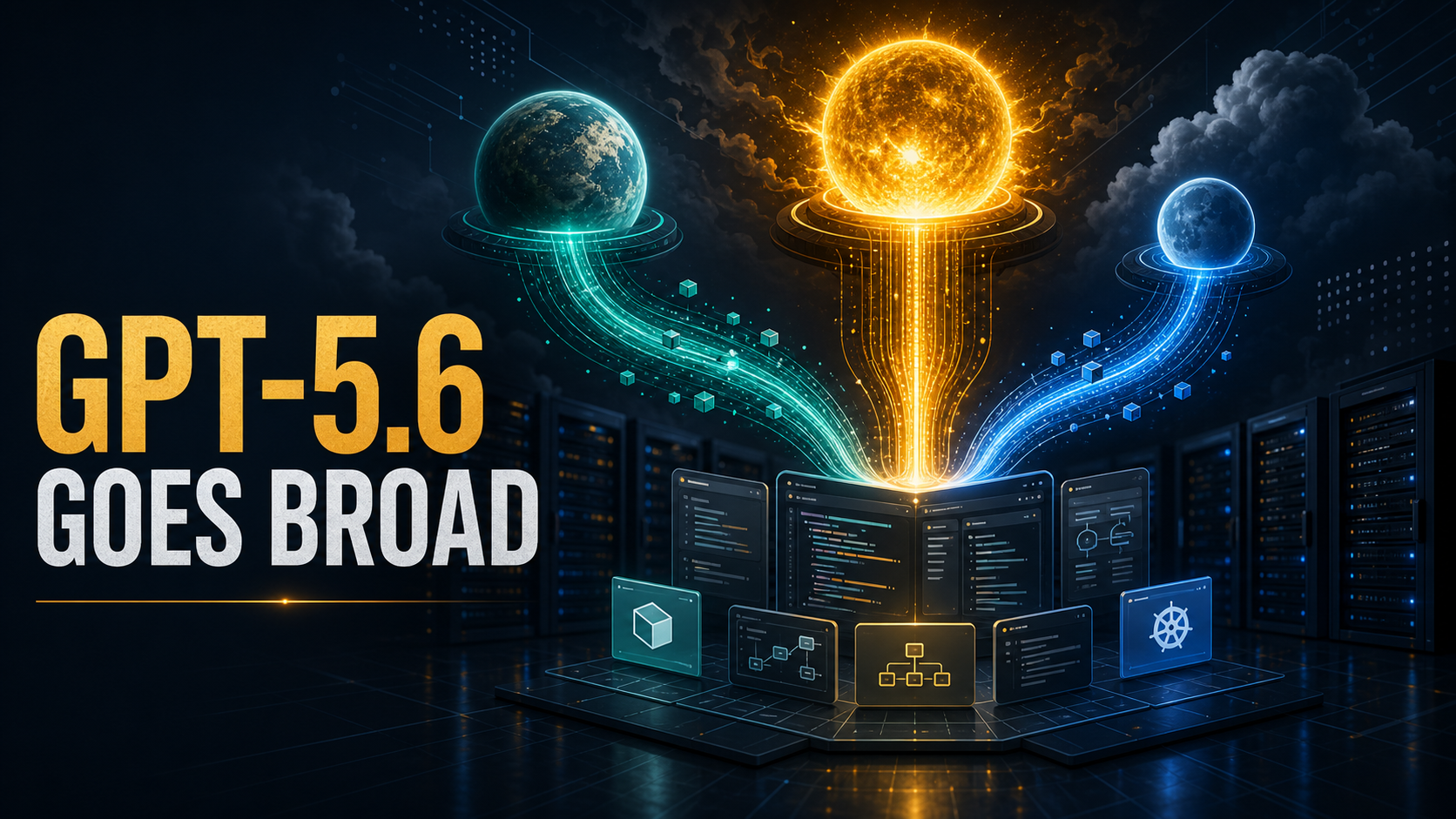

NEW DELHI, July 11, 2026, 6:00 PM IST — OpenAI has made its GPT-5.6 model family generally available across ChatGPT, Codex and the OpenAI API, giving engineering teams three new price-performance tiers and a higher-compute mode for complex, multi-agent work.
The release matters less as a routine model refresh than as a new infrastructure choice. Developers and platform teams now have to decide when the flagship Sol model is worth its higher token price, when the balanced Terra tier is sufficient, and when the lower-cost Luna model can carry high-volume workloads. OpenAI says the family improves coding, knowledge work, cybersecurity and science while using fewer output tokens, but those claims still need workload-specific validation outside the company’s published evaluations.
What OpenAI confirmed
In its July 9 product announcement, OpenAI introduced GPT-5.6 Sol as the flagship, Terra as the balanced option and Luna as the most cost-efficient tier. All three are available through the OpenAI API as well as OpenAI’s consumer and coding products.
Published API pricing is $5 per million input tokens and $30 per million output tokens for Sol, $2.50 and $15 for Terra, and $1 and $6 for Luna. Those list prices make model routing a first-order architecture decision: the spread between Luna and Sol is fivefold on both input and output, before teams account for retries, tool calls, cached context, latency and successful-task rates.
OpenAI also introduced an ultra capability setting for Sol. The company describes it as a way to coordinate multiple agents across parallel workstreams for demanding tasks. That makes the feature potentially relevant to long-running coding, research and operational workflows, but it also raises practical questions about observability, spend ceilings and review gates. Teams should treat the company’s benchmark and efficiency figures as vendor results until reproduced on their own repositories and incident patterns.
A broader launch after an unusual rollout
The general release followed a limited preview and an unusual period of government scrutiny. Reuters reported that the launch came after a delay connected to US government concerns about national-security risks from increasingly capable AI systems. Axios also reported that the rollout had been staggered, while noting disagreement over whether formal government clearance was necessary.
That context does not change the API contract, but it is relevant to enterprise risk planning. Frontier-model availability can now be affected by security review and policy decisions as well as ordinary capacity, regional and product constraints. Teams building critical workflows should preserve model abstraction, fallback paths and tested degradation modes rather than assuming permanent access to one frontier endpoint.
Microsoft’s model catalog now also lists GPT-5.6 Sol in Microsoft Foundry Models. Availability can differ by provider, region and account, so Azure customers should verify deployment support and quotas in their own subscriptions before changing production routing.
What changes for developers and platform teams
The immediate engineering task is not a fleet-wide model swap. It is a controlled evaluation using representative work: real pull requests, failing tests, infrastructure changes, security reviews and operational runbooks. A useful scorecard should measure task completion, correctness after human review, latency, tool-call reliability, output tokens, retries and end-to-end cost. A cheaper model that needs repeated correction can cost more than its rate card suggests; a stronger model can also be wasteful when a narrow task does not need it.
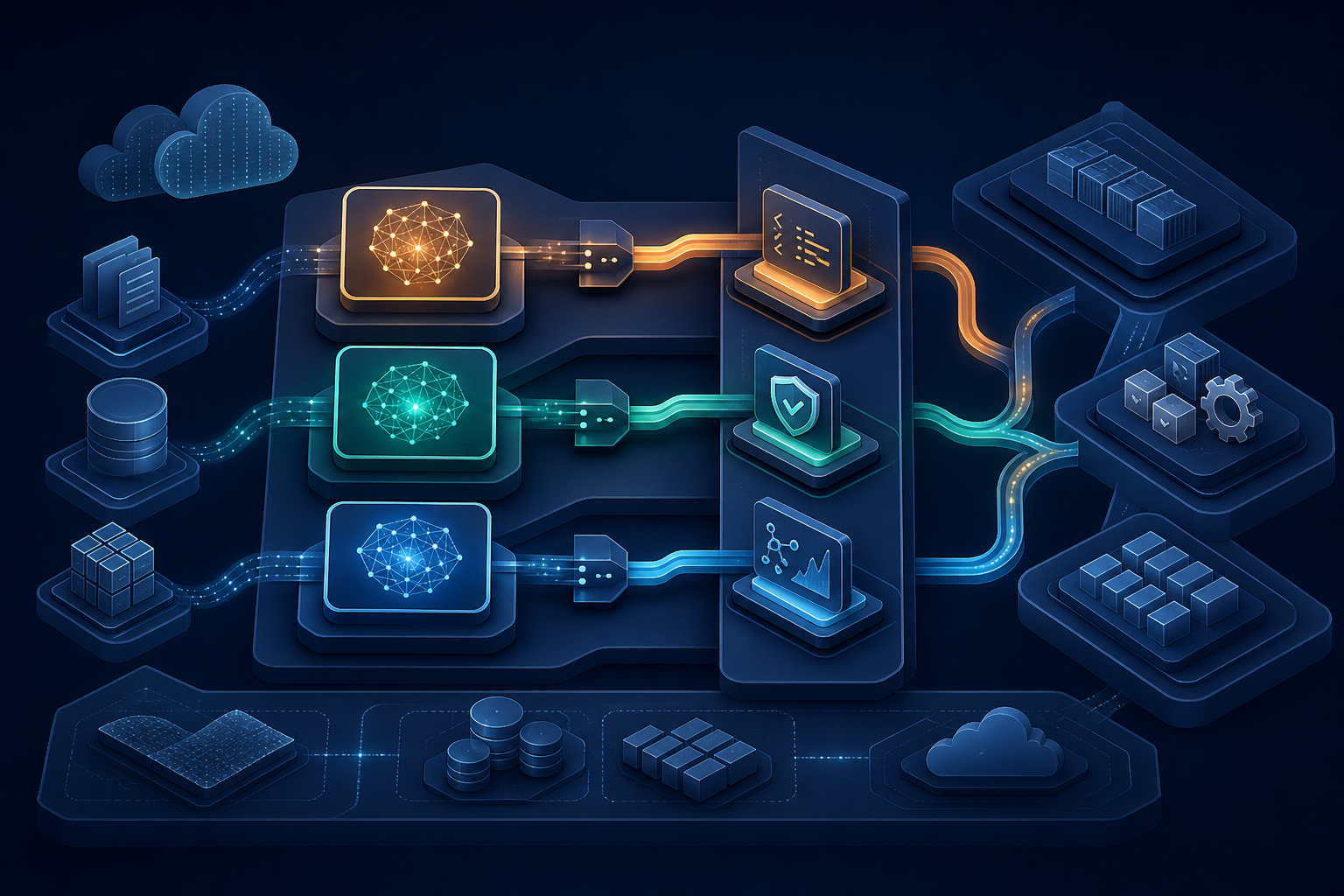
Routing is likely to become more granular. Luna may fit classification, extraction and high-volume assistance after evaluation. Terra may cover general coding and knowledge work. Sol may be reserved for difficult repository-scale changes, complex debugging, security analysis or agentic tasks where a higher success rate offsets cost. Those are deployment hypotheses, not universal recommendations.
Teams operating AI systems should also review token and concurrency budgets before enabling multi-agent execution. Parallel work can reduce elapsed time while increasing simultaneous calls, logs and failure modes. Production controls should include per-run cost limits, timeouts, tool allowlists, approval checkpoints for consequential actions, trace retention and a kill switch. GravityDevOps readers building these controls can use our background guides to LLMOps, prompt engineering for developers and retrieval-augmented generation.

Security capability needs defensive controls
OpenAI calls GPT-5.6 its strongest cybersecurity model so far and highlights defensive uses including threat modelling, code review, patching and blue-team work. Independent coverage from TechCrunch also noted the release’s emphasis on coding and cyber capability.
For security teams, higher capability is not a reason to relax controls. Model-generated patches need tests and code-owner review; agent credentials should be short-lived and least-privileged; prompts and retrieved context need data-handling policies; and tool execution should be recorded. Red-team exercises should include prompt injection, dependency confusion, secret exposure and unsafe shell or cloud actions. The model can assist an engineering control plane, but it should not become an unobserved control plane itself.
Balanced outlook
GPT-5.6 gives AI teams a wider set of deployment choices and makes the economics of model routing more explicit. The confirmed launch is significant for coding agents and cloud platforms, particularly because Sol, Terra and Luna can be evaluated under one provider family. But vendor benchmarks do not settle which tier will be best for a specific repository, compliance boundary or latency target.
The prudent response is a measured bake-off, not an automatic migration. Keep prompts, evaluations and tool interfaces portable; compare successful-task cost rather than token price alone; and promote each tier only after it meets production acceptance criteria. The launch expands the frontier, but reliable operations will still depend on the less glamorous work of testing, tracing, access control and rollback.
Sources
OpenAI’s GPT-5.6 release announcement; the Microsoft Foundry model catalog; Reuters’ frontier-model factbox; Axios launch coverage; and TechCrunch’s release report.


