

NEW DELHI, July 15, 2026, 8:20 PM IST — Oracle has opened its Fusion agent-development environment to the tools software teams already use, adding a command-line “AI Studio Skill” that works with Visual Studio Code, Git-based workflows and AI coding agents including OpenAI Codex and Anthropic Claude Code.
The expansion, announced Tuesday, is aimed at a stubborn enterprise AI problem: prototypes are increasingly easy to build, but production deployments still need identity controls, data permissions, approvals, audit trails, observability and release discipline. Oracle’s answer is to let developers work from familiar pro-code environments while packaging the resulting agentic applications for the governed runtime inside Oracle Fusion Cloud Applications.
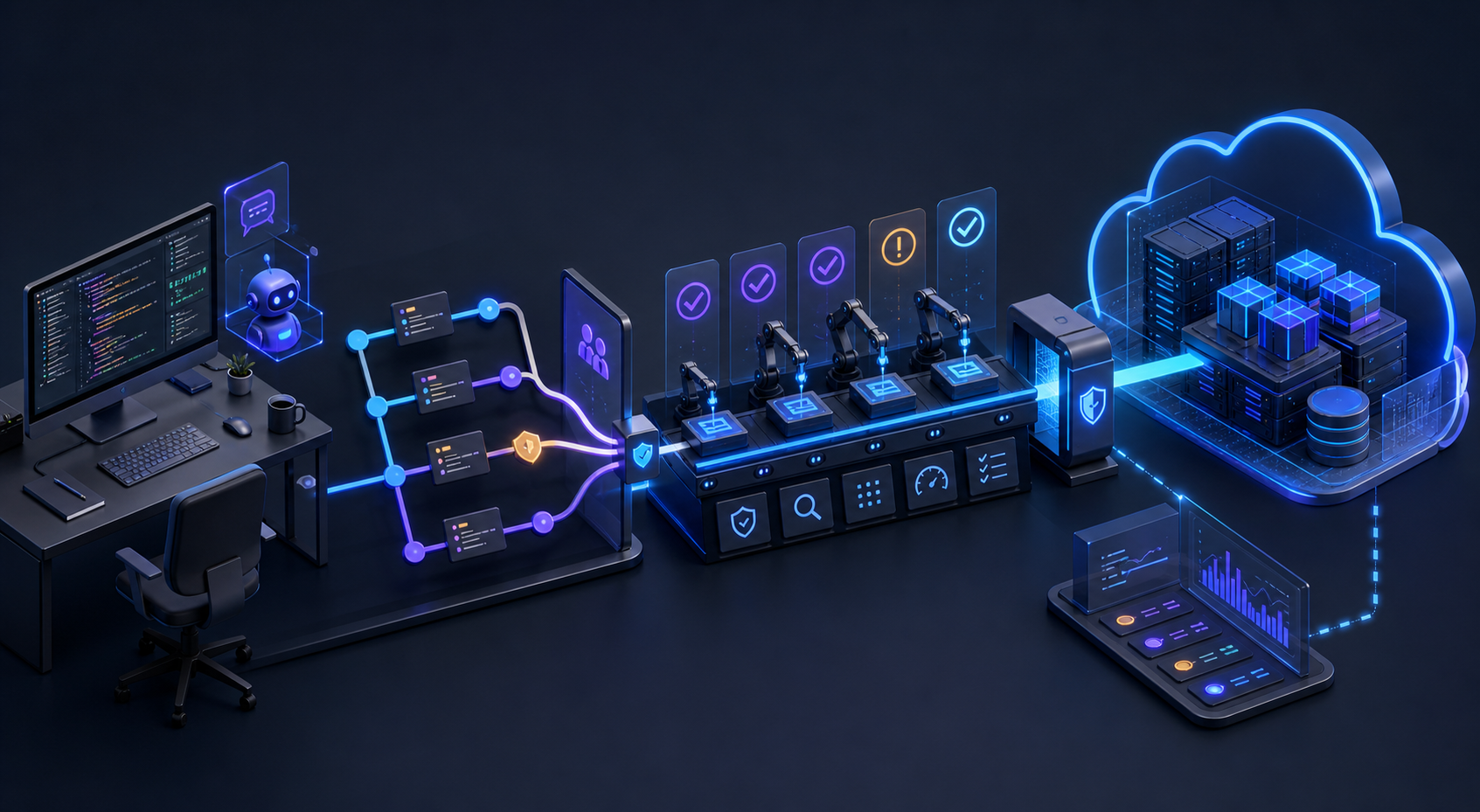
For platform engineering and DevOps teams, the important shift is not another chat interface. It is the attempt to bring agent artifacts into a conventional software lifecycle—local validation, debugging, source control and CI/CD—without separating them from the business objects and access controls they will use in production.
What Oracle confirmed
Oracle said the new builder experience combines no-code, low-code and pro-code development for what it calls Fusion Agentic Applications. These are multi-agent systems designed to execute business processes through Fusion objects, workflows, tools, policies and approval steps, with actions recorded for audit.
The new pro-code path is the AI Studio Skill, a CLI-oriented capability that developers can use with VS Code, standard command-line tools, Git and coding agents such as Codex and Claude Code. Oracle says the workflow supports local validation, debugging and CI/CD lifecycle management. A planned public GitHub repository will add starter projects, templates, sample applications and reference architectures.
Oracle also said applications built this way can run inside Fusion without a separate orchestration layer or custom runtime. They can use Oracle, partner, third-party and custom agents, while inheriting Fusion security, approvals, governance controls and auditability. The company describes the studio as available at no additional cost to Fusion Applications customers, though organizations will still need to assess their existing subscriptions, implementation work and AI consumption before estimating a production budget.
Independent reports from InfoWorld and TechTarget confirmed the new pro-code and CLI direction. Oracle’s own readiness documentation says the CLI can manage artifacts including agentic applications, workflow-style agent teams, business objects, approvals, policies, topics and related assets, and can be paired with Codex or Claude Code for natural-language-assisted development.
Why the runtime boundary matters
Agent systems are harder to operate than ordinary prompt-based assistants because they may read records, call APIs, update business objects or initiate communications. The operational risk sits at the boundary between model output and real-world action. A strong model does not remove the need for least-privilege access, change review, human approval for sensitive actions, rollback plans and traceable execution.
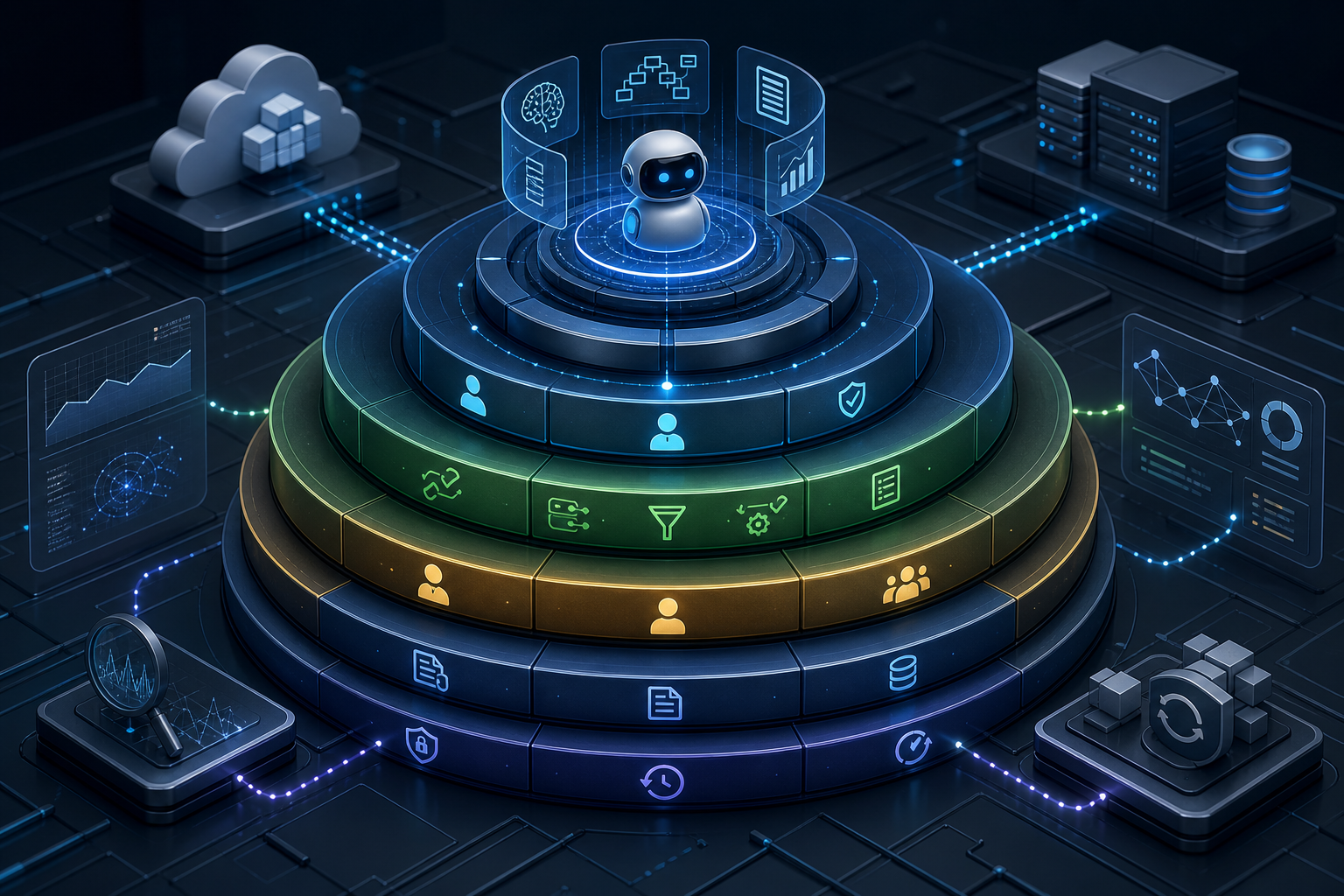
Oracle’s architecture keeps that action boundary inside Fusion. Its documentation says agents follow native role-based access controls, and builders can restrict the business objects and fields an agent may use. Teams can insert human review before actions such as sending an email or updating a record. AI Agent Studio also exposes testing information about the instructions followed and actions taken by an agent.
That design reduces some integration work, but it also increases platform dependence. Teams adopting the builder should determine which artifacts can be exported, reviewed and tested outside Fusion; how environment promotion works; what telemetry reaches their central observability stack; and how they would disable or revert a faulty agent quickly. Oracle has announced the workflow, but real-world evidence on portability, deployment ergonomics and operating cost will need to come from customer use.
What developers and platform teams should do next
Oracle Fusion customers evaluating the capability should start with one bounded workflow rather than a broad autonomous process. A suitable first candidate has clear inputs, deterministic tools, limited write permissions and an existing human approval point. Collections follow-up, employee-information routing or supply-chain exception triage may fit that pattern better than an open-ended agent with access across several modules.
Development teams should treat agent definitions, policies and tool bindings as production artifacts. Put them under review, validate them in an isolated environment and add tests for denied actions, malformed tool output, stale context and unavailable dependencies. CI/CD checks should confirm that permissions do not expand silently between releases and that approval gates remain attached to high-impact operations.
Operations teams will also need service-level indicators beyond response latency. Useful measures include tool-call failure rate, human-approval frequency, policy denials, abandoned workflows, cost per completed outcome and the rate of manual corrections. That is the practical bridge between prompt engineering and a mature LLMOps operating model.
Where agents retrieve internal documents or external knowledge, teams should separately evaluate grounding quality and source freshness. GravityDevOps’ guide to retrieval-augmented generation covers that data path; it should not be confused with the authorization path that controls whether an agent can act.
Context and open questions
Oracle introduced AI Agent Studio for Fusion Applications in March 2025 and expanded it in March 2026 with workflow orchestration, contextual memory, monitoring and an agent ROI dashboard. The latest release moves the development surface closer to mainstream software engineering by adding coding-agent and Git workflows.
The company says customers can extend more than 1,000 AI agents delivered through Fusion Applications and 22 Fusion Agentic Applications released earlier this year. Those counts are Oracle’s figures, not independently audited measures of production adoption or business value.
The central question now is whether enterprise teams can preserve normal engineering controls while moving faster. Native governance is useful, but it does not substitute for threat modeling, independent testing, staged rollouts or incident response. Platform teams should judge the new tooling by the evidence it produces: reviewable changes, reproducible deployments, enforceable permissions and complete action logs.
Sources
Primary sources: Oracle’s July 14 announcement, Oracle’s AI Agent Studio CLI readiness note, and Oracle AI Agent Studio documentation. Independent reporting: InfoWorld and TechTarget.


