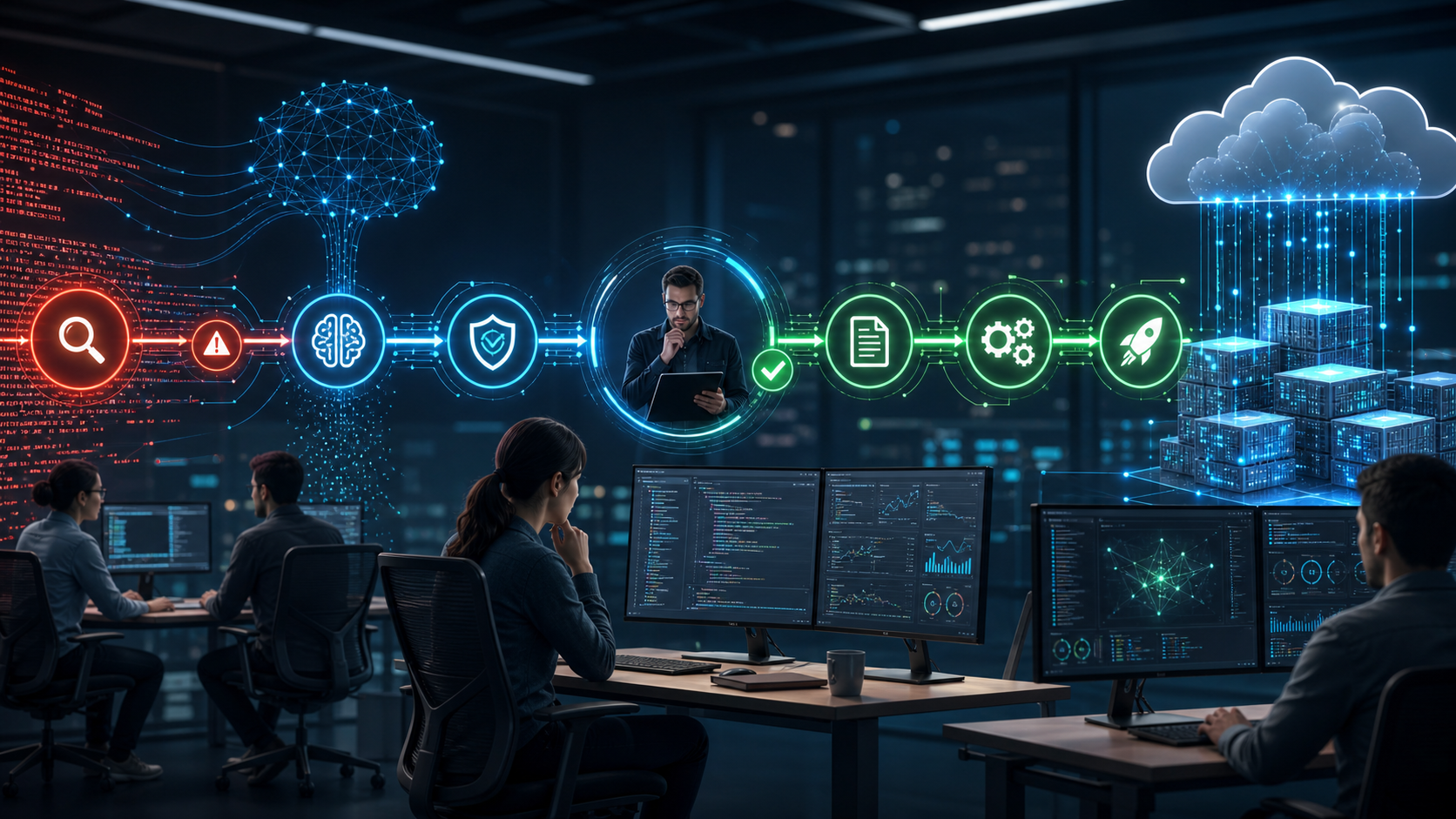

SEO excerpt: OpenAI’s Daybreak expansion, AP’s reporting on Anthropic Mythos, and SoftBank’s OpenAI-powered patching service show AI-assisted cyber defense moving closer to real DevOps workflows. Here is what developers, platform teams and cloud security leaders need to know.
Dateline: Bengaluru, India, June 24, 2026, 9:45 AM IST
AI-assisted cybersecurity moved from abstract benchmark talk toward operational reality this week, as OpenAI expanded its Daybreak security program and AP reported that Anthropic’s Mythos model identified vulnerabilities in classified U.S. government systems during authorized testing.
The news matters for software and infrastructure teams because the center of gravity is shifting from “Can AI find bugs?” to “Can engineering organizations safely validate, prioritize and land AI-assisted fixes?” For DevOps teams, the practical answer is likely to depend less on model hype and more on familiar controls: repository permissions, CI gates, human review, audit trails, rollback paths and vulnerability management discipline.
Key Developments
OpenAI said on June 22 that it is expanding Daybreak with an updated Codex Security plugin, a limited release of GPT-5.5-Cyber for trusted defenders, a cybersecurity partner program and an open-source maintainer effort called Patch the Planet. The company said the Daybreak initiative is intended to help defenders find, validate and remediate software vulnerabilities.
Separately, the Associated Press reported that Anthropic’s Mythos model identified vulnerabilities in classified U.S. government systems during authorized testing with U.S. intelligence agencies. AP said the model found vulnerabilities within hours, while also reporting that the NSA and Anthropic declined comment.
SoftBank added a commercial signal earlier this month by announcing an OpenAI-powered “Patching as a Service” offering for selected Japanese critical-infrastructure organizations. The service is positioned around vulnerability assessment, remediation planning and implementation support, not broad autonomous access to production systems.
What OpenAI Announced
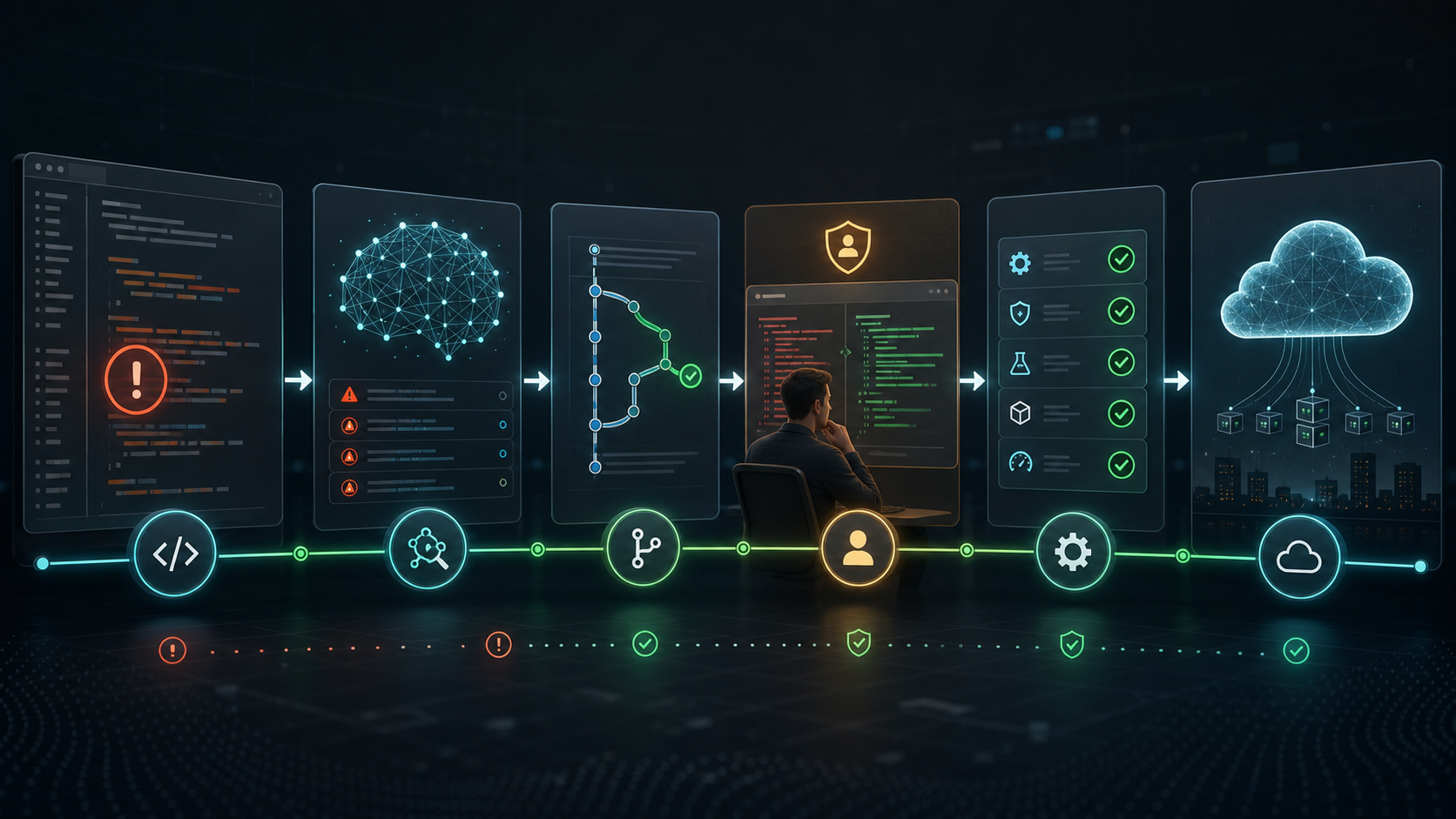
OpenAI’s Daybreak update frames AI security work around the full remediation lifecycle. The company says Codex Security has scanned more than 30 million commits across more than 30,000 codebases since its research preview, with human reviewers marking more than 70,000 findings as fixed.
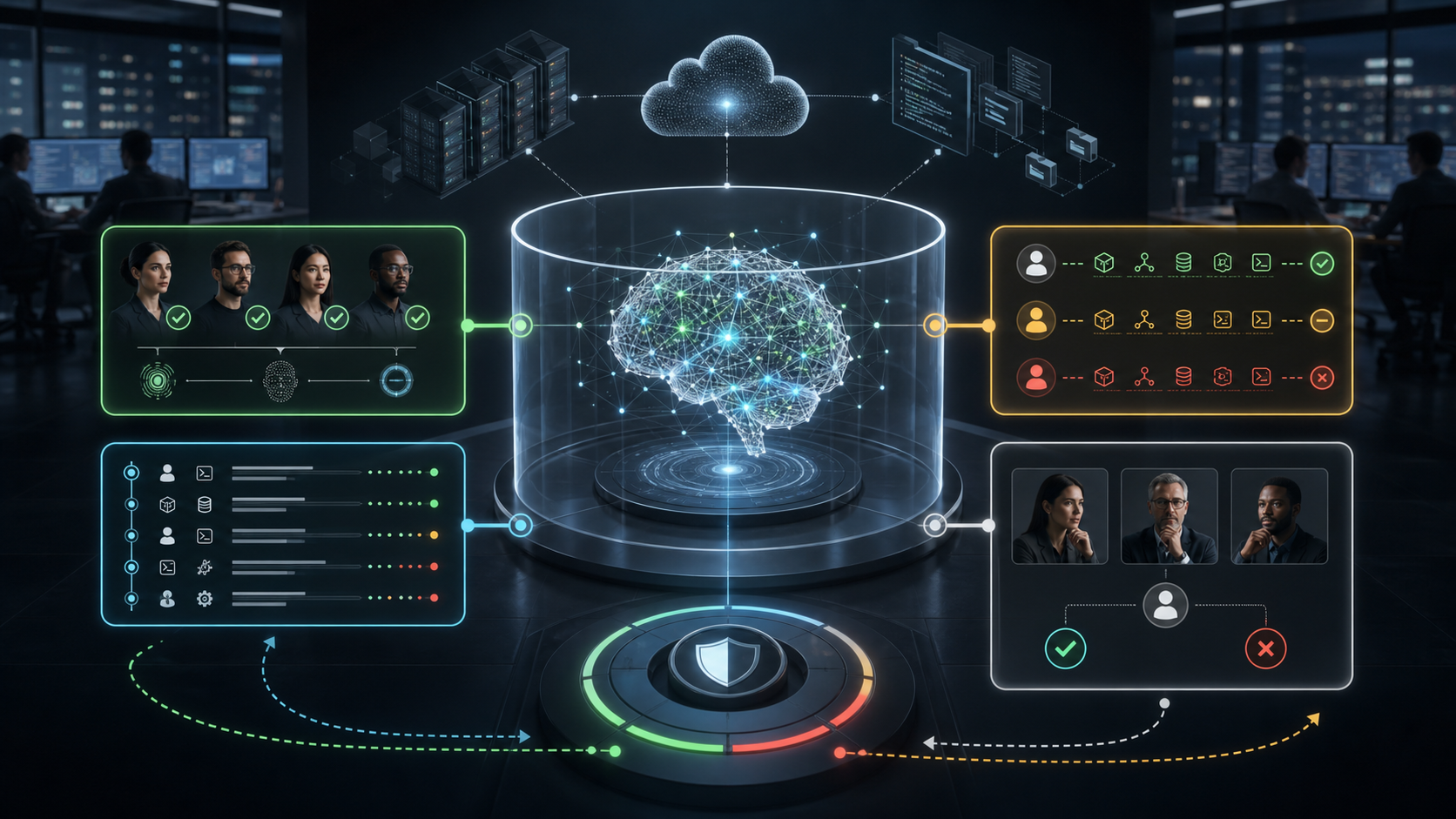
The addition of GPT-5.5-Cyber is especially relevant for security teams because OpenAI is not describing it as a general public chatbot release. The company says the model is being made available through limited access for trusted defenders. That access pattern reflects a broader industry tension: advanced cyber-capable models may help defenders move faster, but the same capabilities can raise misuse concerns if access is not governed.
Patch the Planet is the part of the announcement most relevant to open-source maintainers. OpenAI says the effort is meant to help important open-source projects address vulnerabilities. For maintainers, the quality of reports will matter more than the number of reports. A useful AI-assisted finding should include reproduction detail, affected versions, a focused patch, test coverage and a responsible disclosure path.
What AP Reported About Anthropic Mythos
AP’s report says Anthropic’s Mythos model was used in an authorized test involving U.S. intelligence agencies and classified systems. According to the report, the model identified vulnerabilities in a short time window.
That is significant, but it should be read carefully. The public report supports the conclusion that frontier models are becoming more capable at security analysis under controlled conditions. It does not establish that the model independently breached systems in an uncontrolled environment. Vulnerability discovery, exploit validation and autonomous compromise are different technical claims.
The Anthropic context also includes Project Glasswing, which the company expanded earlier this month to roughly 150 organizations in more than 15 countries. Anthropic has positioned Glasswing as a program for helping important organizations adapt to advanced AI-enabled cyber capabilities. The company also announced Claude Fable 5 and Claude Mythos 5 in June, with Mythos described for trusted cybersecurity access.
Why DevOps Teams Should Pay Attention
Developers may soon see more AI-generated security evidence in pull requests, bug reports and vendor findings. Platform teams may need to decide where AI security scans run, what repositories they can read, whether they can open branches and how results should flow into ticketing systems. Cloud teams may be asked to connect AI security tooling to asset inventory, runtime telemetry, IAM data and vulnerability platforms.
The opportunity is real. AI systems can help trace code paths, summarize risk, draft patches, generate tests and compare a proposed fix against a broader codebase. That can reduce the time between finding a vulnerability and shipping a safe fix.
The risk is also real. AI-generated reports can be noisy. Proposed patches can be plausible but wrong. A model given too much access may expose secrets, inspect unrelated repositories or generate sensitive proof-of-concept material without the right approvals. For DevOps leaders, the issue is not whether AI security tools will appear. It is whether they will be integrated with the same rigor as other privileged automation.
Practical Impact For Engineering Teams
Security and platform teams should treat AI cyber tools as controlled automation, not as ordinary chat assistants. Repository access should be scoped. Secrets should be protected. Model activity should be logged. Any generated patch should land on a branch and pass the same CI, review and deployment gates as human-written code.
A realistic pilot should start in a non-production repository with read-only scanning. Teams can compare AI findings against existing scanners, require human validation, let the tool draft branch-only patches and measure false positives, patch quality, reviewer effort and time saved. If the pilot works, teams can expand slowly into ticketing integration, code-owner review, vulnerability management and release workflows.
The most useful metric is not how many issues the model finds. It is how many validated vulnerabilities are fixed safely without increasing operational risk.
Timeline
- June 2, 2026: Anthropic announced an expansion of Project Glasswing to about 150 organizations across more than 15 countries.
- June 9, 2026: Anthropic announced Claude Fable 5 and Claude Mythos 5, positioning Mythos for trusted cybersecurity access.
- June 12, 2026: Anthropic said a U.S. government directive required access suspension for Fable 5 and Mythos 5 by foreign nationals while compliance work continued.
- June 16, 2026: SoftBank announced an OpenAI-powered Patching as a Service offering for eligible Japanese critical-infrastructure companies.
- June 22, 2026: OpenAI expanded Daybreak with GPT-5.5-Cyber, Codex Security updates, a partner program and Patch the Planet.
- June 23-24, 2026: AP reported that Anthropic’s Mythos model identified vulnerabilities in classified U.S. systems during authorized testing.
What Remains Unclear
The public record does not include enough detail to independently evaluate the exact government test conditions described in the AP report. It is unclear what access the model had, what supporting tools were used, what counted as a successful finding and how much human direction was involved.
It is also too early to treat vendor benchmark claims as a substitute for internal evaluation. OpenAI reported strong results for GPT-5.5-Cyber on security benchmarks, but enterprises should still test tools against their own languages, frameworks, repositories, threat models and review policies.
The clearest takeaway is operational rather than speculative: AI-assisted cyber defense is becoming credible enough that DevOps teams should prepare governance, not wait for perfect certainty.
Related GravityDevOps Guides
- What is LLMOps? for operating AI applications with evaluation, monitoring and governance.
- Best CI/CD Tools 2026 Compared for thinking about where AI-assisted checks fit in delivery pipelines.
- Prompt Engineering for Developers for writing clearer task instructions and review criteria.
- What is RAG? for teams grounding AI security assistants in private documentation and runbooks.
- What is Generative AI? for readers who want the broader foundation.
FAQ
What is OpenAI Daybreak?
Daybreak is OpenAI’s cybersecurity initiative for helping approved defenders find, validate and remediate software vulnerabilities. The June 22 expansion includes GPT-5.5-Cyber, Codex Security updates, a partner program and Patch the Planet for open-source projects.
What did Anthropic Mythos reportedly do?
The Associated Press reported that Anthropic’s Mythos model identified vulnerabilities in classified U.S. government systems during authorized testing with U.S. intelligence agencies. The report describes vulnerability discovery, not an uncontrolled breach.
Should AI patch production systems automatically?
Not without strict controls. AI can help draft patches and tests, but production changes should still pass through human review, CI/CD gates, security approval, monitoring and rollback planning.
How should DevOps teams start?
Start with a non-production repository, read-only scanning, human validation, branch-only patch drafts and full CI testing. Expand only after measuring false positives, patch quality and reviewer workload.
Sources
- OpenAI: Daybreak, tools for securing every organization in the world
- Associated Press: Anthropic Mythos vulnerabilities report
- Anthropic: Expanding Project Glasswing
- Anthropic: Claude Fable 5 and Claude Mythos 5
- Anthropic: Statement on the U.S. government directive to suspend access
- SoftBank: Patching as a Service powered by OpenAI


