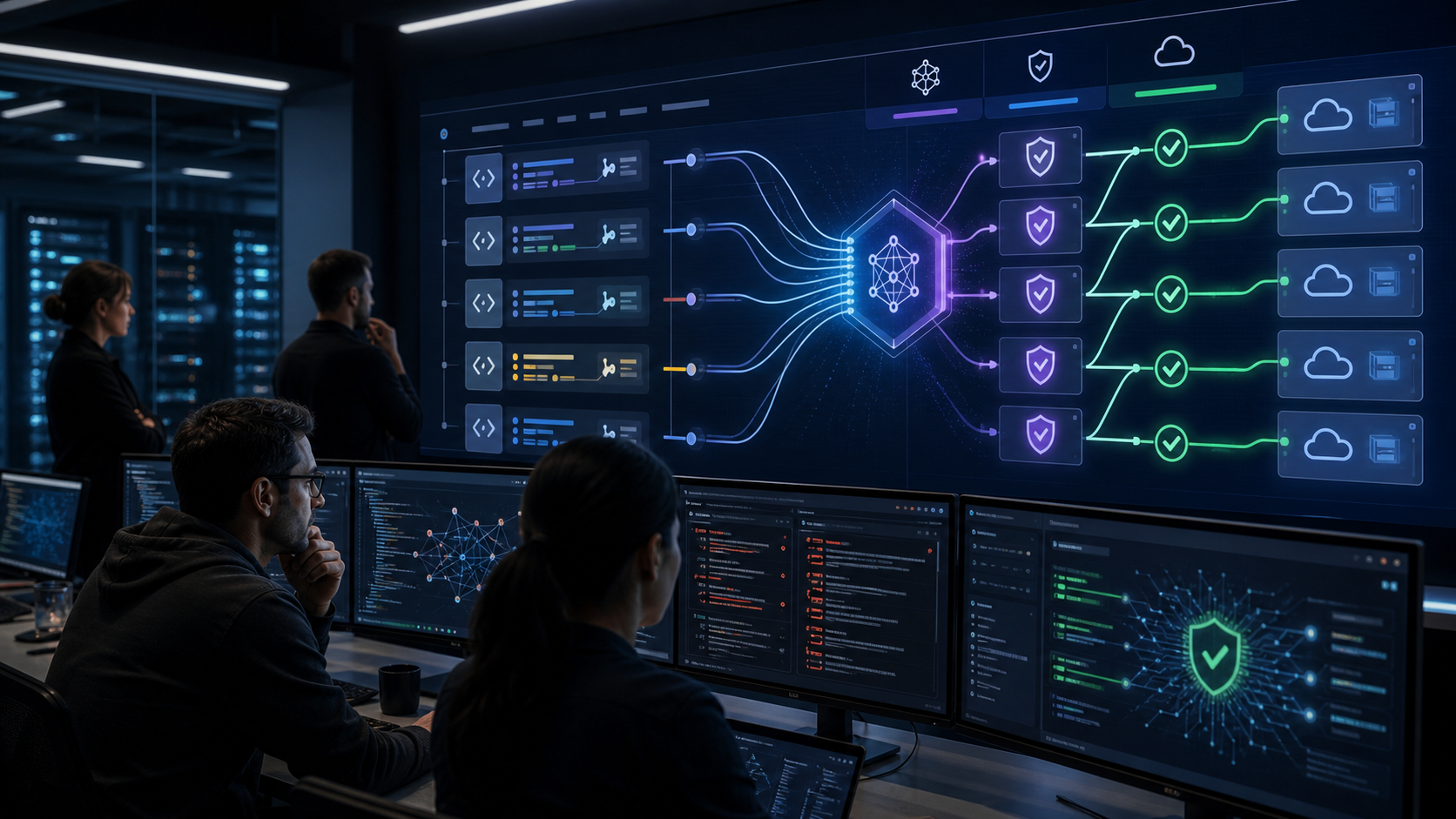

Alberta used Claude Code to review 466 million lines of government code, offering a practical DevSecOps blueprint for AI-assisted security reviews.
BENGALURU, India, July 7, 2026, 12:14 PM IST – Anthropic published a new case study saying Alberta’s Ministry of Technology and Innovation used Claude Code to scan 466 million lines of government code in about 20 hours, a deployment that puts agent-assisted security review closer to a production DevSecOps pattern than a lab demo.
The finding matters because the work described by Anthropic and Alberta’s own Git Insights white paper is not only about faster code search. It combines repository inventory, deterministic rules, AI judgment, human verification, test generation and remediation planning across a large legacy estate. That is the kind of operating model platform teams will have to evaluate as AI coding agents move into security-sensitive software delivery.
What Is Confirmed
Anthropic said the Alberta team used Claude Code with Opus and Sonnet models across roughly 3,400 repositories and about 1,280 applications maintained for 27 provincial ministries. The review covered security vulnerabilities, infrastructure and deployment weaknesses, documentation gaps and modernization candidates.
The Alberta white paper describes the system as Git Insights, an agentic tool built to read the government’s GitHub Enterprise estate and report what is actually present. It says 50 agents processed the codebase in roughly 20 hours, producing repository-level analysis that could be audited against the underlying files.
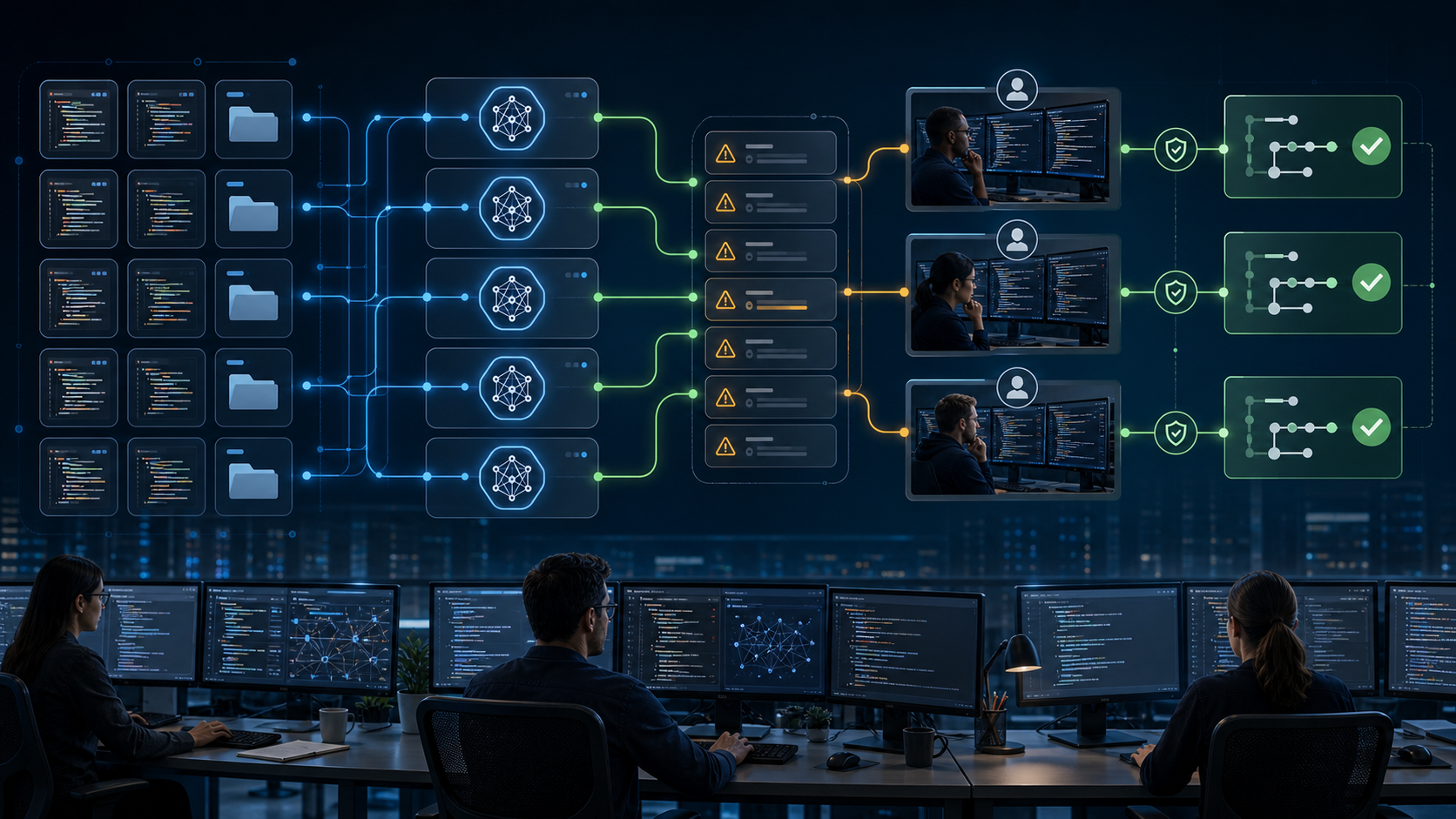
Both sources describe a two-stage review pattern. A conventional rules engine first flags known patterns, then an AI agent examines those flags and must provide specific evidence, including the file and line for developers to check. Anthropic says engineers reviewed and approved fixes before anything shipped.
Why This Is A DevOps Story
The headline number is the code volume, but the more useful signal for GravityDevOps readers is the workflow design. Alberta did not treat an AI model as a replacement for static analysis, code owners or release gates. It used AI to expand the review surface, then kept deterministic checks, human review and auditability in the loop.
That distinction is important for teams already running LLMOps, platform engineering and DevSecOps programs. AI-generated findings are not useful unless they can be routed into the same systems that handle ownership, risk scoring, tests, pull requests and change approval. A vulnerability report that cannot name a file, explain severity or survive review becomes noise.
The white paper also says the agents ran on Google Enterprise Agent Platform and that throughput was increased to support the analysis. For cloud teams, that points to an emerging infrastructure requirement: large agentic reviews need quotas, retry behavior, resumable scans, central logging, evidence retention and cost controls. They are closer to batch data processing and CI orchestration than a simple chatbot session.
Technical Background
Traditional scanners already catch many dependency, secret and code-pattern issues, but they struggle to connect fragmented inventories, missing documentation and inconsistent engineering standards across thousands of repositories. Alberta’s paper says its estate included records spread across GitHub, Jira, Confluence, incident systems, SharePoint and spreadsheets, with no single key tying everything together.
That is where agentic review can add value if it is constrained well. The AI can summarize unfamiliar repositories, connect clues across files, draft documentation, identify missing tests and propose fixes. But the control plane around it still has to decide what counts as evidence, which findings are accepted, who owns remediation and how approved changes reach production.
This is similar to the difference between a promising prompting workflow and an operational system. Production teams need repeatability, reviewability and failure handling. In some cases, retrieval patterns such as RAG can also help ground agents in internal standards, security policies and architecture records, but grounding does not remove the need for verification.
Practical Impact For Teams
For developers, the near-term impact is likely a wider security backlog, not instant automation. If an agent can inspect more code than a human team could reach manually, the first outcome may be a clearer map of technical debt, missing tests and inconsistent controls. That is useful, but only if leadership funds the remediation work that follows.
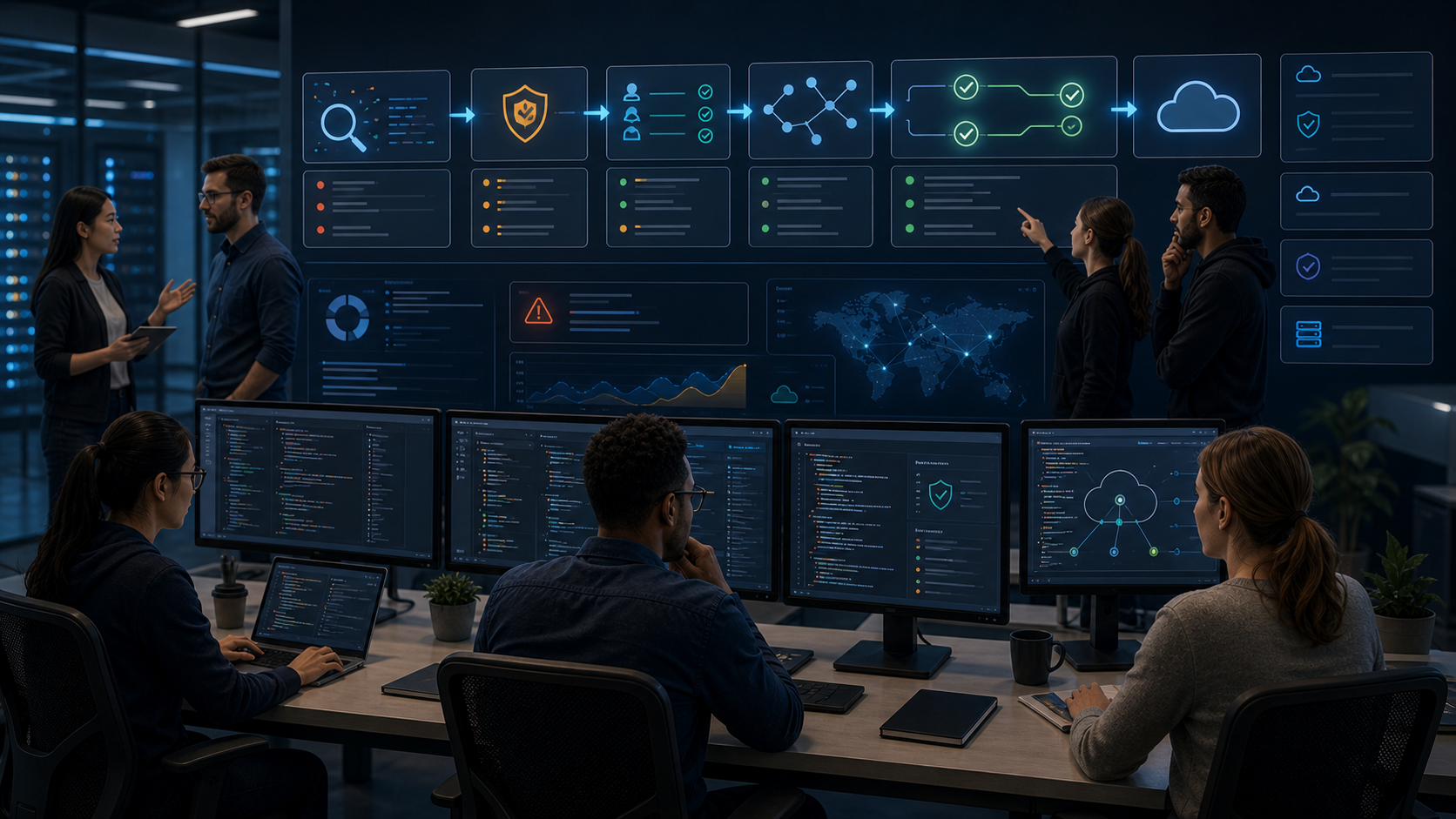
For DevOps and platform teams, the case study suggests several implementation requirements. Agent scans should run as controlled jobs, not ad hoc local experiments. Findings should be deduplicated, tied to owners, linked to source evidence, prioritized by exploitability and tracked through the same issue and release systems used for normal engineering work.
For cloud engineers, quota planning and governance become central. Alberta’s described workload used parallel agents and high token throughput. In enterprise environments, similar runs would need budget alerts, tenant isolation, source-code handling rules, access controls, prompt and output logging, and clear policies for where model providers may process sensitive code.
Limits And Open Questions
The case study is still a vendor-published customer story, even though Alberta has released technical papers of its own. Teams should treat the reported timelines and productivity comparisons as evidence from one environment, not as a universal benchmark. Legacy codebases, testing maturity, language mix and approval requirements vary widely.
There are also security tradeoffs. AI systems that can inspect whole estates may help defenders find weak points, but similar capabilities can help attackers reason across exposed repositories, leaked code or misconfigured systems. That makes access control, logging and red-team review part of the deployment plan, not a later compliance task.
The strongest lesson is procedural. AI-assisted security review becomes credible when every important claim points back to source evidence, every proposed patch is tested, and every production change remains subject to human approval. Without those controls, faster scanning can simply create faster uncertainty.
Timeline And Context
Anthropic published the Alberta case study on July 6, 2026. The Alberta white paper says the Git Insights effort followed a need to understand a code estate that had become difficult to inventory through existing systems. Anthropic says Alberta plans to expand the work through additional agents and broader modernization programs.
For readers comparing this with current AI engineering practice, the story fits a broader shift: agentic AI is moving from individual coding assistance toward managed workflows that touch CI/CD, security review, documentation, migration planning and operational governance. Teams evaluating AI-assisted delivery should compare those tools with the same discipline they use for CI/CD tooling: reliability, audit trails, policy controls and measurable outcomes matter more than headline speed claims.
Sources
This article is based on Anthropic’s July 6 case study, Government of Alberta uses Claude to find and fix cybersecurity vulnerabilities across government systems, and Alberta’s technical white paper, Git Insights. GravityDevOps also reviewed recent site coverage to avoid repeating previously published AI news topics.


