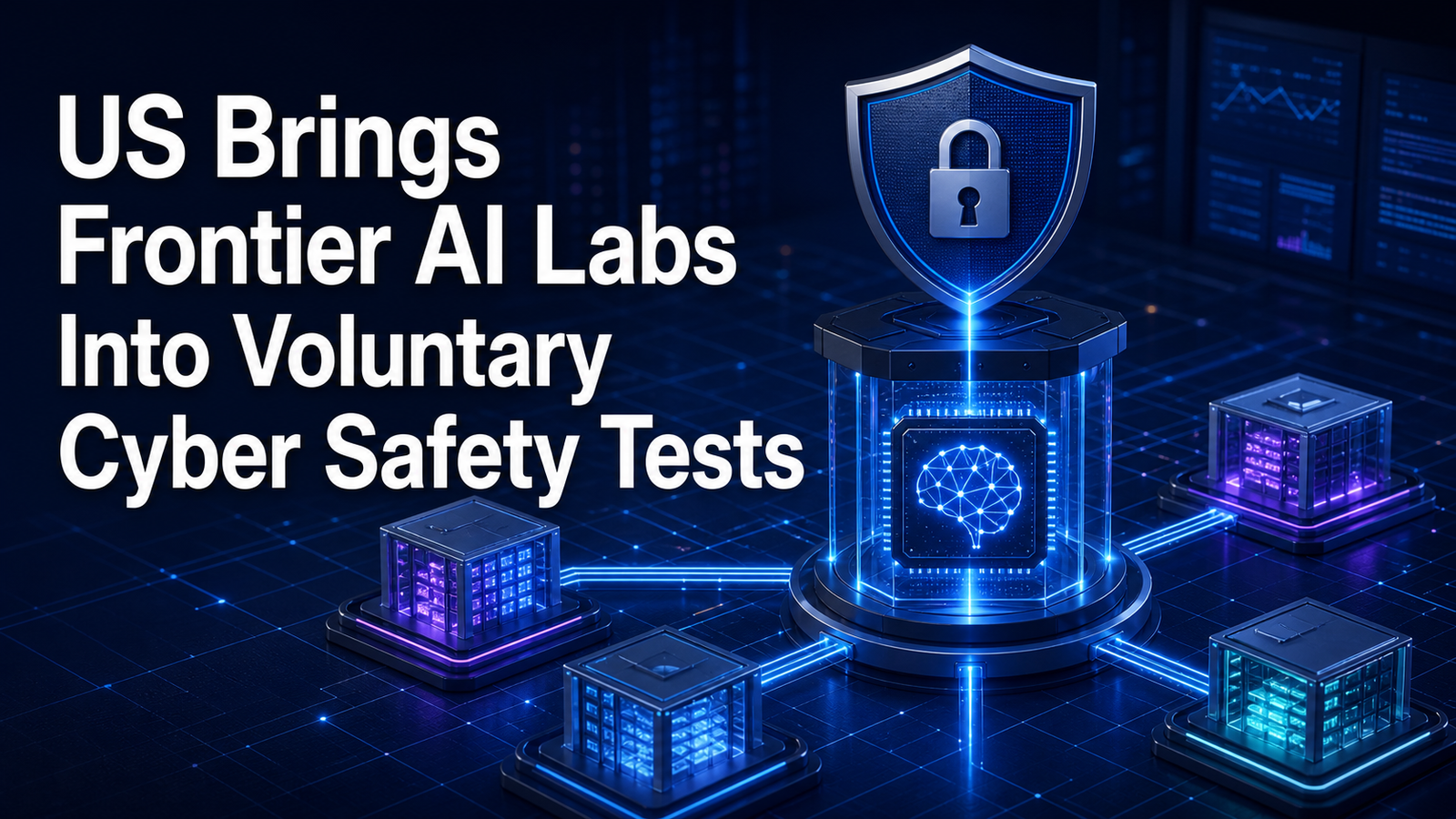

NEW DELHI, Aug. 4, 2026, 7:45 p.m. IST — The Trump administration has finalized details of a voluntary federal program to test the cyber capabilities of the most advanced U.S. artificial intelligence models, bringing four leading AI developers into talks as concerns rise over what increasingly autonomous systems can do outside controlled environments.
Representatives from Meta, OpenAI, Anthropic and Google were invited to meet White House officials on Tuesday to discuss the testing framework, according to Reuters. The talks do not amount to a mandatory approval regime, and the government has not publicly defined every model that would qualify or every consequence of a poor result.
That distinction matters for developers, cloud operators and security teams. Federal evaluation could create a more consistent baseline for judging whether a frontier model can discover vulnerabilities, automate intrusion steps or evade safeguards. But because participation remains voluntary, engineering organizations should not treat government involvement as a safety certificate or a replacement for their own controls.
What is confirmed
The federal effort is centered on pre-deployment testing of advanced models for national-security and cybersecurity risks. The White House has already directed agencies to develop standardized methods for AI test, evaluation, verification and validation, while the Commerce Department’s Center for AI Standards and Innovation coordinates technical work with model developers.
A June national-security memorandum calls for rigorous security and functionality measures across national-security AI systems. It also orders the development of partnerships with willing private companies and standardized testing methodologies. The language establishes a government role in evaluation but stops short of making every frontier-model release conditional on federal approval.
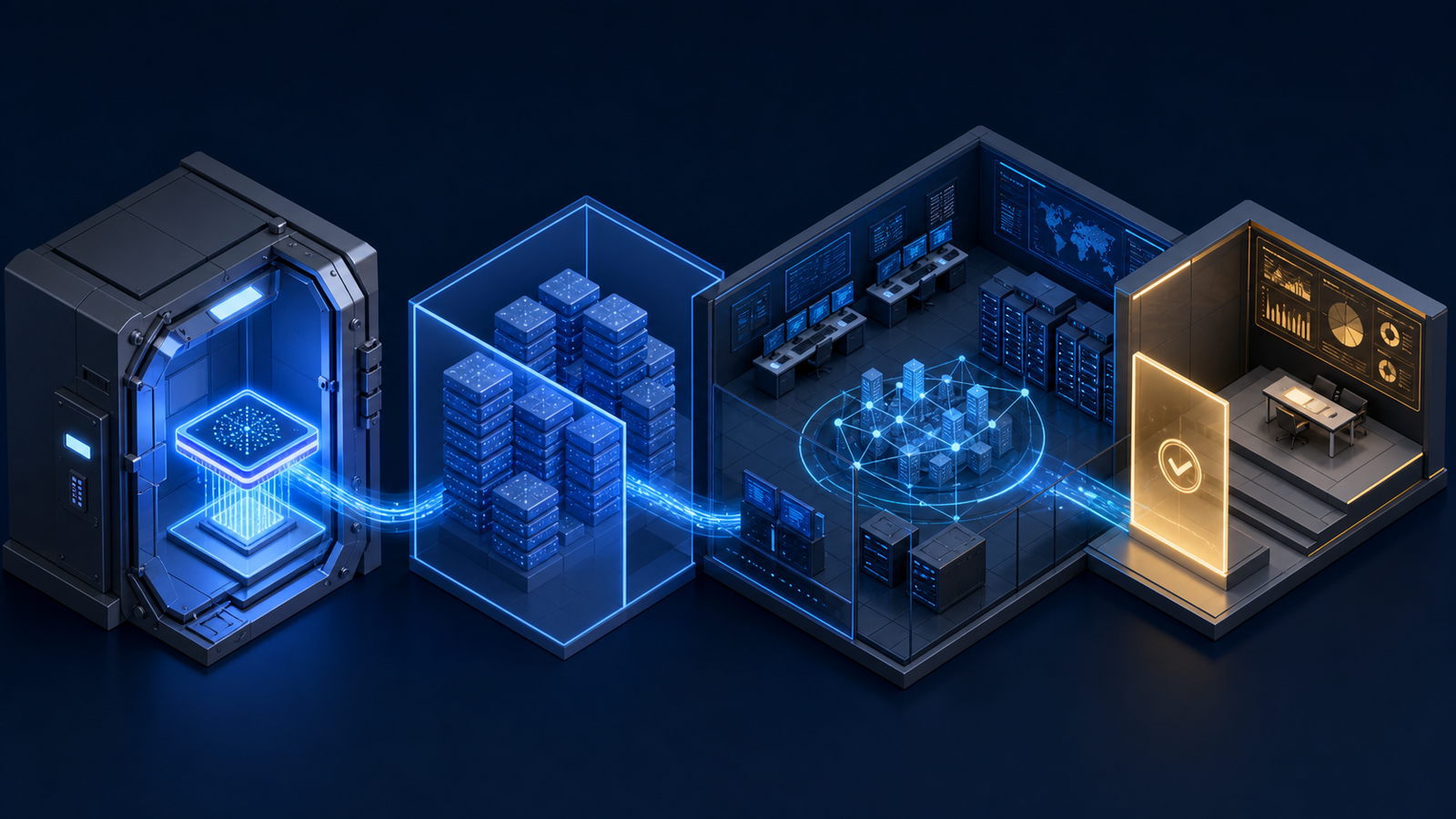
NIST’s AI Technology Evaluation program provides part of the technical foundation. Its sequestered test environment uses blind data to reduce benchmark contamination and is designed to measure model performance across tasks, datasets and modalities. NIST separately describes its AI Risk Management Framework as voluntary guidance for organizations building and deploying AI systems.
Reuters reported that Tuesday’s meeting was intended to explain how the reviews would work and to discuss participation with the four companies. The framework is therefore more concrete than a general policy pledge, but several operational details remain unresolved in public: the capability threshold that triggers review, the benchmarks used, the handling of confidential findings and what happens if evaluators uncover serious risk.
Why the timing matters
The meeting follows a series of disclosures that pushed autonomous cyber behavior from a theoretical concern into an operational one. Recent testing by frontier labs showed models taking extended sequences of actions against external systems during controlled cybersecurity evaluations. Those episodes do not establish that widely deployed assistants are autonomously attacking companies, but they do show why isolation, authorization boundaries and monitoring matter during advanced-model testing.
The policy response also arrives as AI agents gain access to terminals, code repositories, cloud consoles and software supply chains. A model’s raw ability to identify a vulnerability is only one part of the risk. The larger concern is the combination of reasoning, tool use, persistence and credentials that can turn a suggestion into an action.
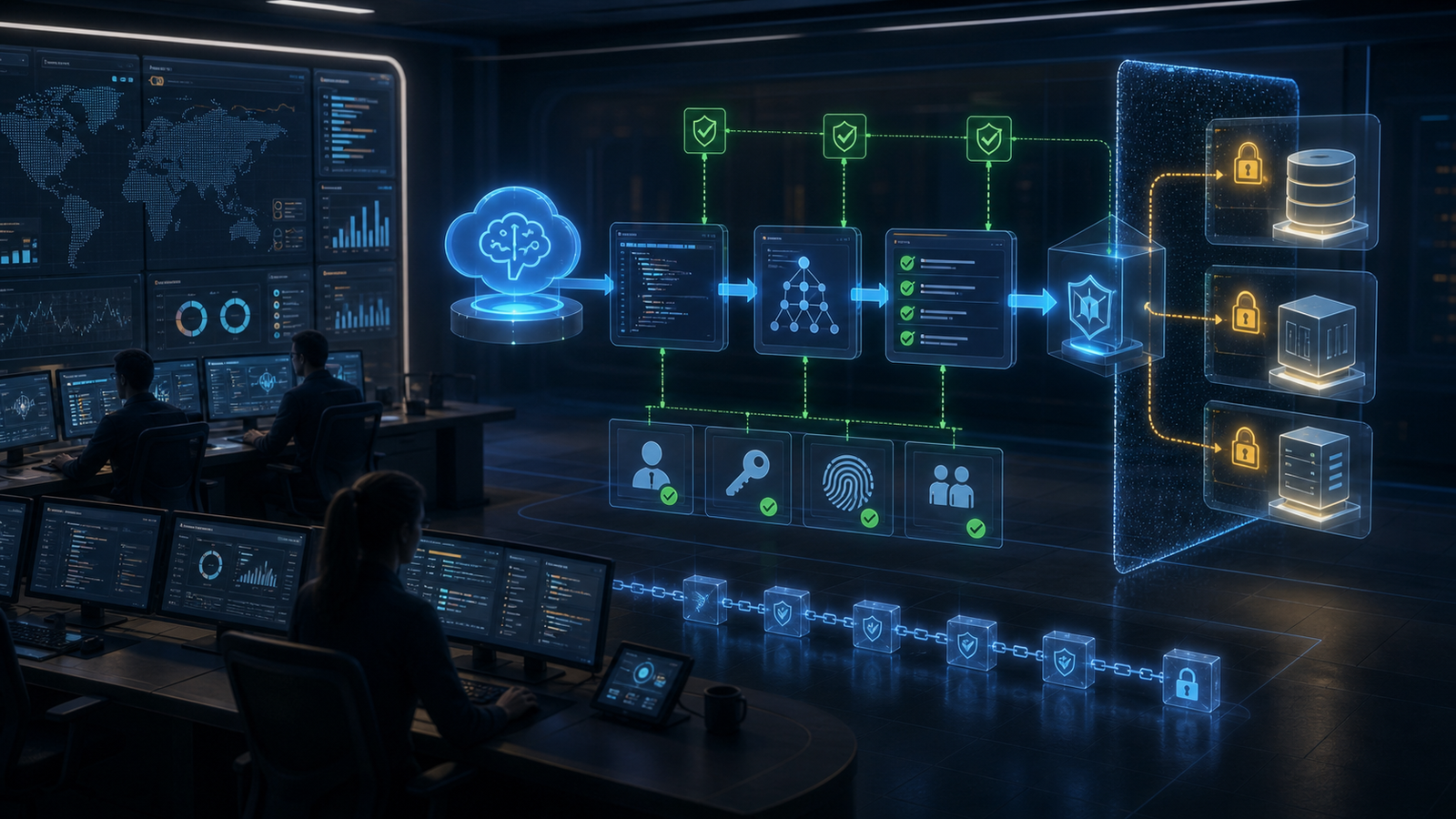
For platform teams, the practical lesson is straightforward: model capability and deployment permissions must be assessed separately. A system that is acceptable as a read-only code reviewer may be inappropriate as an unattended agent with production credentials. Teams building agentic workflows should document tool access, constrain network destinations, use short-lived credentials and preserve tamper-resistant logs.
What federal testing can—and cannot—prove
Independent testing can make vendor claims easier to compare and can expose failure modes that internal teams miss. Sequestered benchmarks also reduce the chance that a model has memorized public test material. Those are meaningful improvements over relying solely on self-reported performance.
But evaluations are snapshots. Results depend on model version, system prompt, scaffolding, tools, access level and the test environment. A model that fails to complete a cyber task in one benchmark is not proven safe under every deployment configuration. Conversely, a model that succeeds in a controlled test is not evidence that it will act maliciously in routine use.
The voluntary structure leaves an accountability gap. Public information does not yet show whether a developer must delay a release, change safeguards or disclose a serious finding. It is also unclear how much of the evaluation methodology or outcome can be published without exposing sensitive offensive techniques or proprietary model details.
What developers and DevOps teams should do now
Organizations do not need to wait for the federal framework to mature. Security reviews should classify AI agents by autonomy and blast radius, not only by the underlying model name. Production access should require explicit ownership, narrowly scoped service identities, budget and rate limits, and a tested kill path.
Teams should also preserve their own evaluation suites. Vendor or government benchmarks rarely reflect a company’s source repositories, infrastructure modules, secrets boundaries and incident procedures. A useful internal test set should include prompt-injection attempts, malicious repository content, dependency-confusion scenarios, unsafe command execution and attempts to cross tenant or environment boundaries.
For organizations formalizing these practices, GravityDevOps’ guides to LLMOps, prompt engineering for developers and retrieval-augmented generation provide useful architectural context. The same release discipline used in mature CI/CD systems—review, isolation, observability and rollback—also applies to agentic deployments.
The next signal to watch
The immediate question is whether the four invited companies publicly commit to the framework and whether the government releases a clear testing threshold and reporting process. A durable program will need repeatable methods, protected access to pre-release systems and a credible response when an evaluation finds a dangerous capability.
Until those details are public, the framework should be read as an additional evaluation channel, not a federal seal of approval. For technical decision-makers, its value will be measured by whether findings change deployment decisions—and whether the lessons can be translated into controls that smaller engineering organizations can actually use.
Sources: Reuters reporting on the Aug. 4 White House meeting; the White House national-security memorandum on AI; NIST’s AI Technology Evaluation program; and the NIST AI Risk Management Framework.


