

NEW DELHI, August 14, 2026, 6:08 PM IST — SpaceXAI has released Grok 4.6, a new version of its coding-focused model aimed at long-running agents and multi-step engineering work, while keeping standard API prices at $2 per million input tokens and $6 per million output tokens.
The release gives platform and software teams another serious candidate for autonomous coding workflows, but its practical significance is not a single benchmark score. Grok 4.6 combines a 500,000-token context window, tool calling and structured outputs with broad availability through the SpaceXAI API, Cursor, Grok Build, OpenRouter, Vercel and Cloudflare. That makes controlled production trials possible now, while increasing the need for teams to measure completed-task cost, permission use and regression rates instead of comparing token prices alone.
What SpaceXAI confirmed
In its August 12 announcement, SpaceXAI said Grok 4.6 received a longer supplemental training run than Grok 4.5. The company described the training mix as curated model-generated reasoning data, advanced technical material, high-quality engineering data and reinforcement-learning environments covering general coding, kernel optimization, web development and computer-aided design.
SpaceXAI is positioning the model for sustained work across many steps: turning a broad product idea into a first implementation, checking its own progress and improving interactive or visual projects. Those are vendor descriptions, not guarantees that the model will complete a particular repository task safely or correctly.
The company’s developer documentation lists text and image inputs, text output, function calling, structured output support and reasoning controls. The standard model has a 500,000-token context window. Standard API pricing starts at $2 per million input tokens and $6 per million output tokens, while a faster variant costs twice as much. Requests exceeding 200,000 input tokens move to higher long-context rates, according to the published model details.
Benchmarks suggest a stronger contender, with limits
SpaceXAI says Grok 4.6 matches OpenAI’s GPT-5.6 Sol on the Artificial Analysis Intelligence Index, a composite of nine evaluations, and reports gains on coding and knowledge-work tests. The company also says competitor figures in its tables come from vendor system cards or public leaderboards. These comparisons mix different model settings and agent harnesses, so they should be treated as directional rather than a production purchasing decision.
Axios reported that Grok 4.6 scored essentially level with GPT-5.6 Sol Max and just behind Anthropic’s Fable 5 Max on the independent index. The result supports SpaceXAI’s claim that it has moved closer to the frontier, but it does not establish equal reliability across codebases, languages, security policies or long-duration tasks.
The most important unanswered questions are operational. SpaceXAI has not published a universal success rate for production changes, the frequency of human intervention across real repositories, or a guaranteed cost per completed task. Long contexts can also raise spend quickly, and the listed cached-input rate for Grok 4.6 is higher than Grok 4.5. Teams should therefore test realistic conversation lengths and recovery paths rather than extrapolate from the headline per-token rate.
What developers and platform teams should do now
For developers, the immediate opportunity is model competition inside existing agent pipelines. Grok 4.6 supports the Responses API and Chat Completions API, making it easier to place behind a model gateway or an internal abstraction. That reduces migration friction, but compatibility at the endpoint level does not guarantee identical tool-call behavior, refusal patterns or output structure.
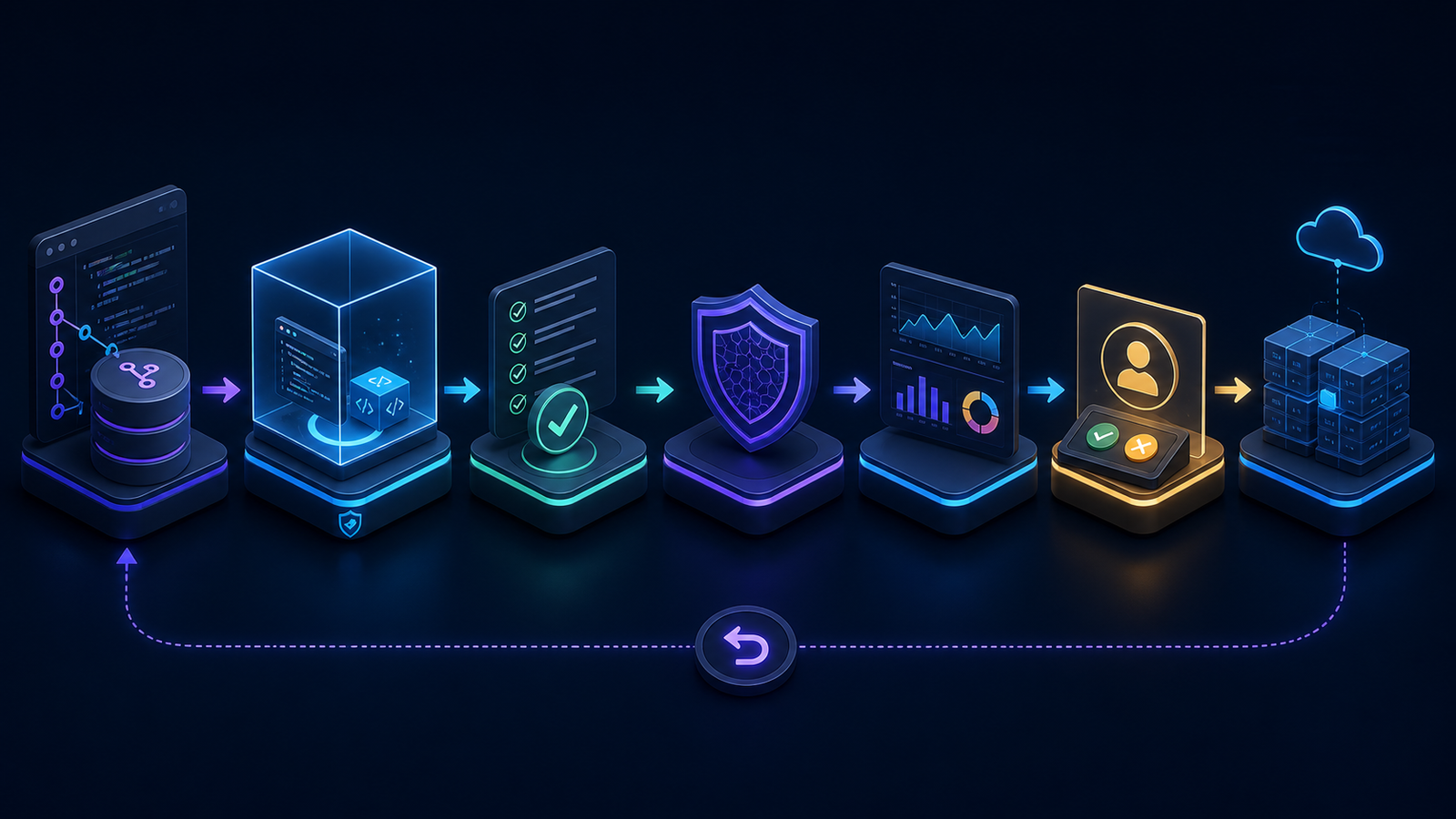
Platform teams should start with shadow evaluation on a representative set of issues: dependency upgrades, test repair, small feature work and incident analysis. Measure accepted patches, test pass rates, escaped defects, wall-clock time, total tokens, cache hits, tool calls and human review minutes. A cheaper token is not cheaper if an agent takes more steps or creates expensive recovery work.
Agent permissions deserve the same attention. Run Grok 4.6 in an isolated workspace with read access by default, narrow write scopes, short-lived credentials and explicit approval before merge, deployment or destructive infrastructure actions. SpaceXAI said it expanded pre-deployment and third-party safeguard testing, but the company also faced scrutiny in July after Axios reported that Grok Build uploaded more repository data than some users expected. That earlier incident makes data-boundary verification especially important for enterprise trials.
Teams that already operate AI-assisted software delivery can use the same controls described in GravityDevOps’ guides to LLMOps and CI/CD platforms: fixed evaluation sets, version-pinned models, audit logs, budget ceilings, progressive rollout and a tested fallback model. Retrieval-heavy workflows should also recheck grounding and source access controls rather than assuming a larger context window replaces a governed RAG pipeline.
A fast-moving release, not a finished verdict
Grok 4.6 arrives less than a month after Grok 4.5, underscoring how quickly coding-model economics and capabilities are changing. Its price, context window and distribution make it credible enough to evaluate. The case for production adoption, however, must come from each team’s own completion quality, security posture and total cost measurements.
For DevOps leaders, the useful takeaway is straightforward: add Grok 4.6 to the controlled bake-off, not directly to the deployment path. Pin the model version, capture traces, compare it against the current baseline and keep a human approval gate until the evidence supports broader autonomy.


