
SEO excerpt: Google has made Gemini 3.7 Flash generally available for coding and AI agents at temporary half-price rates, giving platform teams a lower-cost migration window with new API requirements.
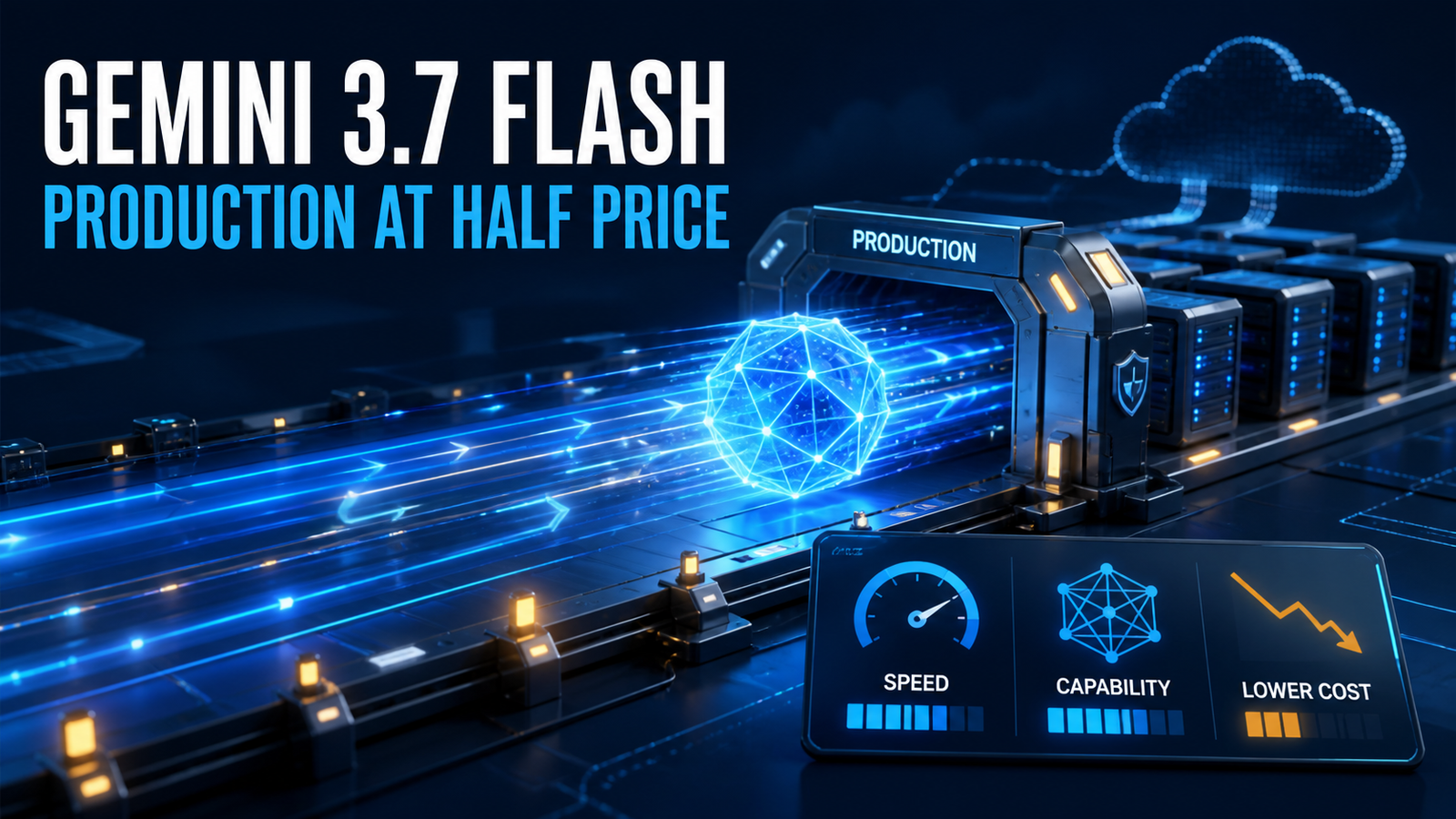
NEW DELHI, August 15, 2026, 6:08 PM IST — Google has released Gemini 3.7 Flash for production use, pairing stronger vendor-reported coding and agent performance with introductory API pricing of $0.75 per million input tokens and $3.75 per million output tokens through the end of 2026.
The launch gives developers a new high-volume model option only three weeks after Gemini 3.6 Flash arrived. For DevOps and platform teams, however, the important story is not another model-number increase. It is the combination of a generally available endpoint, temporary pricing, a one-million-token context window and concrete migration changes that can affect existing integrations.
A production release, not a preview
Google’s developer documentation identifies the model as generally available under the model ID gemini-3.7-flash. It supports text, image, audio and video input, a context window of up to one million tokens, a maximum output of 64,000 tokens and low, medium or high thinking levels.
The model is available through the Gemini API and Google AI Studio, the Gemini Enterprise Agent Platform and Google’s Antigravity developer tooling. Google has also made 3.7 Flash the default model behind its Antigravity agent in Gemini Managed Agents. In the consumer Gemini app, it now powers Spark for eligible subscribers.
Google says the new model is based on Gemini 3.6 Flash and improves its reasoning foundation. The company is positioning it for software engineering, multi-step agents, web development and document-heavy enterprise workflows.
Google reports stronger coding and agent results
In its Gemini 3.7 Flash model card, Google reports a 43.6% score on FrontierCode 1.1 Main, up from 34.4% for Gemini 3.6 Flash. On DeepSWE v1.1, a long-horizon software-engineering evaluation, the company reports 65.3% versus 48.6% for the prior model.
The gains are not uniform. Google’s table shows Gemini 3.7 Flash trailing GPT-5.6 Terra on DeepSWE and Terminal-bench 3.0, and trailing Claude Sonnet 5 on an operating-system agent evaluation. It also scores slightly below 3.6 Flash on a chart-reasoning test. Those mixed results are a useful reminder that no single benchmark establishes production reliability.
Google’s evaluations span different harnesses, tool configurations and private test sets. Teams should treat the figures as vendor-reported directional evidence, not proof that the model will reduce failures or human review in their own repositories and cloud environments.
The price cut has an expiry date
Gemini 3.7 Flash costs $0.75 per million input tokens and $3.75 per million output tokens through December 31. Google is applying the same temporary rates to Gemini 3.6 Flash. On January 1, 2027, both models are scheduled to move to $1.50 per million input tokens and $7.50 per million output tokens.
That makes the current rate a promotional window rather than a permanent cost baseline. A service processing 10 billion input tokens and two billion output tokens per month would pay about $15,000 at the introductory rates before caching, tools, storage, network charges and other platform costs. At the announced standard rates, the same token mix would cost about $30,000.
Real agent economics also depend on retries, reasoning depth, tool calls, output length and the percentage of tasks that complete successfully. GravityDevOps readers can use the broader LLMOps framework to measure those variables rather than choosing a model on token price alone.
Migration requires more than changing the model name
Google’s migration guidance says applications moving from Gemini 3.5 Flash, Gemini 3 Flash Preview or Gemini 3.1 Pro should remove deprecated temperature, top-p and top-k sampling controls. Integrations must replace numeric thinking budgets with a named thinking level, remove candidate-count settings and stop using prefilled model turns.
Multi-turn applications should standardize on server-managed previous-interaction identifiers. Teams using function calling should also audit response formatting and tool-call identifiers. Existing Gemini 3.6 Flash applications already follow several of these constraints, making that migration path less disruptive.
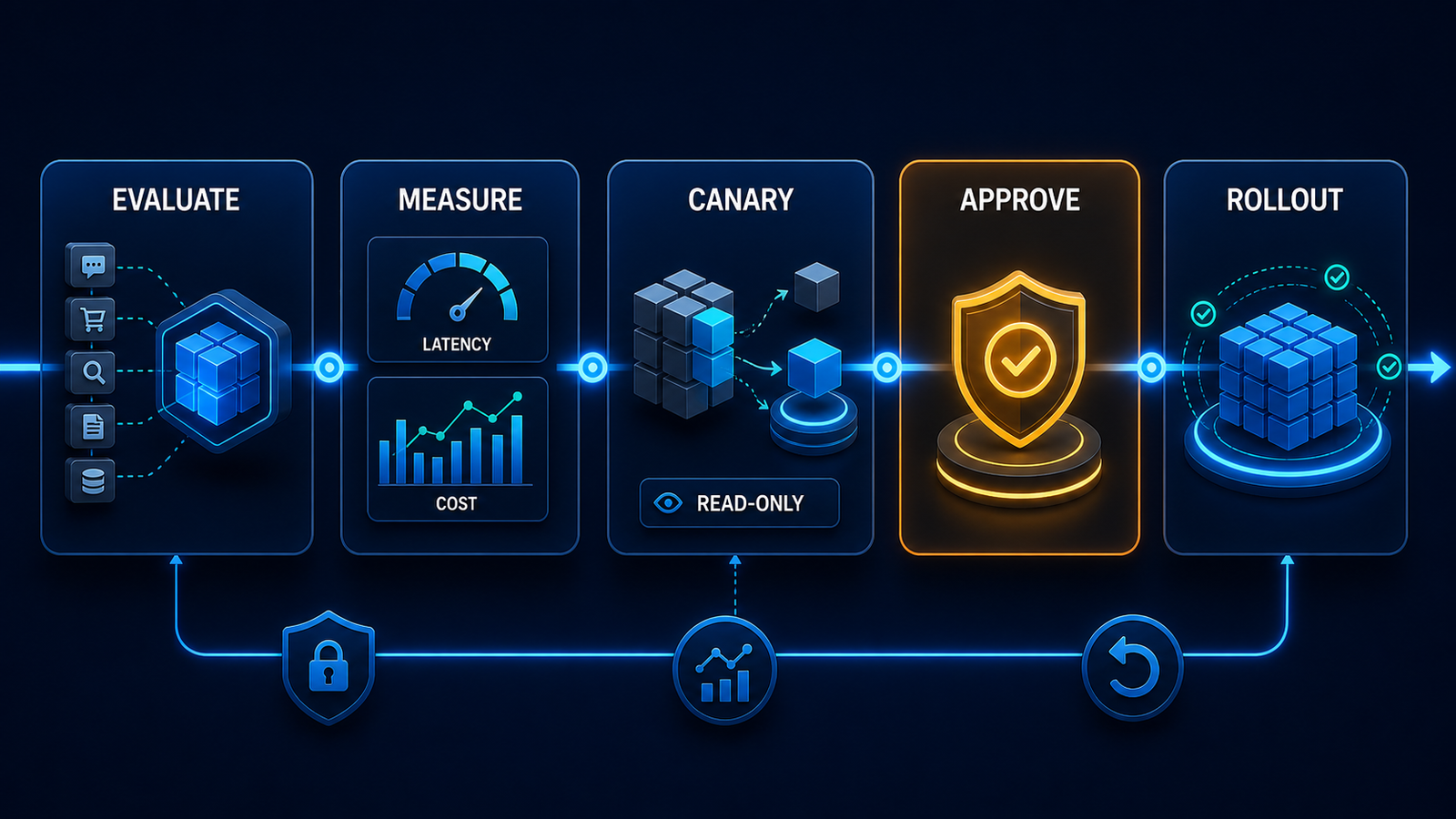
For platform teams, the practical response is a staged rollout. Capture a representative set of repository, incident-response and infrastructure tasks; replay them against the new model; and compare successful-task cost, latency, tool errors and required human corrections. Canary traffic should remain read-only or approval-gated until the model’s behavior is understood.
Generated patches should continue through normal tests, security scans and CI/CD controls. Agents that can reach cloud consoles, issue trackers or deployment systems should receive short-lived, least-privilege credentials and explicit approval gates for destructive actions.
What remains uncertain
Google has not shown how the model behaves across every language, repository type or proprietary tool chain, and the published benchmarks do not provide a complete picture of intervention rates in long-running production agents. The temporary pricing also complicates annual budget comparisons.
The most defensible conclusion is narrower: Gemini 3.7 Flash is a production-available model with a meaningful short-term price incentive and promising reported gains on several coding and agent evaluations. Whether it is cheaper per completed task will depend on workload-specific tests, disciplined observability and the operational controls wrapped around it.
Sources
Google’s launch announcement, the Google DeepMind model card and the Gemini API migration guide.


