
OpenAI plans to stop supplying models through Cursor after its SpaceX acquisition, putting coding-agent portability and fallback plans under scrutiny.
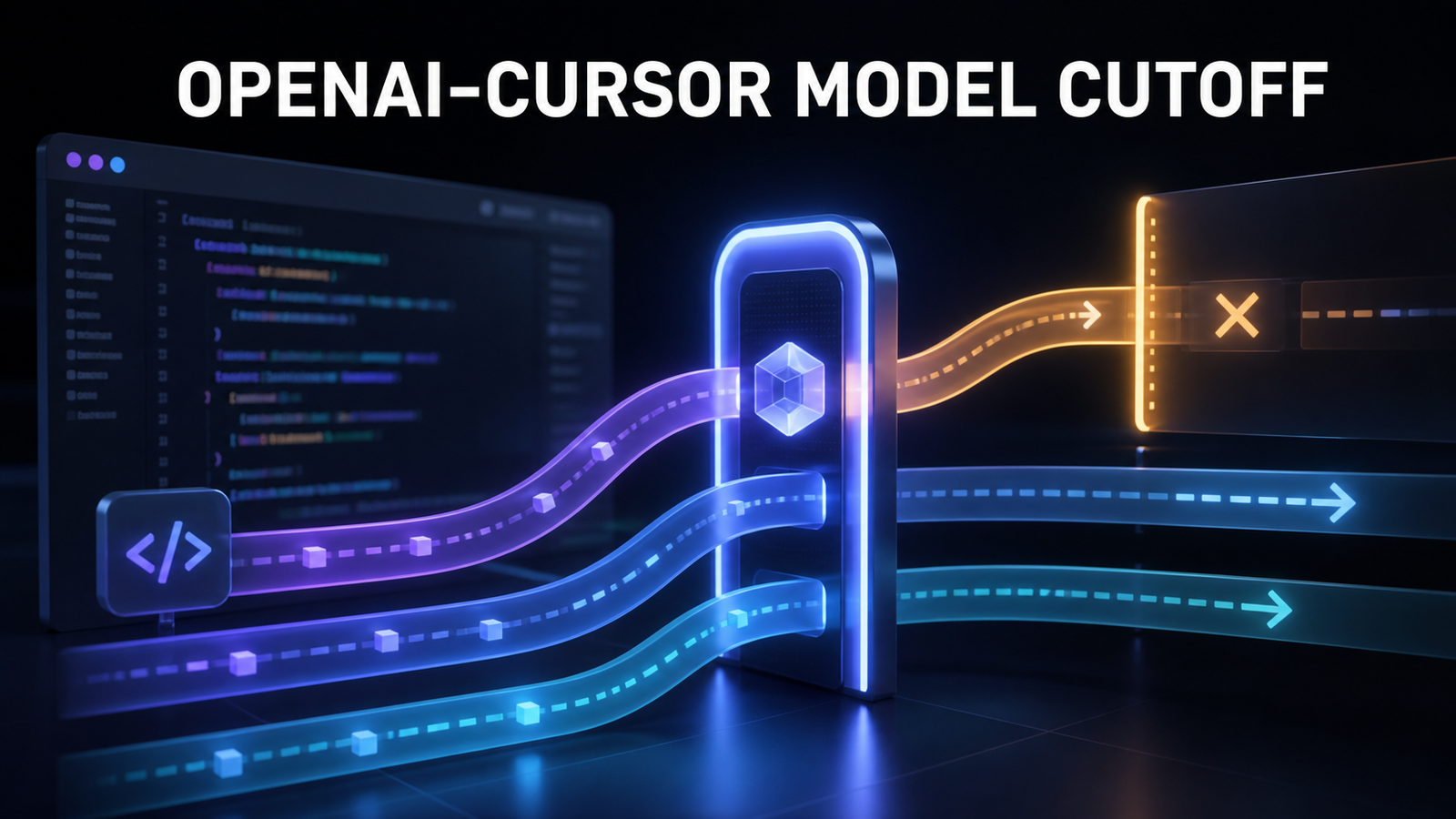
NEW DELHI, August 30, 2026, 5:02 PM IST — OpenAI intends to end the contract that supplies its models through Cursor, proposing November 12 as the cutoff after the AI coding company was acquired by SpaceX. The decision creates a near-term migration deadline for engineering teams that depend on OpenAI models inside Cursor-managed workflows.
The announcement is more than a dispute between AI vendors. It exposes a production risk that platform teams increasingly face as coding agents become part of software delivery: access to a model can change because of ownership, contracts or provider policy, even when the development tool itself remains available. Teams using Cursor should now identify which workflows depend on OpenAI models, which can move to another provider, and which cannot use a bring-your-own-key fallback.
What OpenAI confirmed
In an August 28 statement, OpenAI said it had notified SpaceX that it plans to wind down the Cursor contract and proposed November 12, 2026, as the shutoff date. OpenAI said the contract gives it a limited cancellation window following a change of control and that it will not provide future models to Cursor.
OpenAI attributed the decision to concerns about compliance with its terms of service under SpaceX ownership. Those are OpenAI’s stated concerns; the announcement does not establish a court finding about the Cursor contract. The company also described November 12 as a proposed date rather than a final one.
An accompanying OpenAI support note says existing OpenAI models should remain available through the transition period, although Cursor could end access earlier. OpenAI said the official termination date will be shared after the companies confirm it.
Cursor confirmed on August 14 that it had become part of SpaceX. The company said the acquisition would give it access to SpaceXAI computing capacity and support development of stronger, less expensive models. Associated Press reporting on the acquisition described Cursor as a popular coding assistant that competes with OpenAI Codex and Anthropic Claude Code while relying on model-provider partnerships.
The fallback is narrower than it first appears
Developers can currently add their own OpenAI API key for supported local Chat and Agent requests inside Cursor. OpenAI also points users to its separate Codex IDE extension or a compatible AI gateway as possible routes for continued access.
But bring-your-own-key access does not cover every Cursor surface. According to OpenAI’s support guidance, a customer API key cannot power Cursor Tab and autocomplete, Auto routing, Cloud or Background Agents, Automations, the Cursor CLI, or Cursor’s API and SDK. Those features depend on models supplied or routed by Cursor.
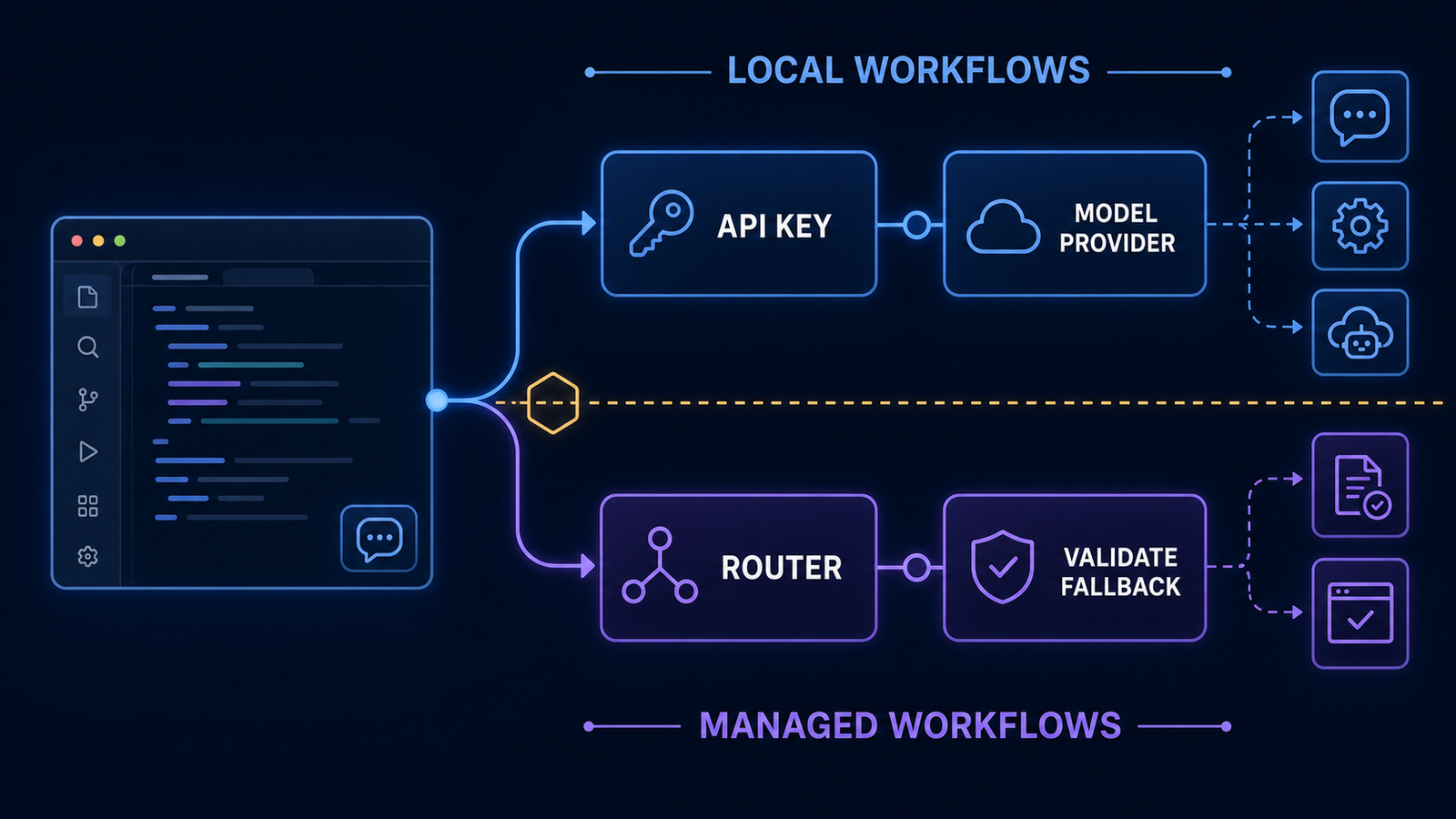
That distinction matters for platform teams. Replacing a model in an interactive chat is comparatively simple. Revalidating an asynchronous coding agent that edits repositories, opens pull requests or triggers CI is a production change. Model behavior, tool selection, latency, token cost and failure modes can all shift.
What engineering teams should do now
First, inventory model use by workflow rather than by editor seat. Capture the selected model, routing mode, agent surface, repository permissions, data residency needs and billing path. Cursor’s current documentation says its model pool includes models from OpenAI, Anthropic, Google and Cursor itself, while its Auto router can choose among providers. Teams should enable model visibility where available so they can see which provider actually handled a request.
Second, build a small regression suite from real engineering tasks: repository search, test repair, infrastructure-as-code changes, dependency upgrades and pull-request review. Run the same tasks against an approved fallback and compare acceptance rate, diff size, test pass rate, latency, cost and the frequency of tool or permission errors. A model benchmark alone will not show whether an agent behaves safely in a particular delivery pipeline.
Third, separate model credentials from developer laptops. If direct API access becomes the fallback, use centrally managed secrets, project-level budgets, audit logs and provider-specific egress controls. Teams already applying LLMOps practices should treat model availability as a versioned dependency with owners, promotion gates and rollback criteria.
Finally, test the degraded path before the proposed cutoff. An agent should fail closed when an approved model is unavailable, not silently switch to a model that lacks the required policy, region or tool behavior. The same principle applies to prompt and tool contracts: keep them portable where possible, but expect provider-specific differences and validate them in CI.
What remains uncertain
The final termination date has not been confirmed publicly. Cursor has not detailed how every affected product surface will route requests after the proposed cutoff, and OpenAI has not published a complete model-by-model transition table. Existing Cursor documentation still lists OpenAI models among available options, which is consistent with the announced transition period.
The immediate operational lesson is not that multi-model platforms are unreliable. It is that model access is a supply-chain dependency. Organizations that use AI agents in development should monitor provider contracts and product notices with the same discipline they apply to container images, CI services and cloud APIs. A concise CI/CD control plane, observable routing and tested fallbacks can make a provider change manageable rather than disruptive.
Sources
Primary sources include OpenAI’s contract announcement and transition guidance, Cursor’s SpaceX acquisition notice and current model documentation. Acquisition context was cross-checked against Associated Press reporting.


