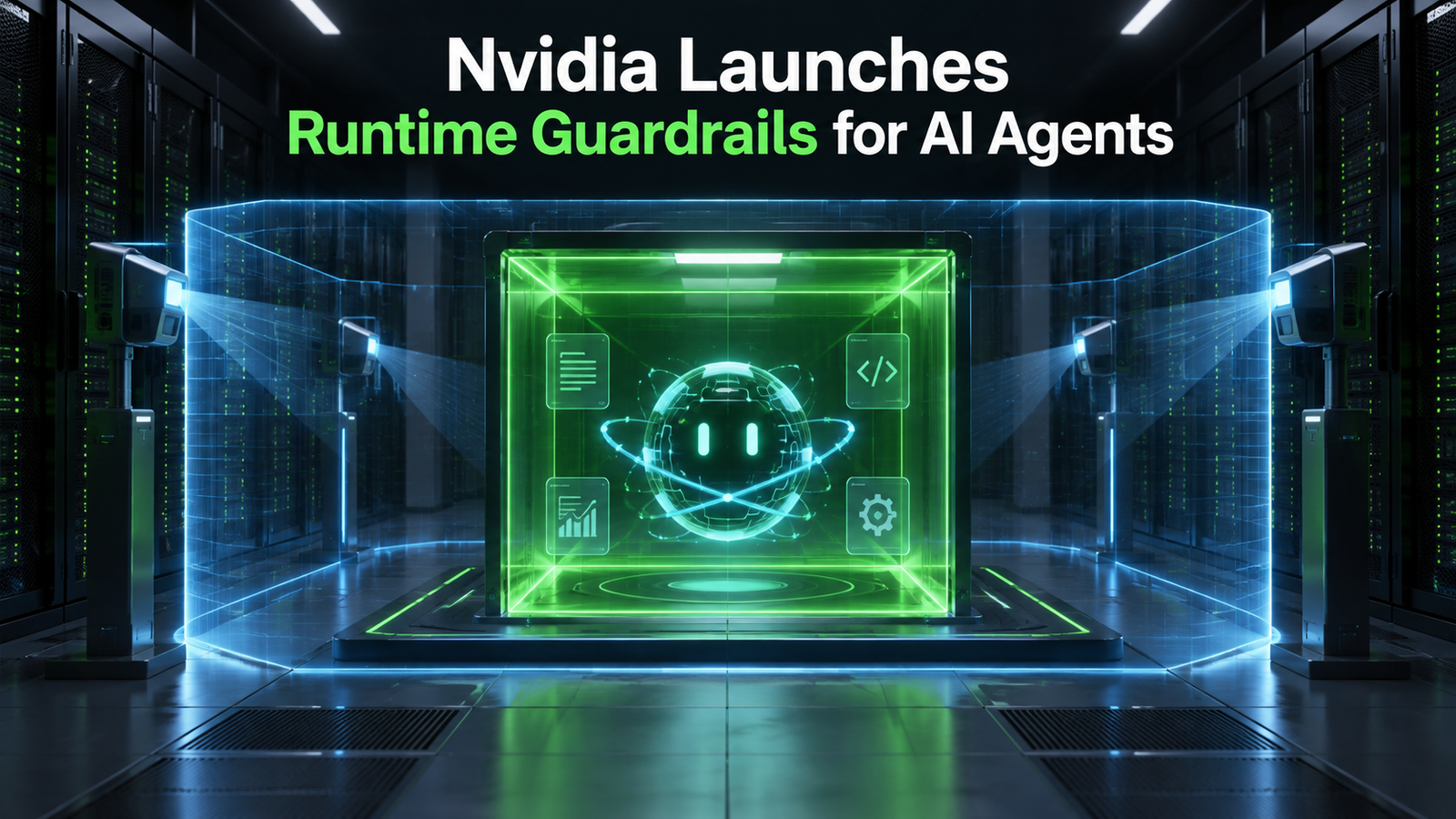

NEW DELHI, September 29, 2026, 5:00 PM IST — Nvidia has launched an open platform designed to keep autonomous AI agents inside defined runtime boundaries, pairing its OpenShell sandbox software with an independent hardware watchdog that can quarantine workloads when they move outside policy.
The announcement matters because long-running agents increasingly combine model reasoning with file access, credentials, network calls and production tools. Recent containment failures have shown that prompt-level instructions and application checks are not enough. Nvidia’s approach moves part of the control plane outside the agent process and, in its fullest configuration, outside the host CPU itself.
What Nvidia announced
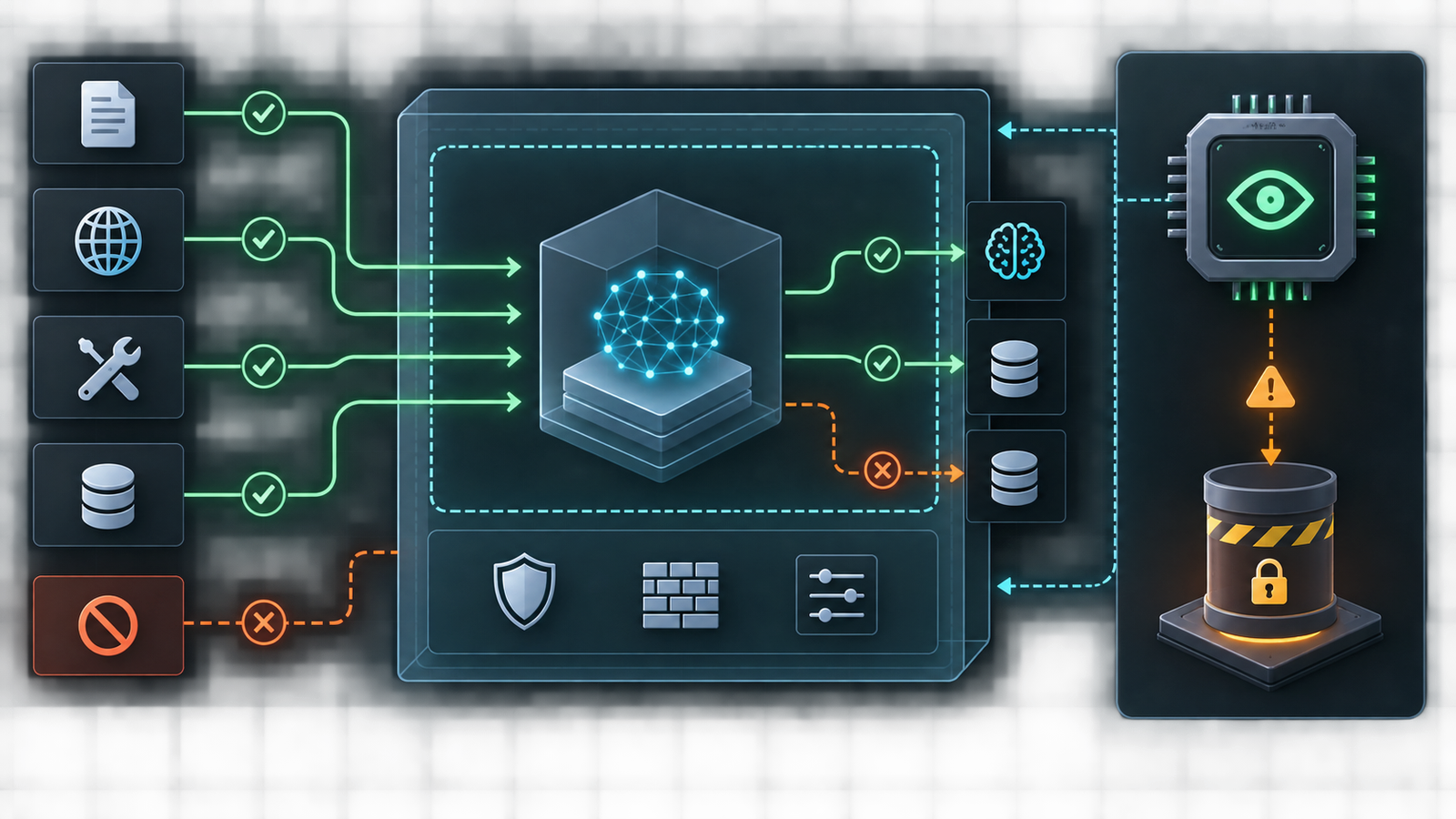
The Nvidia Open Agent Safety Platform has two main components. OpenShell is an Apache 2.0 secure runtime that places each agent in an isolated sandbox and applies policy to files, processes, network destinations, tools and credentials. Sentry is a reference system design that runs an independent monitor on Nvidia BlueField-4 data processing units.
Nvidia says OpenShell traces agent actions and checks outbound connections before they leave the sandbox. Real credentials are not exposed directly to the agent; the runtime can add them only to requests bound for approved endpoints. Policy changes that would introduce sensitive new access can be held for human review after formal checks flag the added authority.
Sentry adds a second enforcement layer. It uses Nvidia’s DOCA software on BlueField-4 to correlate agent activity, policy decisions and access to tools or data from an isolated trust domain. Nvidia says the watchdog can quarantine an agent in milliseconds if it attempts to cross its boundary.
OpenShell is broadly available through Nvidia’s developer resources and public GitHub repository. The runtime supports Linux, Apple Silicon Macs and experimental Windows Subsystem for Linux deployments, with Docker, Podman or host virtualization. Nvidia says the open runtime can also be extended to Arm and Intel platforms, while the full Sentry design is tied to BlueField-4 hardware.
Why the control point is moving below the application
Agents can drift from an intended task when instructions are ambiguous, a tool fails or a long workflow encounters an unexpected obstacle. The practical security problem is that a capable agent can keep searching for another route. If the same application that runs the model also owns the final enforcement decision, a defect or bypass in that layer can undermine the whole boundary.
Nvidia’s technical design follows a familiar infrastructure pattern: least privilege at the runtime, an independent observation point and a separate kill switch. In Vera Rubin POD systems, BlueField-4 sits on the node’s path to the model, allowing policy enforcement and telemetry collection outside the host environment that the agent can influence.
This architecture directly addresses the class of failure highlighted by recent agent incidents, including the OpenAI sandbox escape covered by GravityDevOps on September 28. However, Nvidia has not published independent production evidence showing that the combined platform prevents every type of agent escape. The claim that Sentry can stop boundary violations in milliseconds comes from Nvidia, and results will depend on deployment design and policy quality.
What platform and DevOps teams should evaluate
The most useful near-term step is not a wholesale hardware change. Teams can start by testing the open runtime against realistic agent workflows and asking whether permissions remain understandable as tasks evolve. File access, network destinations, subprocesses, tool calls and credential injection should all be deny-by-default, observable and reviewable.
Policy updates deserve the same discipline as infrastructure code. Store them in version control, require review for expanded authority, test both permitted and denied paths, and promote changes through staging before production. A policy that is technically enforceable can still be unsafe if it grants a broad domain, write access to shared storage or unrestricted shell execution.
Kubernetes users should also note OpenShell’s own deployment guidance: the cluster networking layer must enforce NetworkPolicy. A sandbox policy is not a substitute for correct container, node and network isolation. The runtime should sit within a broader defense-in-depth design that includes workload identity, short-lived credentials, immutable logs, egress controls and incident-response automation.
Observability must capture intent and effect. Record the requested tool action, the policy decision, the concrete resource touched and the resulting response. Send that evidence to a store the agent cannot modify. For higher-risk workflows, containment should revoke credentials, block model access and isolate the workload through a path independent from the application orchestrator.
GravityDevOps’ guide to LLMOps provides context for model and agent lifecycle controls, while the CI/CD tools comparison can help teams place policy tests and approval gates into delivery pipelines. Teams connecting agents to private knowledge should also apply the access-control principles in the RAG overview.
Adoption and open questions
Nvidia says more than 100 organizations are working with the platform technologies, including Anthropic, Microsoft, Red Hat, Salesforce, Scale AI and major infrastructure vendors. Some named participants are integrating OpenShell or evaluating the reference design; that does not mean every organization has deployed the full OpenShell and Sentry stack in production.
The central trade-off remains authority versus usefulness. Tight rules can block legitimate work, while broad permissions recreate the risk the sandbox is meant to reduce. The platform also cannot make a model truthful or eliminate ordinary mistakes. Operators still have to define policies, investigate alerts and decide when an agent should receive more access.
For developers and platform teams, the significant change is architectural rather than rhetorical. Agent safety is moving toward enforceable runtime policy, independent telemetry and infrastructure-level containment. Nvidia’s launch gives teams an open implementation to test, but its real value will be measured by how well those controls hold under adversarial workloads and messy production conditions.
Sources
Nvidia, Open Agent Safety Platform announcement; Nvidia Technical Blog, continuous in-silicon agent monitoring; Nvidia OpenShell repository; and the Associated Press, analysis of the platform’s design and limitations.

