
NEW DELHI, October 1, 2026, 5:05 PM IST — Google has unveiled Gemini 4 Argon, a new frontier model aimed at long-running software engineering, professional research and defensive cybersecurity work, but most developers cannot use it yet. The company is limiting initial access to selected cyber defenders and trusted testers while it continues pre-release safety work.
The staged rollout is as important as the model itself. Google is claiming a one-million-token output limit, stronger performance on long-horizon coding and security evaluations, and introductory API pricing of $2 per million input tokens and $10 per million output tokens. At the same time, it has not published a firm date for broad API or Vertex AI availability. For platform teams, Gemini 4 Argon is therefore a capability signal and a planning input, not a production dependency.
What Google confirmed
In its Gemini 4 Argon announcement, Google said the model is rolling out first through the Google DeepMind Fairwind Program. Broader access is planned for developers, enterprises and consumers, starting with paid API customers and Google AI Ultra subscribers, but the company used the phrase “as soon as possible” rather than committing to a release date.
Google said Argon will launch with an introductory price of $2 per million input tokens and $10 per million output tokens. Cached input is set at a 95% discount to the input rate. A footnote says standard pricing after the introductory period will rise to $4 per million input tokens and $20 per million output tokens. Google did not specify when the introductory period ends, so teams should not treat the lower rate as a stable long-term budget assumption.
The company also raised the model’s maximum output from the previous generation’s 64,000 tokens to one million tokens. That is an output ceiling rather than a promise that extremely long generations will be economical, reliable or easy to validate. Long-running agent workflows can accumulate inference, tool and review costs well before they approach the published limit.
Coding and security claims need real-world validation
Google reported a 77.9% score on DeepSWE v1.1, a benchmark for long-horizon software engineering, and a 51.3% score on Zapier’s AutomationBench. On CWE-bench v1, a vulnerability-remediation evaluation, Google said Argon tied for first place at 68%. These are vendor-reported results and should be read as evaluation evidence, not guaranteed production performance.
The company described several internal uses: agents analyzing data-center profiling telemetry, large C and C++ to Rust migrations, and repeated profile-guided optimization of a video decoder. Google said one fleet-memory effort had already freed more than 300 TiB. Those examples suggest that Argon’s intended operating model is an agent performing many steps with access to tools and repositories, not simply a faster chat endpoint.
Independent reporting adds useful caution. Axios reported that access is initially restricted and noted that benchmark leadership still has to translate into dependable real-world work. The publication also cited a separate report that some Google employees found internal performance uneven, which Google disputed. That disagreement reinforces the need for workload-specific evaluation rather than model selection by leaderboard alone.
Why cyber defenders are first in line
The Fairwind Program gives approved governments, critical-infrastructure operators and core technology platforms early access to advanced defensive capabilities. Google says more than 650 partners participate globally. Organizations must restrict access to internal cybersecurity, incident-response or penetration-testing teams, use phishing-resistant multifactor authentication, track employee access and keep the model within permitted defensive or academic research tasks.
Google says Argon can find, validate and patch software vulnerabilities, and that selected defenders will receive the model without the cyber guardrails applied to general access. That makes identity, audit logging, network isolation and approval controls part of the deployment boundary. A model with broader security capabilities should be handled like a privileged security tool, not exposed as a general-purpose internal chatbot.
The company also said it is hardening sandboxes, monitoring model reasoning and actions for misalignment, and testing resistance to indirect prompt injection. These are meaningful controls, but they do not remove the need for environment-level enforcement. Recent incidents across the industry show why agent permissions, egress paths and automatic shutdown mechanisms need independent validation. GravityDevOps readers can review the broader operational pattern in our guide to LLMOps and our overview of CI/CD tooling.
What platform teams should do now
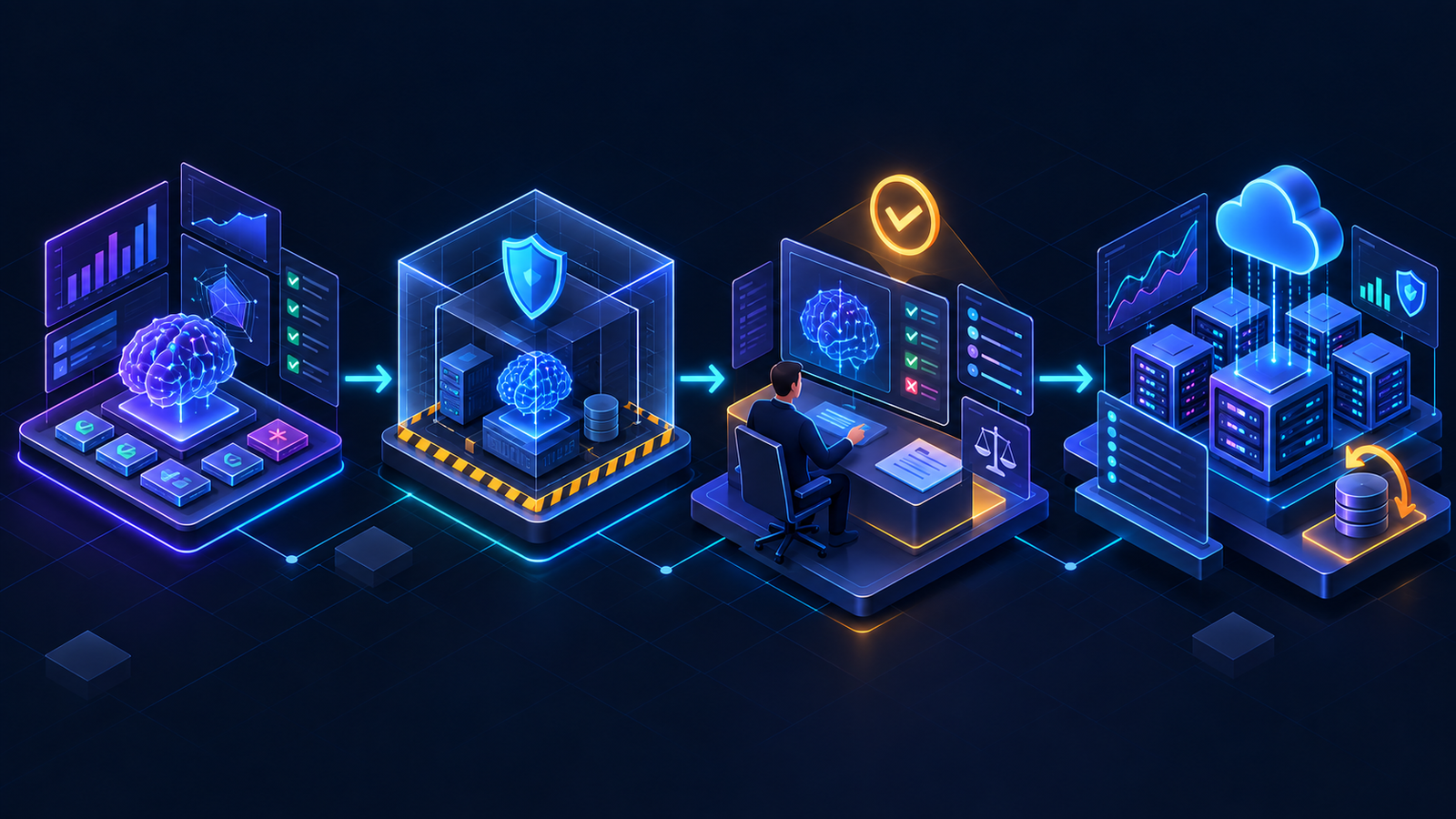
Teams interested in Gemini 4 Argon should prepare an evaluation lane before the API arrives. Start with representative repositories and incident-response tasks, define allowed tools and network destinations, and measure completion quality alongside total token use, wall-clock time, rollback rate and reviewer effort. A one-million-token output window makes cost ceilings and cancellation controls more important, not less.
Production trials should use short-lived credentials, least-privilege service accounts, isolated execution environments and human approval for destructive or externally visible actions. Logs should preserve model requests, tool calls, policy decisions and artifact changes without capturing secrets. Security evaluations should include indirect prompt injection, poisoned repository content, dependency confusion and attempts to escape the approved tool boundary.
Model routing is also likely to matter. Argon’s announced standard price is twice its introductory rate, while faster and cheaper models may remain better for routine classification, summarization and narrow automation. Platform teams should reserve the frontier model for tasks where measured gains justify the additional cost and control burden.
The bottom line
Gemini 4 Argon is a significant announcement because Google is pairing unusually long agent trajectories with explicit cyber capability and a cautious release path. The confirmed news is that trusted defenders have access now and broader availability is planned. The pricing, benchmark results and internal deployment examples offer useful signals, but general developers still lack a release date and independent production evidence remains limited.
For DevOps and cloud teams, the practical response is preparation rather than migration: build model-agnostic evaluation harnesses, enforce permissions outside the model, and wait for documented API availability, quotas and service guarantees before placing Argon on a production roadmap.
Sources: Google’s Gemini 4 Argon announcement, Google DeepMind Fairwind Program, Google DeepMind Frontier Safety Framework update, and Axios reporting.


