
SEO excerpt: Broadcom has introduced VMware Private AI Cloud, bringing model serving, agent controls, governed data and private-cloud operations into one VMware stack. Several headline capabilities are still forthcoming.
NEW DELHI, August 31, 2026, 9:10 PM IST — Broadcom has introduced VMware Private AI Cloud, an integrated software stack intended to let enterprises run AI inference and autonomous agents alongside conventional workloads while keeping models, data and infrastructure inside a private-cloud boundary.
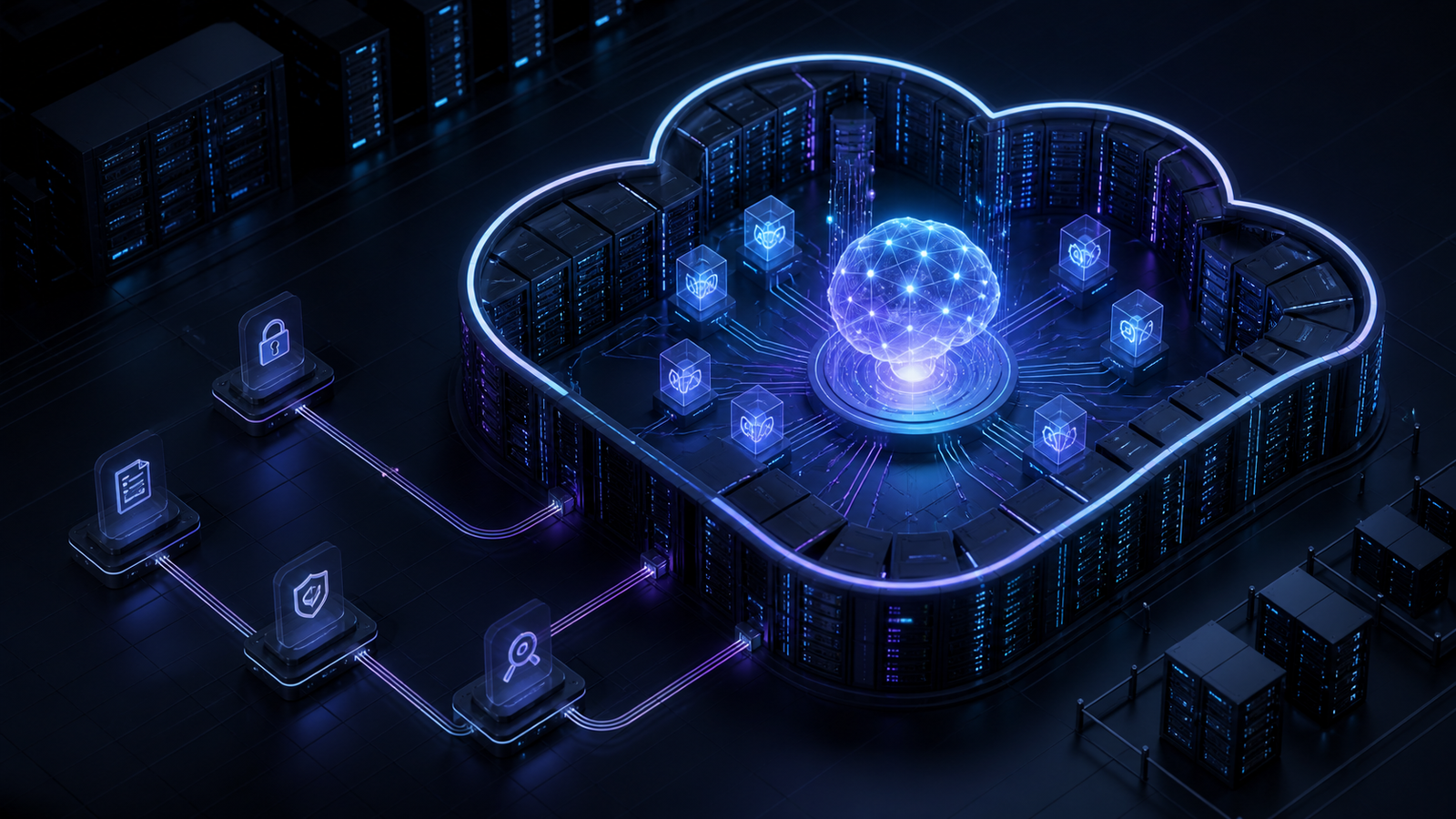
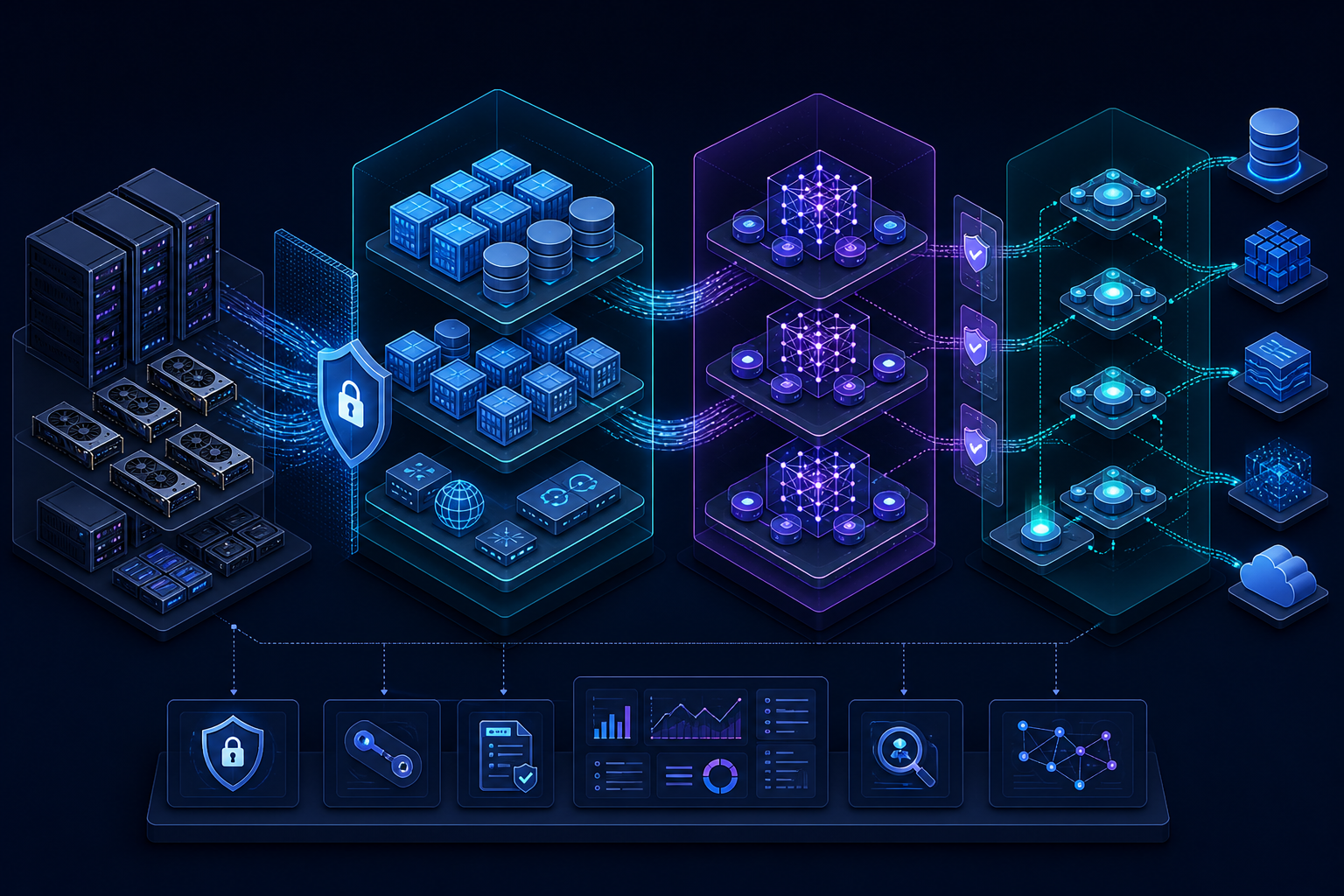
The announcement, made Monday at VMware Explore 2026 in Las Vegas, packages VMware Cloud Foundation infrastructure with a new VMware AI Factory, private model services, Tanzu agent and data tooling, AgentMinder governance, and expanded network security and observability. The practical change for platform teams is that Broadcom is trying to make AI operations part of the same lifecycle and control plane they already use for virtual machines and Kubernetes, rather than a separate GPU island.
That integration matters now because enterprise AI is shifting from isolated pilots to long-running inference and agent workflows. Those workloads introduce resource contention, rapidly changing models, tool credentials, data-access policies and audit requirements that ordinary application platforms were not designed to handle together. Broadcom’s answer is a private stack spanning hardware provisioning, model serving, agent execution and security policy.
What Broadcom confirmed
At the infrastructure layer, VMware AI Factory combines VMware Cloud Foundation with certified AI-ready servers and a set of private AI services. Broadcom said the system can automate hardware provisioning, software enablement and lifecycle operations from bare metal through model inference. It supports heterogeneous server designs and accelerator choices, including a collaboration with AMD around Instinct GPUs and the ROCm software ecosystem.
The model-serving layer pools GPU capacity and allows multiple tenants or business units to share models through isolated namespaces. A model gallery and runtime are designed to deploy inference and retrieval-augmented generation workloads across virtual machines, containers and GPU resources. Broadcom also described an AI gateway for application authorization, usage limits, prompt routing and a common interface to on-premises and cloud-hosted models.
Broadcom said VMware Cloud Foundation customers can run more than 150 validated open-source and commercial models, citing families from Google, NVIDIA, NEC, Alibaba Cloud and Z.ai. Validation is useful compatibility evidence, but it should not be read as a guarantee that every model has identical support, licensing, performance or update cadence across every certified hardware configuration.
Agents get a control plane, not unrestricted access
The agent layer is built around VMware Tanzu Platform and AgentMinder. According to Broadcom’s Tanzu announcement, agents run in hardened sandboxes with deny-by-default access to networks, APIs and tools. Credentials are kept in an isolated store, while data products carry access controls, context and lineage so operators can trace which information contributed to an agent action.
AgentMinder is intended to give each agent an enterprise identity tied to an approved mission, tools and resources. Runtime policy enforcement would then apply least-privilege checks to tool calls and retain an audit trail. Complementary controls in vDefend and Avi Load Balancer are intended to detect unauthorized agent traffic, restrict tool access, protect APIs and help identify data exfiltration or anomalous behavior.
This architecture is directionally aligned with the controls platform teams already use for human and workload identities: explicit authorization, segmentation, rate limits, observability and revocation. It does not make autonomous software intrinsically safe. Prompt injection, compromised tools, poisoned retrieval data and overly broad policies can still cross a trusted boundary if teams treat platform defaults as a substitute for application-specific threat modeling.
Availability is more complicated than the launch headline
Broadcom describes VMware Private AI Cloud as a production-ready path, but the component announcements mix existing, new and forthcoming capabilities. VMware Cloud Foundation 9.1 and Private AI Services provide an available base for AI workloads, while the AI Factory announcement labels secure AI sandboxes and some governance functions as forthcoming. Broadcom separately said the newly announced Tanzu agent and data capabilities will become generally available in fall 2026.
The company did not publish a single package-level availability date, universal price, independently reproduced deployment-time benchmark or complete support matrix for every model and accelerator combination. Its claim that automation can reduce the time from bare metal to a first served model from weeks to hours is a vendor claim and will depend heavily on validated hardware, network readiness, firmware, storage design and an organization’s existing VMware estate.
SiliconANGLE’s independent report corroborated the scope of the launch and the combination of Cloud Foundation, AI Factory, Tanzu, AgentMinder and security products. It also framed the release as an integrated stack rather than a single new appliance or managed service.
What platform and DevOps teams should evaluate
For existing VMware shops, the strongest potential benefit is operational convergence. Shared infrastructure can improve accelerator utilization, and a common model gateway can make usage, latency and authorization visible across teams. Running models close to governed data may also simplify some residency and egress constraints. Readers building these workflows should connect the announcement to established LLMOps practices rather than treat private placement as the end of the lifecycle problem.
A realistic proof of concept should measure time to provision and recover the full stack; sustained tokens per second and tail latency under mixed tenants; GPU fragmentation; model cold starts; upgrade and rollback behavior; and the cost of capacity that sits idle. Teams should also test whether agent identities remain constrained across tool chains, whether credentials are genuinely unavailable to model context, and whether audit events can be exported into the organization’s existing security operations workflow.
Retrieval pipelines deserve equal scrutiny. Data lineage and governed access can reduce risk, but they do not prove that retrieved material is current, complete or safe to follow. Teams still need evaluation sets, source freshness controls and response tracing of the kind used in production retrieval-augmented generation systems.
The broader competitive question is whether an integrated private-cloud stack offers enough operational simplicity to offset licensing, skills and hardware commitments compared with managed cloud AI services or a more composable Kubernetes platform. Broadcom has presented a credible architecture and a wide partner ecosystem; customers still need workload-level evidence on cost, portability and operational maturity.
Bottom line
VMware Private AI Cloud is a significant expansion of Broadcom’s private AI strategy because it connects model infrastructure to agent identity, data governance and runtime security. For developers and platform engineers, the news is less about another place to host a model and more about whether AI agents can become governed workloads inside the existing private-cloud operating model.
The design is worth evaluating for organizations already standardized on VMware Cloud Foundation, particularly where data residency and infrastructure control are hard requirements. The important caveat is timing: buyers should verify which components are generally available in their target configuration and avoid basing production commitments on the umbrella launch alone.


