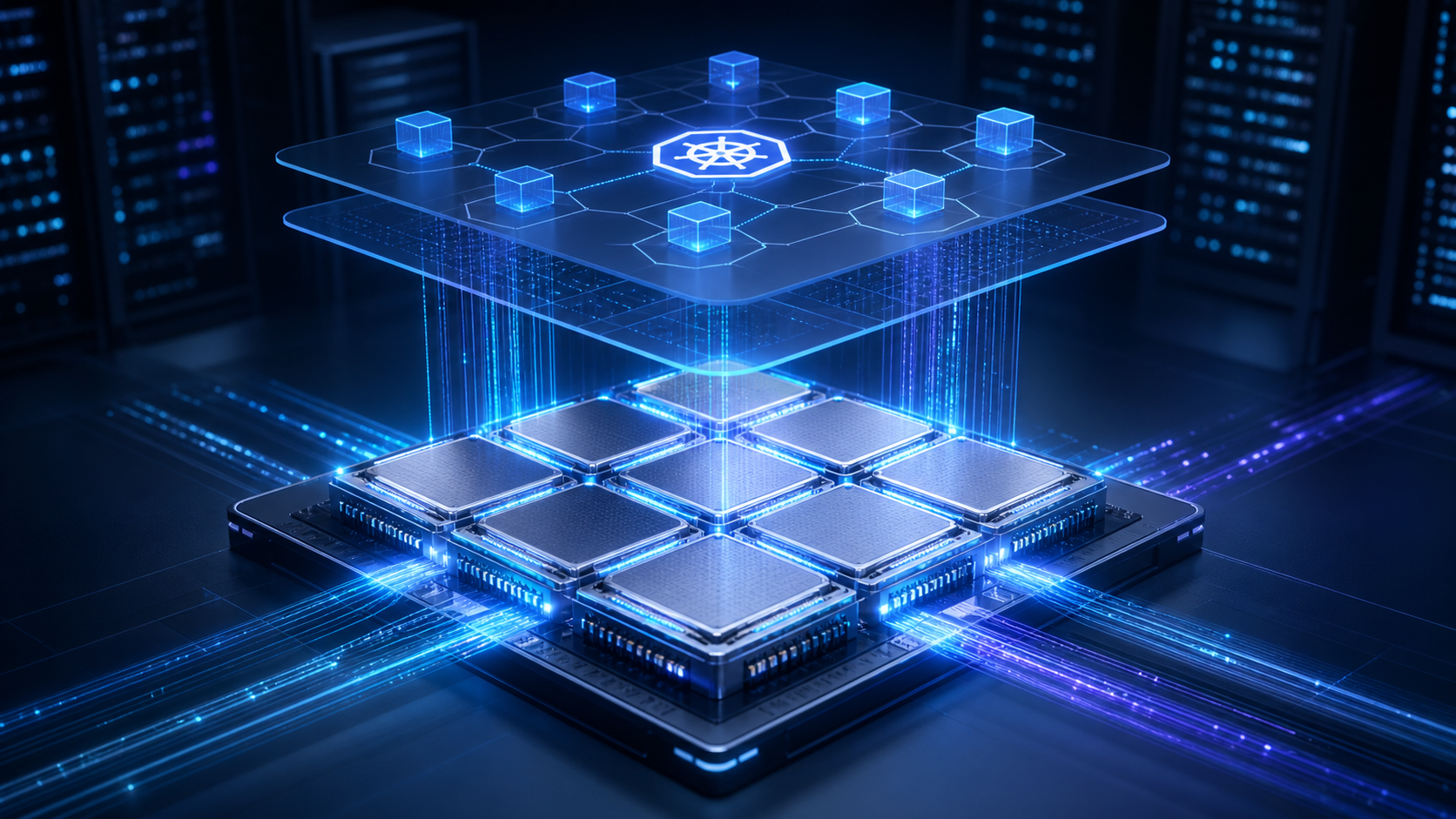

SEO excerpt: Ray now treats Google Cloud TPUs as a first-class accelerator, giving platform teams supported paths for serving, data pipelines and distributed JAX training on GKE.
NEW DELHI, July 25, 2026, 6:00 PM IST — Google has detailed a production-oriented path for running Ray artificial intelligence workloads on Cloud TPUs, moving the distributed Python framework’s TPU support beyond an experimental setup and into supported images, scheduling primitives and higher-level libraries.
The change matters because accelerator choice has often been entangled with orchestration code. With the Ray 2.55 foundation and Google’s newly completed two-part implementation guide, teams that already use Ray for GPU clusters can target TPU slices through familiar Ray Serve, Ray Data and Ray Train workflows. The practical promise is portability at the framework layer, although cost, model compatibility and operational maturity still need workload-specific testing.
What Google confirmed
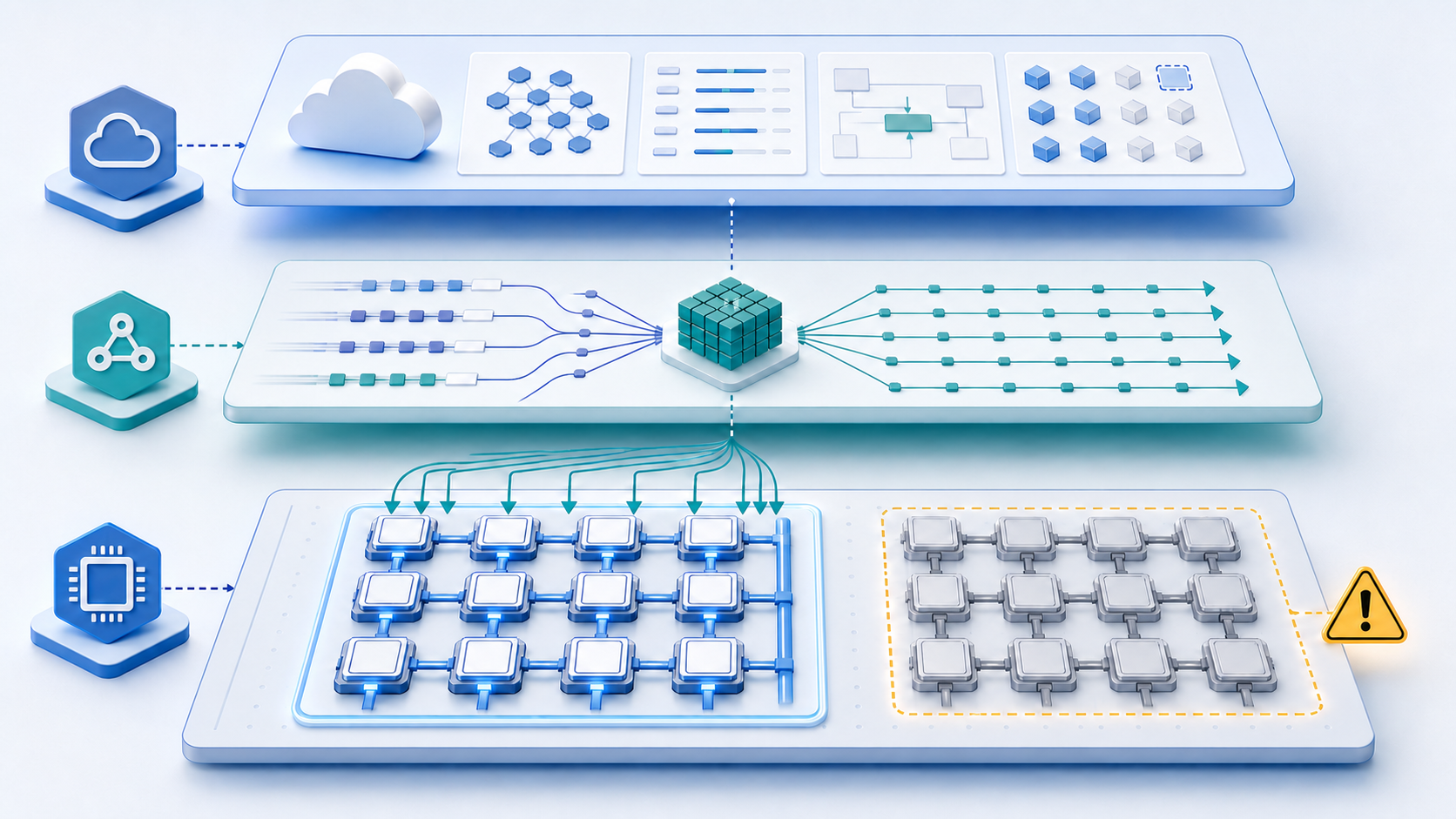
In a developer update published July 24, Google said Ray’s higher-level AI libraries now handle the core placement requirement for multi-host TPU workloads: all workers that depend on the TPU inter-chip interconnect must land on one intact hardware slice.
Google Kubernetes Engine provisions and labels TPU hosts through the Ray Operator add-on. Ray Core then reserves a complete slice as a unit. Teams specify a topology such as a 4-by-4 slice rather than manually coordinating individual chips and hosts.
That distinction is operationally important. Google warns that a multi-host deployment without the correct topology declaration may scatter workers across separate slices. Because those slices do not share the required high-speed interconnect, collective operations can stall and leave a deployment stuck rather than producing an obvious application error.
The July 24 update completes the application layer described in Google’s July 20 foundation announcement. Ray 2.55 placed TPUs in official release pipelines and added pre-built TPU images, replacing the earlier path that relied more heavily on custom containers and community support. The independent Ray 2.55 release record confirms the underlying framework release.
Serving, data and training move onto one control plane
Ray Serve can now place a multi-host model on one TPU slice through a topology setting while retaining Ray’s load balancing, autoscaling and application composition model. Google’s published examples use vLLM for inference and include deployments of open models on v5e and v6e hardware.
Ray Data adds a JAX-native batch path that delivers device-sharded arrays directly to a TPU workload. Google says this avoids an extra host-side conversion that can become a bottleneck when accelerators are waiting on the input pipeline. The interface also makes the final incomplete batch an explicit operational choice: drop it, pad it or fail early.
For training, JaxTrainer brings checkpointing, fault-tolerant restarts and multi-slice coordination into Ray Train. A platform team supplies the training function, accelerator type and slice topology; Ray launches workers by host and connects them to the intended mesh. This is especially relevant for long-running jobs on preemptible capacity, where restart behavior can determine whether lower compute prices translate into real savings.
New images and metrics reduce platform work
Ray is publishing tagged TPU container images with the JAX and TPU software stack already installed, including Flax, Optax and checkpointing dependencies. That can reduce environment drift across development and production, but teams should still pin image tags, scan their dependency tree and promote images through their own software supply-chain controls.
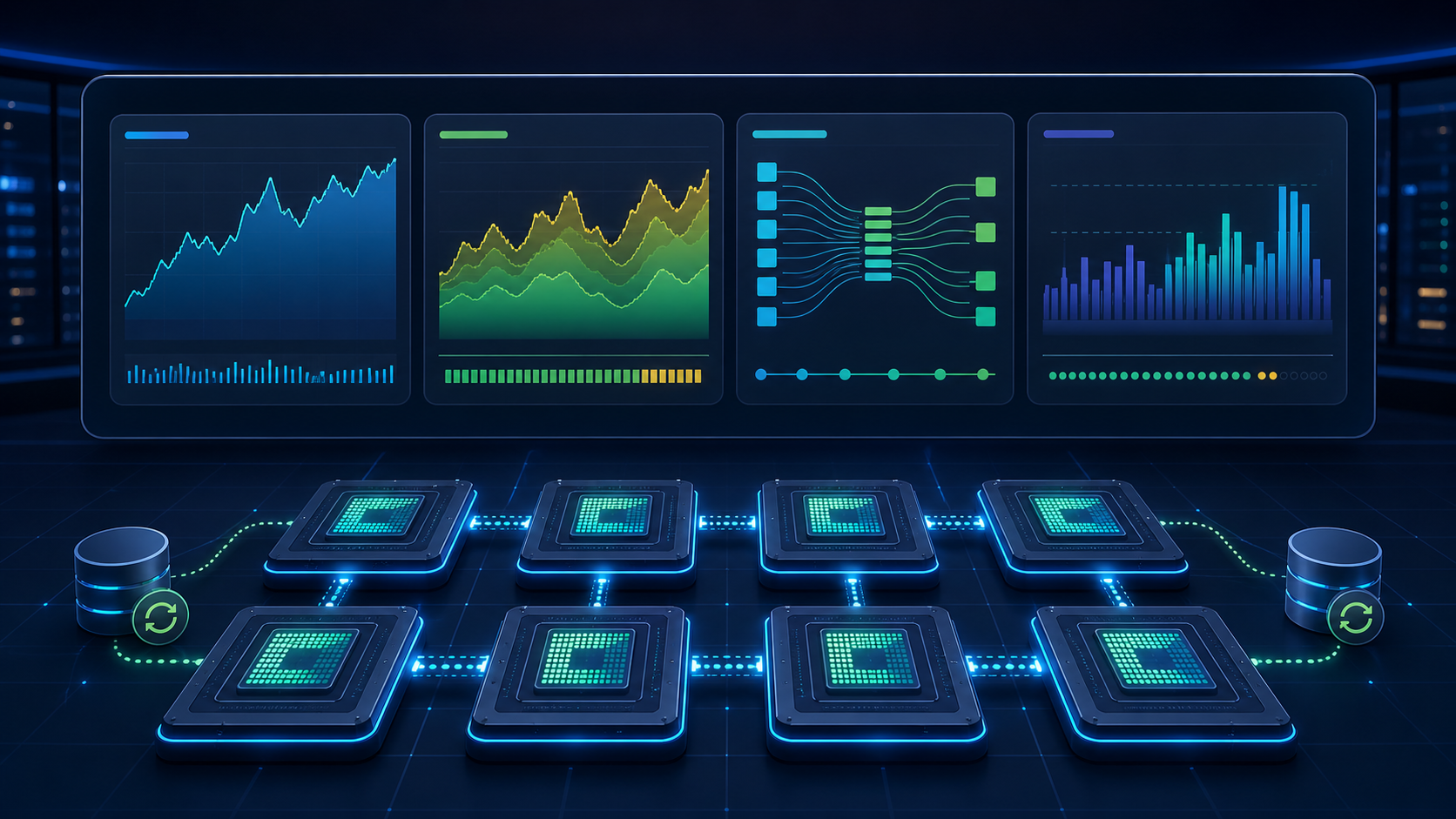
The Ray Dashboard now places TPU utilization and memory alongside CPU and GPU metrics. A worker-level JAX profiler is also available for attachment through the dashboard. For DevOps and platform teams, those additions are as consequential as the scheduling work: a supported accelerator is difficult to operate if capacity use, memory pressure and stalled workers remain invisible.
Google has also published a runnable GKE sample covering cluster creation, serving, data preparation and training with a Qwen model on a v6e slice. That gives teams a concrete validation path before they redesign a production platform.
What changes for developers and cloud teams
The immediate opportunity is not a blanket GPU-to-TPU migration. It is the ability to test an additional accelerator behind a framework many AI teams already use. Organizations with Ray applications can compare throughput, latency, regional capacity and total cost without first building a separate orchestration stack.
Platform engineers should treat topology as a deployment invariant. Admission policies and CI checks can validate that multi-host TPU services declare an approved slice shape. Runbooks should distinguish a placement failure from a model startup failure, particularly when a service remains in a deploying state.
Observability also needs to extend beyond accelerator utilization. Useful production signals include replica placement, request queues, checkpoint duration, data-loader throughput, restart count and cost per completed inference or training step. Readers building that operational layer may also find GravityDevOps’ guides to LLMOps and CI/CD tooling relevant.
Developers should verify framework support before moving a workload. Google’s path is centered on JAX for training and vLLM for serving. PyTorch-first applications, custom CUDA kernels and model-specific extensions may require adaptation or may still fit GPUs better. The new support lowers platform friction; it does not make every model hardware-neutral.
Balanced outlook
The announcement strengthens Google Cloud’s case for TPU adoption by meeting developers at the Ray abstraction layer instead of requiring a wholly Google-specific control plane. It also gives Ray users a more credible multi-accelerator strategy.
Several limits remain. Google describes deeper Ray Data and Ray LLM integration, multi-host reinforcement learning support and dynamic slice capabilities as roadmap items, not generally available features. Google also says TPUs can be more available and cost-effective for some inference workloads, but it has not supplied a universal price-performance result. Teams should benchmark their own model, batch size, availability requirements and data path.
For GravityDevOps readers, the near-term takeaway is concrete: create a small isolated GKE test cluster, use the official tagged image and sample, validate whole-slice placement, and measure an end-to-end service-level objective. Production adoption should follow evidence from that test, not the announcement alone.
Sources
This report is based on Google Developers’ Ray AI libraries update and Ray on TPU foundation note, cross-checked against the official Ray 2.55 release record and Google’s runnable GKE sample.


