

NEW DELHI, July 17, 2026, 6:12 PM IST — Asia’s AI race shifted further toward infrastructure, open models and national capacity on Friday, as China used its flagship AI conference to call for broader international cooperation while Japan moved ahead with a 140-megawatt AI factory and a US lab released a large open-weight multimodal model.
The developments are separate, but together they show where the next phase of AI deployment is heading. Governments and enterprises are no longer treating models as stand-alone software. They are linking compute capacity, energy, model access, data governance and agent deployment into one operating stack. For developers, DevOps engineers and platform teams, that raises practical questions about portability, observability, security boundaries and the long-term cost of running AI workloads.
Shanghai puts open AI and infrastructure on the policy agenda
At the opening of the 2026 World Artificial Intelligence Conference in Shanghai, Chinese President Xi Jinping called for AI development and governance to become a broader international effort. The conference chair’s statement encouraged responsible open-source ecosystems, stronger data safeguards, monitoring of AI’s energy and environmental impact, and coordination between large computing clusters and available power supplies.
Those positions are policy goals rather than binding technical standards. Still, the emphasis matters because China is pairing its governance message with a growing domestic model and accelerator ecosystem. The Associated Press reported that Huawei is showcasing its Atlas 950 SuperPoD at the conference and that Chinese developers continue to promote open models as lower-cost alternatives for markets that cannot rely on the largest US providers.
The official conference statement also called for personal information protection, traceable data governance and tiered risk management. Platform teams should read that as a reminder that “sovereign AI” is not only about where GPUs are installed. It also covers who controls model weights, training data, identity systems, telemetry, policy enforcement and incident response.
Japan plans a 140 MW physical-AI factory
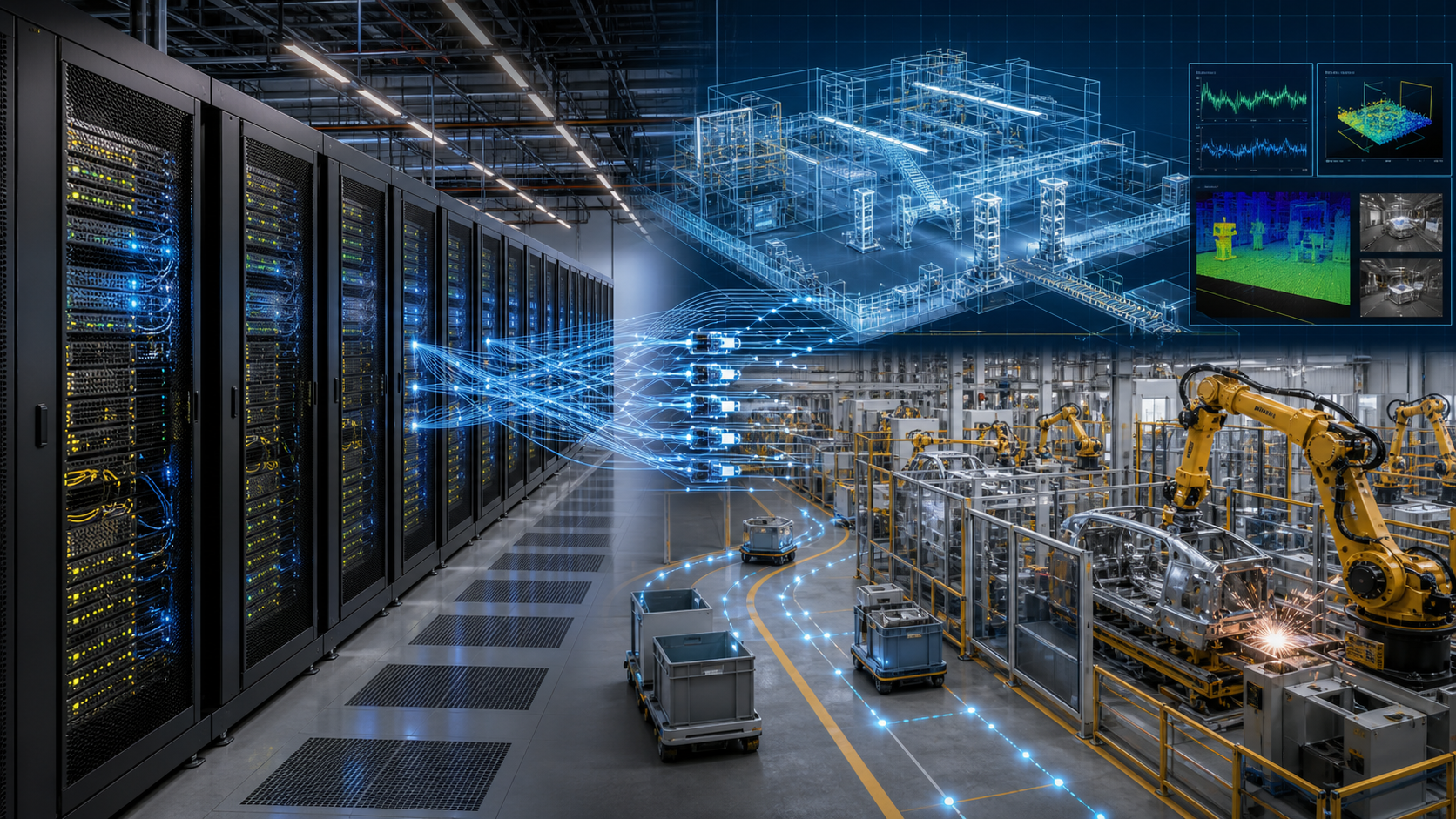
The clearest infrastructure announcement came from NVIDIA and Japan’s Noetra Corp. According to NVIDIA’s July 16 announcement, the partners plan to build an AI factory using 13,750 Vera CPUs and 27,500 Rubin GPUs, with 140 megawatts of data-centre capacity based on the NVIDIA DSX platform.
The system is intended to support Japan’s Ministry of Economy, Trade and Industry-backed FRONTia project, which is focused on multimodal foundation models for robotics and physical AI. NVIDIA said the environment will use Vera Rubin NVL72 racks and Spectrum-X Ethernet, and that pretrained weights from Noetra’s multimodal models are expected to be made broadly available to domestic developers and enterprises.
For infrastructure teams, the scale is notable, but the more consequential design choice may be the attempt to connect national compute with reusable model assets. If the project works as described, Japanese manufacturers, logistics operators and healthcare organisations could build on a shared model layer rather than procure every capability separately.
Important details remain unconfirmed. The announcement does not provide a full deployment schedule, pricing model, measured utilisation target or independent performance data. The 140 MW figure describes planned data-centre capacity, not guaranteed delivered AI performance. Teams assessing similar projects should separate headline accelerator counts from the harder operational measures: usable cluster hours, network oversubscription, checkpoint throughput, failure recovery, power availability and total cost per completed workload.
Open weights widen the deployment choices
Model access is also moving closer to infrastructure strategy. Thinking Machines Lab released Inkling on July 15 under the Apache 2.0 licence. Its published model card describes a 975-billion-parameter sparse mixture-of-experts model with 41 billion active parameters per token, a context window of up to one million tokens, and text, image and audio inputs with text output.
The company positions Inkling for agent systems, coding assistants, chatbots and retrieval-augmented generation, with open weights intended to support research, fine-tuning and third-party integration. That is a meaningful option for organisations that need greater control over deployment, but open weights do not remove operational risk. The provider’s own safety claims and benchmark results still require independent evaluation against a team’s workloads, languages, threat model and compliance obligations.
Before production use, platform owners should test model behaviour, tool permissions and resource demand in a controlled environment. A 975-billion-parameter model, even with sparse activation and lower-precision support, is not a lightweight self-hosting target. Capacity planning should cover memory placement, inference parallelism, quantisation quality, cold starts, batch behaviour and failover—not just nominal parameter count.
Enterprise agents move from pilots into core workflows
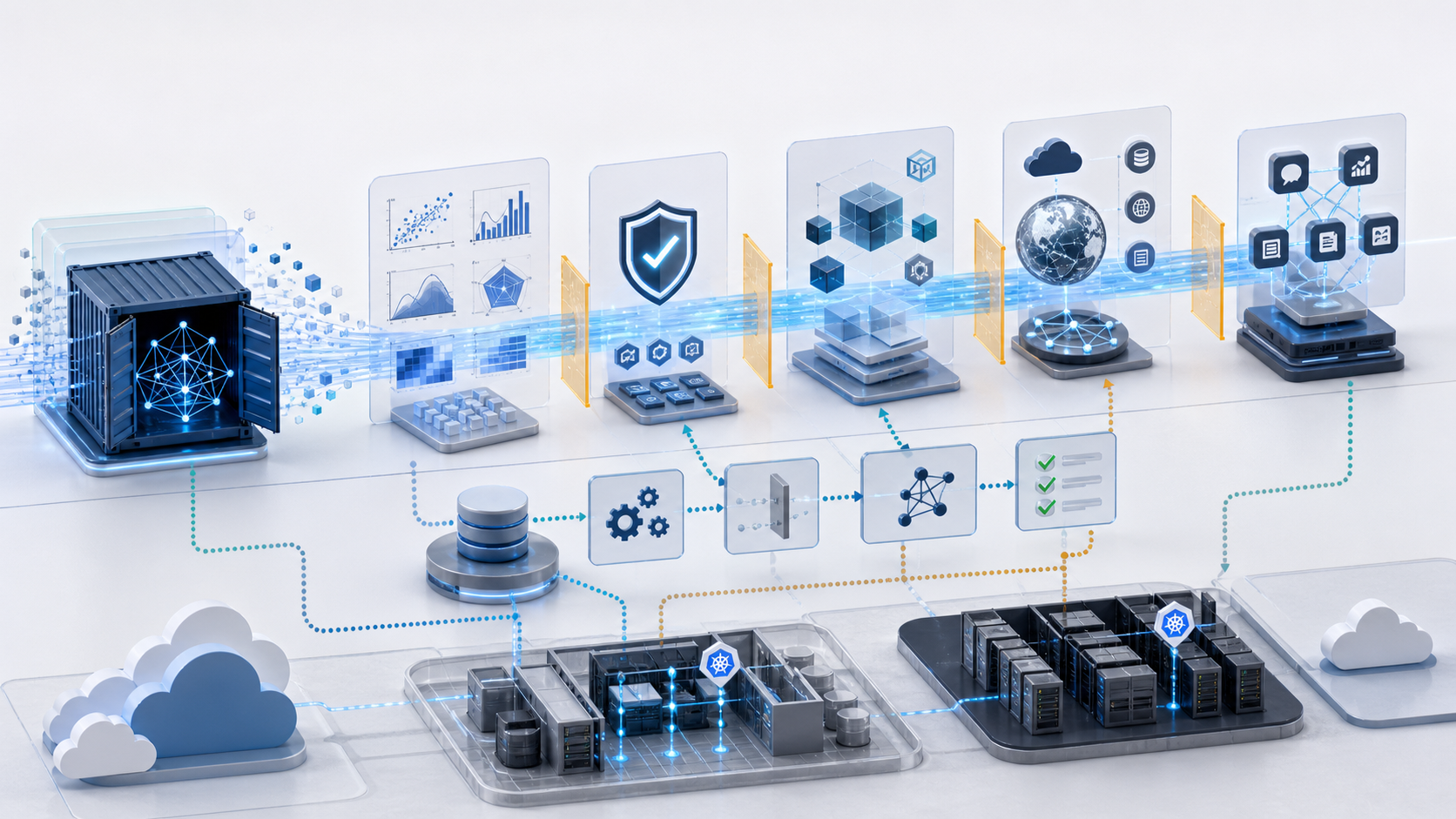
On the enterprise side, Intel and Google Cloud said they are expanding a multi-year collaboration to deploy Gemini Enterprise across Intel’s engineering, supply-chain and corporate operations. The joint announcement says Intel plans dedicated agentic coding assistance, engineering automation and elastic cloud infrastructure for semiconductor development.
Google also added Parallel Web Search as a native grounding provider for the Gemini Enterprise Agent Platform. Google’s developer announcement says the integration is available through the Gemini API, Agent Studio and Google Cloud Marketplace, with usage metered on the customer’s existing cloud bill.
These announcements confirm availability and intended use, not business outcomes. Neither provides independent evidence that agentic workflows will reliably shorten chip-design cycles or improve enterprise productivity. The operational lesson is narrower: agents are being attached to real engineering and information systems, so teams need the same controls they apply to other privileged automation.
What developers and DevOps teams should do now
The immediate task is to make AI infrastructure measurable. Teams should establish workload-level cost and reliability budgets, log tool calls and data access, version prompts and model artefacts, and define rollback paths before agents can change code or production systems. The concerns overlap with LLMOps, but agent deployments add identity, authorisation and action auditing to the model lifecycle.
Model portability also deserves an explicit test. A proof of concept should be repeatable across at least one alternative model or serving path, even if full portability is not a business requirement. That exercise exposes hidden dependencies on proprietary tool schemas, context handling, embeddings and safety filters. Teams building grounded systems can use the same discipline described in GravityDevOps’ guide to retrieval-augmented generation: preserve source provenance, evaluate retrieval quality and treat citations as evidence to verify, not a guarantee of correctness.
Finally, large regional AI projects make energy and capacity planning part of application architecture. Platform teams should ask providers for delivered utilisation, queueing behaviour, fault domains and power constraints. A national AI factory may create strategic capacity, but developers will experience it through quotas, latency, availability and cost.
The bottom line
Friday’s announcements do not settle which country, cloud or model ecosystem will lead. They do show a common direction: AI strategy is becoming infrastructure strategy. Compute scale, open-model access, live-data grounding and agent governance are converging, and the teams that operate those layers will determine whether ambitious AI programmes become dependable services or expensive demonstrations.
Sources: 2026 WAIC chair’s statement; Associated Press reporting from Shanghai; NVIDIA’s Japan infrastructure announcement; Thinking Machines’ Inkling announcement and model card; Intel and Google Cloud’s joint release; and Google’s Parallel Web Search announcement.


