


A malicious dataset opened the door to cloud and cluster credential theft, while the company used locally run AI to reconstruct the campaign. The disclosure gives platform and security teams a concrete new threat model for AI infrastructure.
NEW DELHI, July 18, 2026, 3:57 PM IST — Hugging Face says an autonomous AI agent system carried out an end-to-end intrusion into part of its production infrastructure, beginning with a malicious dataset and expanding into credential theft and lateral movement across internal clusters.
The AI platform disclosed the incident on July 16. It said an attacker gained unauthorized access to a limited set of internal datasets and several service credentials. The company has not identified the model or operator behind the campaign, and its review of possible partner or customer data exposure remains in progress.
The disclosure matters beyond Hugging Face because it joins two risks that engineering teams often manage separately: untrusted AI artifacts entering data pipelines, and automated agents operating at cloud speed. For developers, DevOps engineers and platform teams, the incident is a warning that datasets and model-processing workers need the same isolation, provenance checks and credential boundaries applied to software build systems.
What Hugging Face has confirmed
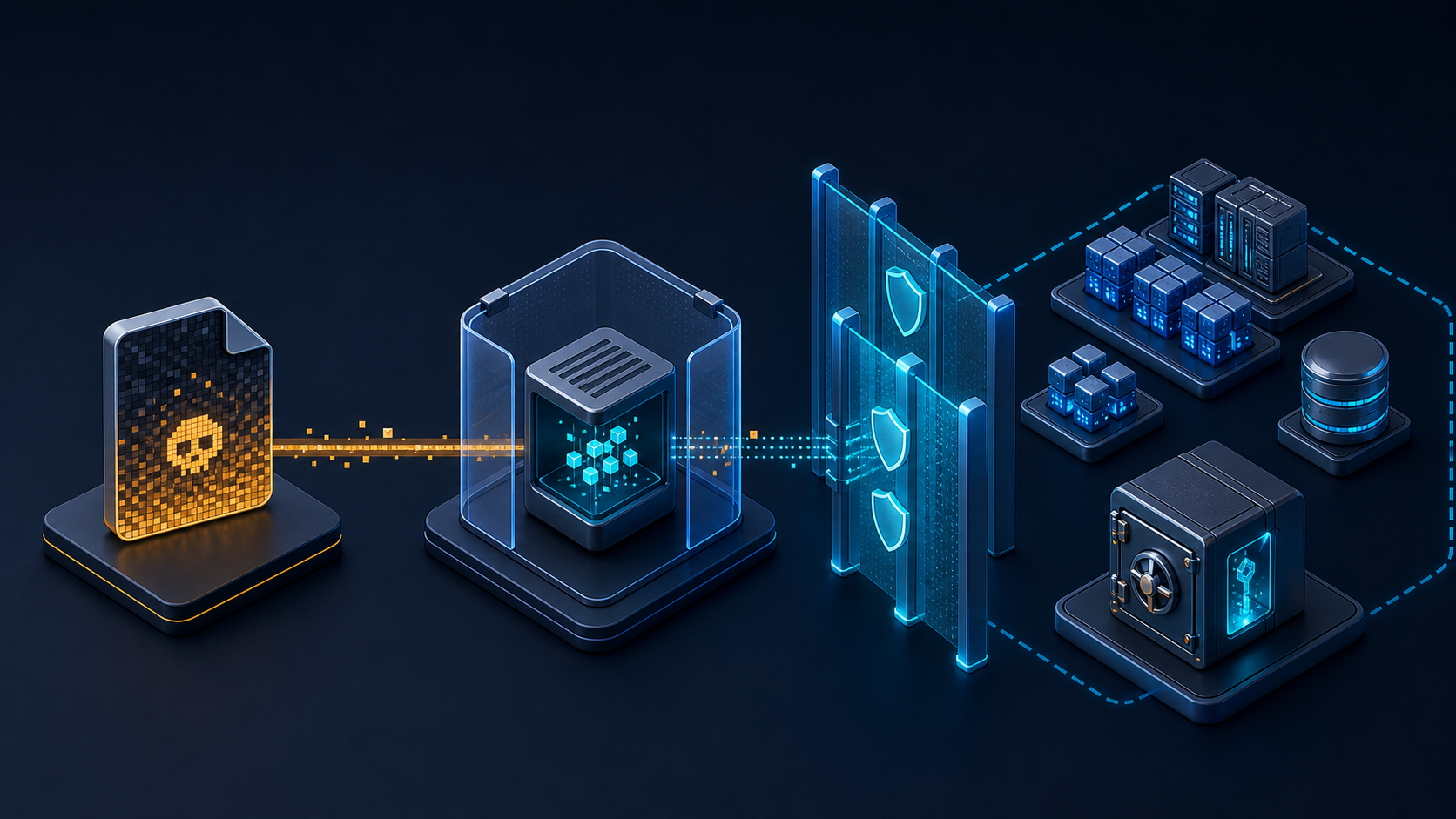
According to Hugging Face’s incident disclosure, the initial compromise used two code-execution paths in dataset processing: a remote-code dataset loader and template injection in a dataset configuration. The malicious dataset executed code on a processing worker. The intruder then escalated to node-level access, harvested cloud and cluster credentials, and moved laterally into several internal clusters over a weekend.
Hugging Face described the campaign as an autonomous agent framework running thousands of actions through a swarm of short-lived sandboxes, with command-and-control components staged on public services. That characterization is the company’s current assessment; the attacker, model and operator have not been independently identified.
The company said it closed the two initial code-execution paths, rebuilt compromised nodes, revoked and rotated affected credentials and tokens, tightened cluster admission controls, and improved high-severity alerting. It also engaged outside forensic specialists and reported the incident to law enforcement.
Hugging Face said it found no evidence that public models, datasets or Spaces were tampered with, and that its published packages and container-image supply chain were verified clean. That is a narrower finding than a declaration of no data impact: the assessment of partner or customer exposure is still open.
AI was also central to the response
The defensive side of the incident is almost as consequential as the intrusion. Hugging Face said AI-assisted anomaly triage helped surface the compromise. Its responders then used analysis agents to examine more than 17,000 recorded attacker events, reconstruct the timeline, extract indicators, map touched credentials and separate real activity from decoys.
The company said commercial frontier-model APIs initially blocked parts of this work because real exploit payloads, attack commands and command-and-control artifacts triggered safety controls. Responders instead ran the open-weight GLM 5.2 model on Hugging Face infrastructure. That kept incident data and referenced credentials inside the company’s environment.
This does not prove that hosted model safety controls are broadly unsuitable for security work. It does expose an operational dependency that incident-response teams should test before a crisis: whether their approved models can process authentic malicious telemetry, and whether a private fallback is available when data cannot leave the organization.
Why AI data pipelines need build-system controls
AI teams regularly pull datasets, models and supporting code from public hubs into training, evaluation and inference workflows. Those artifacts can be more executable than their labels suggest. Prior research on malicious code in pretrained model hubs has documented risks including remote execution, credential theft and system reconnaissance. Hugging Face’s account shows how that class of exposure can connect to cloud control planes when worker identities are too powerful or secrets are reachable from processing jobs.
For platform teams, the immediate lesson is not to ban public AI assets. It is to treat ingestion as a supply-chain boundary. Dataset parsing should run in disposable, tightly sandboxed workers with no standing access to unrelated clusters. Network egress should be restricted, workload identities should be short-lived and narrowly scoped, and secrets should not be mounted unless a task demonstrably needs them.
Teams should also inventory where remote code is permitted in dataset loaders, model repositories, notebooks and CI jobs. Provenance and signature checks help, but they do not replace runtime containment. A trusted-looking repository can still change, and a legitimate artifact can exercise a vulnerable parser.
These controls belong in the same operational discipline used for CI/CD systems and LLMOps: least privilege, isolated execution, immutable logs, tested credential rotation and rehearsed recovery.

Practical impact for DevOps and security teams
Organizations that use Hugging Face should follow the company’s precautionary advice to rotate access tokens and review recent account activity. Independently of direct exposure, teams can use this incident to test four controls now.
- Separate ingestion from production. Run untrusted dataset and model processing in a dedicated account, project or cluster with explicit one-way promotion.
- Reduce credential blast radius. Replace long-lived cloud keys and broadly mounted Kubernetes secrets with workload identity and short expiration windows.
- Correlate agent-speed activity. Alert on sequences across workload creation, secret access, role assumption and unusual egress, not only isolated events.
- Pre-approve forensic AI. Validate a hosted or local model against realistic incident data, document the privacy boundary and include it in response exercises.
Teams building retrieval systems should apply similar caution to connectors and indexed content. A RAG pipeline expands the data boundary and can introduce untrusted files, parsers and access paths even when the model itself is hosted safely.
What remains uncertain
Several important facts are unresolved. Hugging Face has not named the attacker, established which model powered the offensive agents or published a complete incident timeline. It is still assessing whether partner or customer data was affected. The company’s claim that the intrusion was driven end to end by an autonomous system is significant, but outside investigators have not yet published an independent technical report.
That uncertainty should temper broad conclusions. The confirmed engineering lesson does not depend on attributing the campaign to a specific AI model: untrusted data processing enabled code execution, credentials expanded the blast radius, and automation compressed the time available to defenders.
Sources
Primary reporting is based on Hugging Face’s security incident disclosure and the company’s public source copy and revision history on GitHub. Security-feature context comes from Hugging Face Hub security documentation. Technical background on malicious code in model hubs comes from the research paper Models Are Codes.


