

Nvidia has signed memorandums of understanding with six large investment firms to build independent financing platforms for AI compute. The target is more than $500 billion of third-party capital over time, but the agreements are not yet final and the headline figure is not cash already committed.
NEW DELHI, 12 August 2026, 11:35 a.m. IST — Nvidia is moving deeper into the financing of the infrastructure that runs artificial intelligence, announcing partnerships with Apollo, BlackRock, Blackstone, Brookfield, Goldman Sachs and KKR intended to mobilize more than $500 billion for data centres and GPU capacity.
The plan could make it easier for AI labs, cloud operators and enterprises to secure expensive compute without funding every server, network and cooling system directly from their own balance sheets. It also introduces a new layer of financial dependency into the AI stack: the economics of a workload may increasingly depend not only on model efficiency and cloud pricing, but also on how the underlying accelerators are financed, depreciated and reused.
In its official announcement, Nvidia said the six memorandums of understanding are designed to create independent platforms with dedicated pools of capital at what it called attractive rates for its customers. The company described GPU-based “AI factories” as productive infrastructure capable of generating recurring revenue.
The qualification matters. Nvidia said the partnerships remain subject to final agreements. The more than $500 billion figure describes the aggregate third-party capital the platforms aim to mobilize over time; it is not Nvidia revenue, a single fund, or a completed commitment to one buyer or data-centre project.
What Nvidia confirmed
The participating firms bring different pools of infrastructure, private-credit, insurance and capital-markets money. Nvidia said it will work with each firm to finance infrastructure across its ecosystem, including frontier AI laboratories, enterprises and specialist AI cloud providers.
Axios reported that opportunities would be evaluated case by case and that Nvidia may provide residual-value support for up to 25% of an individual opportunity. That support could make lenders more comfortable with equipment that becomes technologically older during a loan or lease, but the exact economics will depend on the final documents and the assets involved.
The financing concept is not entirely new. GPU-backed lending and long-term capacity contracts already help fund specialist cloud companies. Nvidia also offers financing structures for some DGX deployments. What is new here is the proposed scale and the attempt to connect multiple globally significant capital providers to a repeatable pipeline of Nvidia-based compute projects.
Why this matters for cloud and platform teams
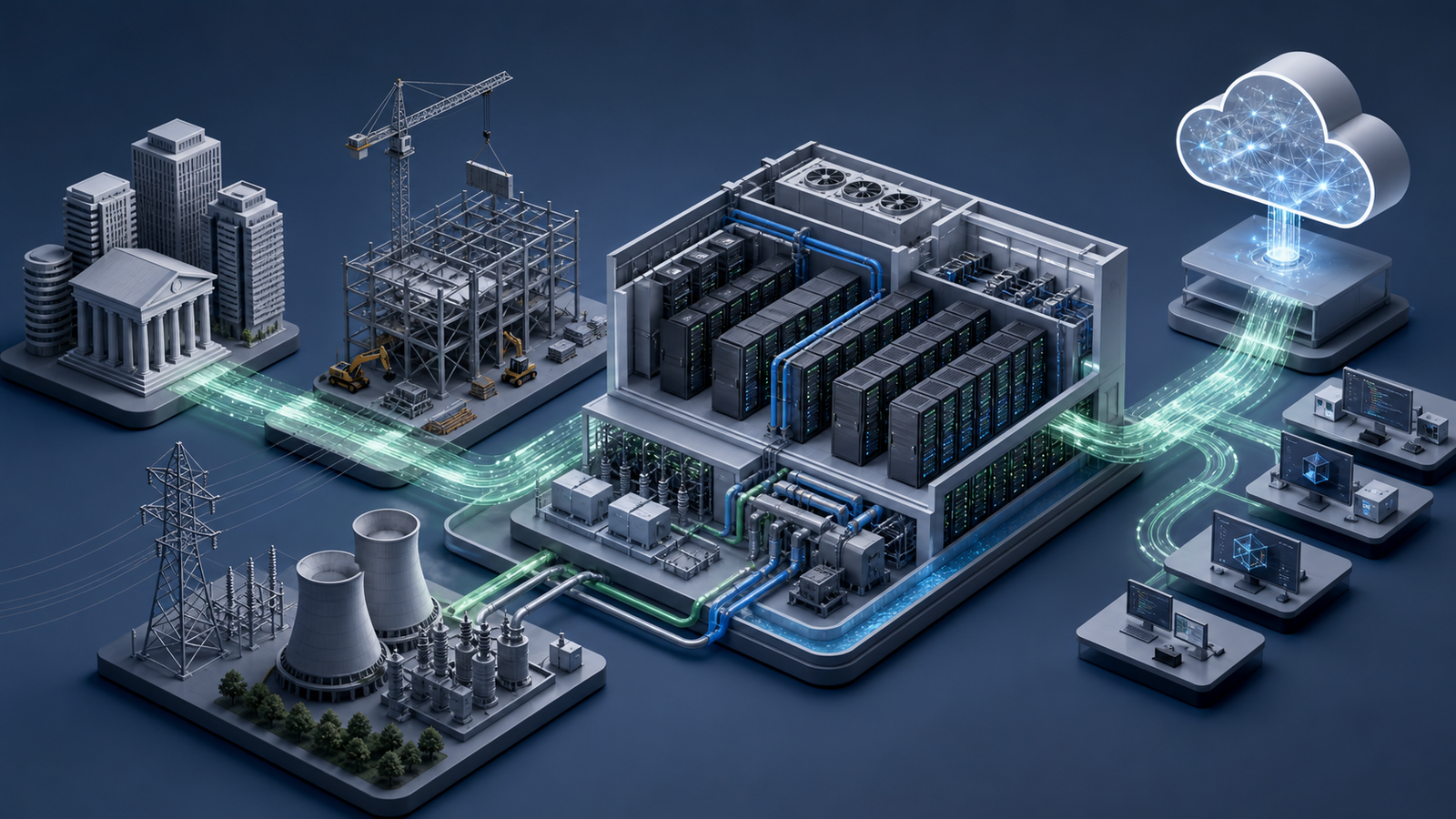
For engineering organisations, the near-term effect is unlikely to be a sudden drop in GPU prices. Financing can accelerate capacity construction, but it does not remove constraints such as grid connections, transformers, cooling equipment, network fabrics, memory supply or skilled operations staff. It can also create pressure for high utilisation because financed assets need predictable cash flow.
That makes capacity planning more important, not less. Platform teams should expect more offers built around reserved clusters, committed spend and longer contracts. Those deals can secure access and improve unit economics for steady workloads, but they may be a poor fit when model architectures, accelerator requirements or demand volumes are changing quickly.
Teams evaluating new AI infrastructure should compare at least three scenarios: on-demand cloud capacity, a reserved or financed deployment, and a portable multi-provider design. The comparison should include power and cooling charges, network egress, storage, software licences, support, minimum utilisation, migration costs and the residual value assumed for the hardware. A cheap accelerator-hour can become expensive if a contract locks the team into idle capacity or a narrow software stack.
The announcement also strengthens Nvidia’s full-stack position. More Nvidia systems can expand the installed base for CUDA, networking and associated software, while financing tied to Nvidia equipment may make alternative accelerators harder to introduce later. Buyers should therefore preserve workload portability at the container, scheduler and model-serving layers where practical, and test critical workloads before signing multi-year commitments.
For teams formalising production operations, GravityDevOps’ guide to LLMOps covers the monitoring and lifecycle controls that become essential once model workloads share costly infrastructure. The site’s comparison of CI/CD tools is also relevant when infrastructure changes need repeatable validation rather than manual rollout.
Finance does not solve the operational bottlenecks
Nvidia argues that its compute remains useful across models and workloads and can improve economically through CUDA software updates. That is the supplier’s case for treating GPU systems more like durable infrastructure than fast-depreciating IT equipment. Independent investors will still have to judge demand, contract quality, energy availability, hardware ageing and resale markets for themselves.
The risk is concentration. If lenders, cloud operators, model companies and hardware suppliers all rely on the same utilisation assumptions, a slowdown in AI demand or a sharp efficiency gain could affect several layers at once. Axios noted that the structure could revive concerns about circular financing, in which suppliers help fund customers whose purchases in turn support supplier growth.
That does not mean the projects are uneconomic. Data-centre capacity with contracted customers can produce long-lived cash flows, and institutional capital routinely funds power, telecommunications and other infrastructure. But GPU clusters have faster technology cycles than many traditional assets, while their value depends heavily on software compatibility, interconnect performance and access to electricity.
Developers should also distinguish available compute from deployable services. A funded data centre still needs provisioning systems, identity controls, secrets management, observability, quota enforcement, incident response and model governance. Organisations building retrieval systems can use the architectural grounding in GravityDevOps’ RAG guide, but production readiness depends on those surrounding controls as much as on accelerator supply.
What happens next
The next confirmed milestone is the execution of final agreements. After that, the useful disclosures will be the size and terms of actual capital pools, named projects, customer commitments, Nvidia’s risk exposure, expected deployment schedules and the treatment of older hardware.
Until those details appear, the announcement is best read as a major attempt to standardise AI-compute finance rather than proof that $500 billion has already entered the market. For DevOps and cloud leaders, the practical signal is clear: infrastructure sourcing is becoming a capital-structure decision as well as a technical one. Contract flexibility, utilisation telemetry and exit planning should be reviewed alongside benchmark performance.
Sources
This report is based on Nvidia’s announcement, with deal structure and risk context cross-checked against Axios’ follow-up reporting and its initial report.


