
SEO excerpt: Meta has released Muse Glimmer, a 30-billion-parameter open-weight model designed to run local multimodal AI agents on 24 GB and 32 GB hardware. Here is what developers and platform teams need to verify before deployment.
NEW DELHI, Aug. 11, 2026, 1:15 p.m. IST — Meta has released the weights for Muse Glimmer, a 30-billion-parameter multimodal model built for local AI agents, putting a new option in front of engineering teams that want tool-using models to run without sending every prompt, screenshot or repository snippet to a hosted API.
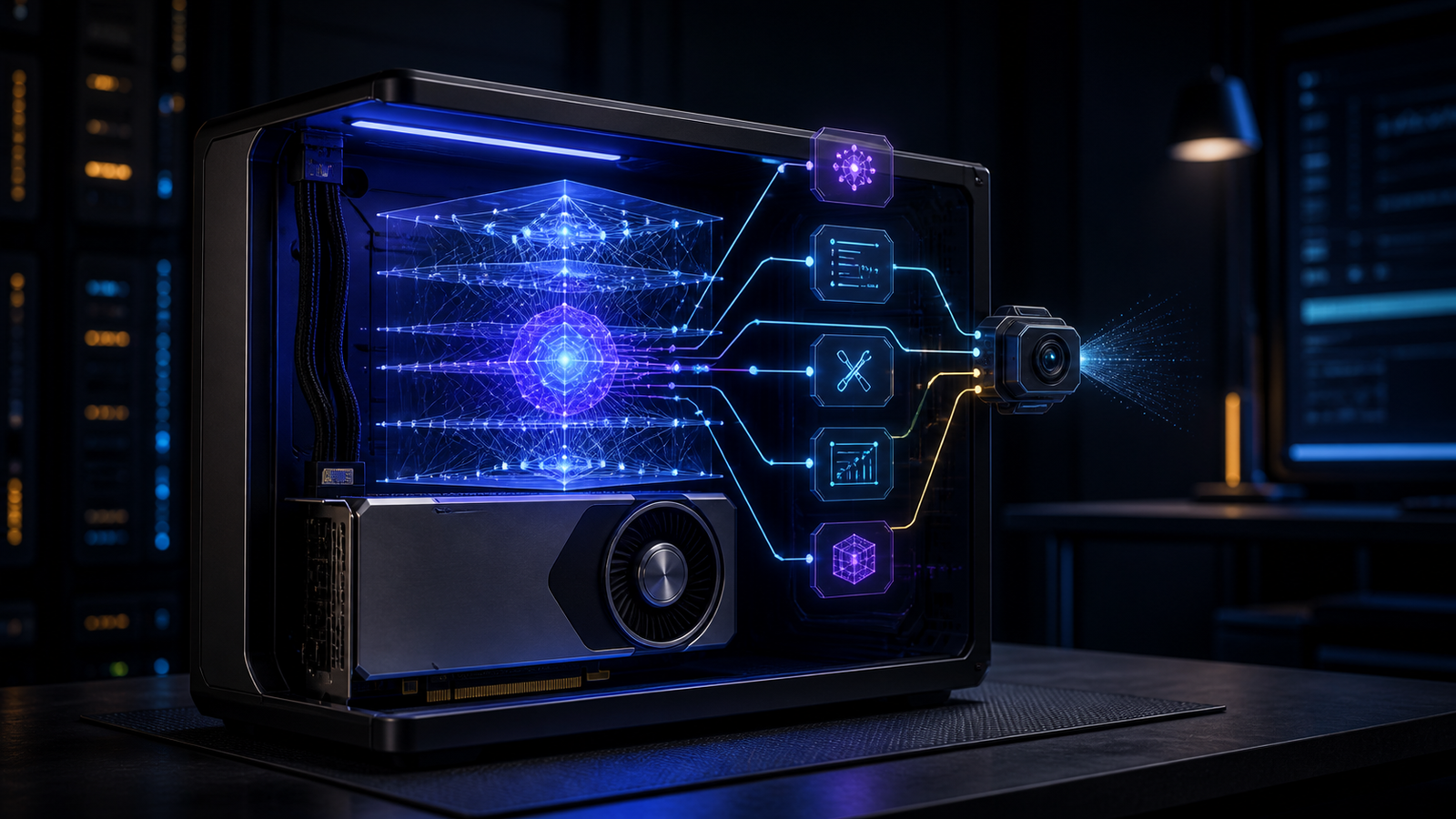
The release matters because it narrows the gap between cloud-hosted agent systems and models that teams can operate on their own workstations or controlled infrastructure. Meta says quantized variants can fit inside a 24 GB or 32 GB memory envelope while retaining room for a long-context cache, image encoder and speculative-decoding component. That is a materially different deployment profile from frontier-scale models that require multi-GPU servers or external inference services.
What Meta released
According to the official Muse Glimmer model card, the model has about 29.6 billion parameters, including a roughly 1.8-billion-parameter vision encoder. It accepts interleaved text and images and produces text, with a stated context length of at least 131,072 tokens. Meta lists coding agents, local task automation, tool calling, document and screenshot interpretation, synthetic-data generation and model evaluation among its intended uses.
The full-precision and quantized artifacts are available under the Apache 2.0 license. Meta says the approximately four-bit variants shrink the language-model weights to under 20 GB. One target is a 17 GB quantization intended for 24 GB systems; another is designed for a 32 GB envelope. Those numbers describe model packaging, not total workstation requirements, and actual usable context will depend on the inference runtime, cache precision, workload and other components loaded alongside the model.
Meta also ships a small DFlash drafter that proposes blocks of tokens for the main model to verify in parallel. In Meta’s own batch-one, greedy-decoding tests, the combination delivered a reported 3.1-fold speed-up on an Nvidia RTX 5090 and smaller gains on Apple M4 Max and M5 Max systems. These are vendor measurements under specific settings and should not be read as universal throughput guarantees.
Why developers and platform teams should care
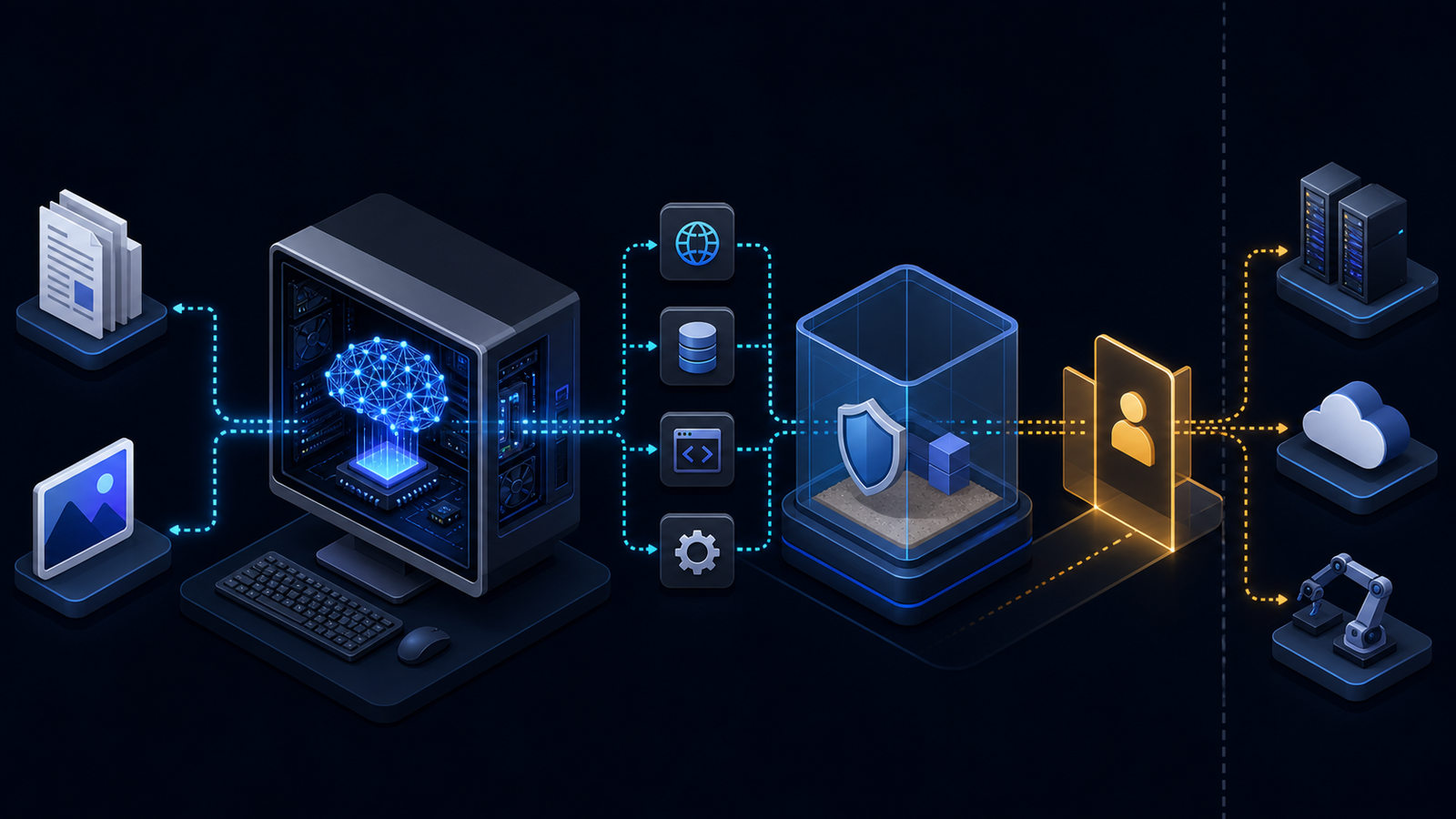
A model that can run on a single high-end workstation creates a practical test bed for teams evaluating agentic workflows. Developers can prototype repository search, build-log analysis, ticket triage or runbook assistance without paying per-token API charges during every experiment. Regulated teams can also keep selected prompts and source material inside an environment they control, subject to their own security architecture and policies.
That does not make local inference automatically private or safe. Prompts may still reach external systems through tools, telemetry, package downloads or connected model gateways. Platform engineers need explicit egress controls, secret isolation, short-lived credentials and auditable tool policies. GravityDevOps’ overview of LLMOps practices provides useful context for versioning, monitoring and governing these systems, while its guide to retrieval-augmented generation explains how teams can ground a model in controlled internal knowledge.
The model card says Muse Glimmer supports common agent scaffolds and structured function calls, but compatibility should be tested rather than assumed. A platform team considering the model should start with a fixed evaluation set drawn from its own repositories and operations data. It should measure task completion, tool-selection accuracy, latency, memory use, false-positive remediation steps and the rate at which a human must intervene.
Benchmarks show promise — and limits
Meta reports a 51.2 score on SWE-Bench Pro and 76.0 on SWE-Bench Verified in its high-reasoning configuration. The company says Muse Glimmer outperformed the compared Gemma4-31B configuration on both tests and narrowly exceeded Qwen3.6-27B on SWE-Bench Pro. However, Qwen’s compared configuration scored higher on SWE-Bench Verified and TerminalBench 2.1. Meta’s table also shows competitors ahead on several multimodal and general-reasoning evaluations.
The mixed results are more useful than a blanket “best model” claim. They suggest that Muse Glimmer may be competitive in some agent and coding workflows while remaining workload-dependent. Teams should reproduce results with their own runtime, quantization and agent harness before changing production architecture.
Security results deserve equal attention. Meta reports a 28.4 percent attack-success rate on its Siren AgentDojo evaluation, compared with 25.6 percent for the evaluated Gemma configuration. The exact benchmark context matters, but the broader operational lesson is clear: local deployment does not remove prompt-injection risk. Meta itself recommends extra guardrails and human confirmation for irreversible actions.
A practical deployment path
For DevOps teams, the immediate opportunity is controlled experimentation rather than unsupervised production access. A sensible first phase is a read-only assistant that summarizes CI failures, correlates logs or drafts remediation steps. Keep shell execution, deployments, ticket updates and cloud-resource changes behind approval gates until the model has passed task-specific reliability and adversarial tests.
Teams should also pin model files by checksum, scan container images and dependencies, and record the exact inference engine and quantization used in each evaluation. Treat model weights and agent prompts as versioned supply-chain components. If the model participates in delivery workflows, connect it to the same policy and evidence controls used for other CI/CD tooling.
Meta’s release follows its cloud-oriented Muse Spark line but targets a different operational constraint: useful agent behavior on hardware a developer or small team can own. The Meta research announcement and public weights make independent evaluation possible. The next question is not whether the model fits in memory, but whether it remains reliable, observable and governable in real engineering work.
What remains uncertain
Independent testing is still early. Real-world performance can vary sharply with quantization, context length, tool schemas and prompt design. Meta’s January 2026 knowledge cutoff also means current operational facts need retrieval or tool access, which introduces its own trust boundary. Availability across inference runtimes may differ at launch, and teams should verify production support before committing to a serving stack.
For now, Muse Glimmer is best viewed as a credible new local-agent candidate with unusually accessible deployment targets—not as a drop-in replacement for every hosted model. Its value will depend on disciplined evaluation and the quality of the system wrapped around it.
Sources: Meta AI Research; the official Muse Glimmer model card and released artifacts on Hugging Face; contemporaneous coverage by Reuters, CNBC and The New York Times reviewed for launch context.


