
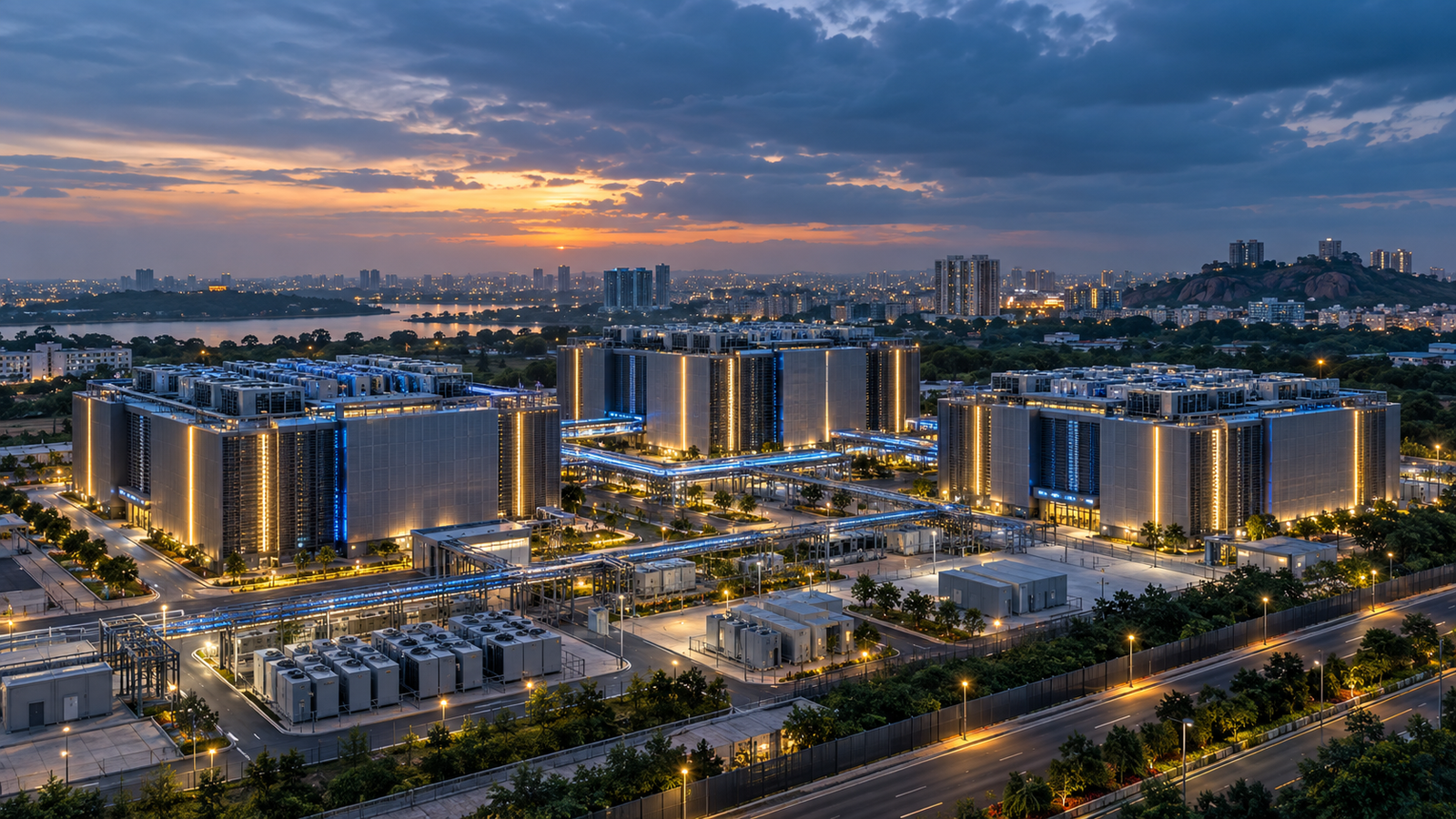

NEW DELHI, September 21, 2026, 10:08 p.m. IST — Microsoft has designated its India South Central cloud region in Hyderabad as a strategic AI infrastructure hub for Asia and the Global South, adding a three-zone Azure footprint intended to bring advanced compute, data residency options and resilient cloud capacity closer to Indian organizations.
The announcement matters less as a ribbon-cutting exercise than as an operational signal. The Hyderabad region became generally available in August, but Microsoft is now positioning it as a foundation for AI workloads while additional Azure and Microsoft Foundry capabilities roll out. For developers and platform teams, that means a new deployment location is available today, but the service catalog, quota profile and AI-model availability still need to be checked workload by workload.
What Microsoft confirmed
Microsoft said India South Central is its fourth cloud region in India, joining regions in Pune, Chennai and Mumbai. The company describes the Hyderabad site as AI-ready and built around three availability zones, a design that can let teams distribute compatible services across physically separate locations within the region.
The company’s current Azure regions list identifies the programmatic region name as indiasouthcentral, places it in Hyderabad and shows availability-zone support. Microsoft’s global infrastructure directory also says customer data stored at rest in the region remains in India.
Microsoft said the region launched with a broad Azure portfolio and is designed to support the wider Azure and AI catalog, including Microsoft Foundry, as capabilities are added. That distinction is important: “designed to support” is not the same as every service, accelerator, model or SKU being generally available on day one.

Why the Hyderabad region matters for AI operations
India-based teams have often had to balance latency, data-location requirements, capacity and the uneven regional availability of managed AI services. A new domestic region expands the placement choices available for inference endpoints, retrieval systems, data pipelines and the surrounding observability stack.
For regulated organizations, Microsoft says the region offers local capacity and controls intended to help address applicable requirements under India’s Digital Personal Data Protection framework and guidance from MeitY, RBI and CERT-In. Those are platform capabilities, not an automatic compliance result. Each organization remains responsible for classifying data, mapping controls, choosing replication settings and documenting where prompts, embeddings, logs, backups and model outputs travel.
The three-zone architecture also gives architects another way to reduce single-site failure risk. Production teams should still confirm that every dependency supports zonal deployment. A highly available inference tier can remain fragile if its vector store, key management service, container registry or telemetry pipeline is pinned to one zone.
Teams new to production AI should treat the region decision as part of a broader operating model. GravityDevOps’ guide to LLMOps covers the monitoring, evaluation and lifecycle practices around deployed models, while its overview of retrieval-augmented generation explains why data location and retrieval dependencies matter alongside model hosting.
Cooling claim needs a precise reading
Microsoft says the Hyderabad facilities use high-efficiency mechanical cooling with air-cooled chillers and consume effectively zero water for cooling during normal operations. That is narrower than saying the datacenter has no water footprint. Construction, electricity generation, maintenance and exceptional operating conditions can still involve water use, and Microsoft has not published a site-level lifecycle total in Monday’s announcement.
The design nevertheless reflects a broader shift in AI infrastructure. Dense accelerator clusters create substantial heat, so cooling architecture increasingly affects site selection, capacity planning and environmental reporting. Microsoft previously described closed-loop chip cooling and air-cooled chillers as the basis of its zero-water cooling design for newer AI datacenters.
What platform teams should verify before migrating
The practical first step is an inventory, not a mass redeployment. Teams should compare the India South Central service catalog with their current stack, then validate accelerator SKUs, quota lead times, managed-model availability, zone support and pricing. Infrastructure-as-code modules may also need the new region identifier, supported zone numbers and region-specific exclusions.
Resilience planning deserves separate attention. Microsoft documentation pairs India South Central with Central India, but its reliability guidance warns customers not to treat provider-managed regional failover as a complete disaster-recovery strategy. Recovery objectives, replication mode and failover tests still belong to the application owner.
AI systems add further dependencies that conventional web applications may not expose. Model endpoints, safety filters, evaluation stores, feature pipelines and GPU scheduling can have different regional footprints. An application should degrade safely if a preferred model or accelerator becomes unavailable, rather than silently routing sensitive data outside the intended geography.
Deployment pipelines should encode those boundaries and test them continuously. Teams comparing release tooling can use GravityDevOps’ CI/CD tools comparison as a starting point, but the key control is policy: block unsupported regions, require approved data routes and make capacity fallbacks explicit.
The broader context
Microsoft says Adani Group, Bajaj Finserv, HDFC Bank and PB Pay are among the organizations already using or signed up for the region. It also links the expansion to a previously announced $20.5 billion commitment in India. Those customer and investment figures come from Microsoft and do not establish how much AI capacity is currently available to every Azure customer.
The most useful interpretation is therefore measured. Hyderabad gives Indian cloud teams another live region, three-zone architecture and a path toward a broader local AI service catalog. It does not remove the need to inspect regional product tables, request quota, test failover or perform a compliance assessment. The opportunity is real, but production readiness will be decided in architecture reviews and deployment tests—not in the summit headline.
Sources
Microsoft’s September 21 infrastructure announcement; its August 6 general-availability announcement; the Azure region directory; and Microsoft’s region-pair reliability guidance. Independent same-day context was checked against reporting by The Economic Times.

