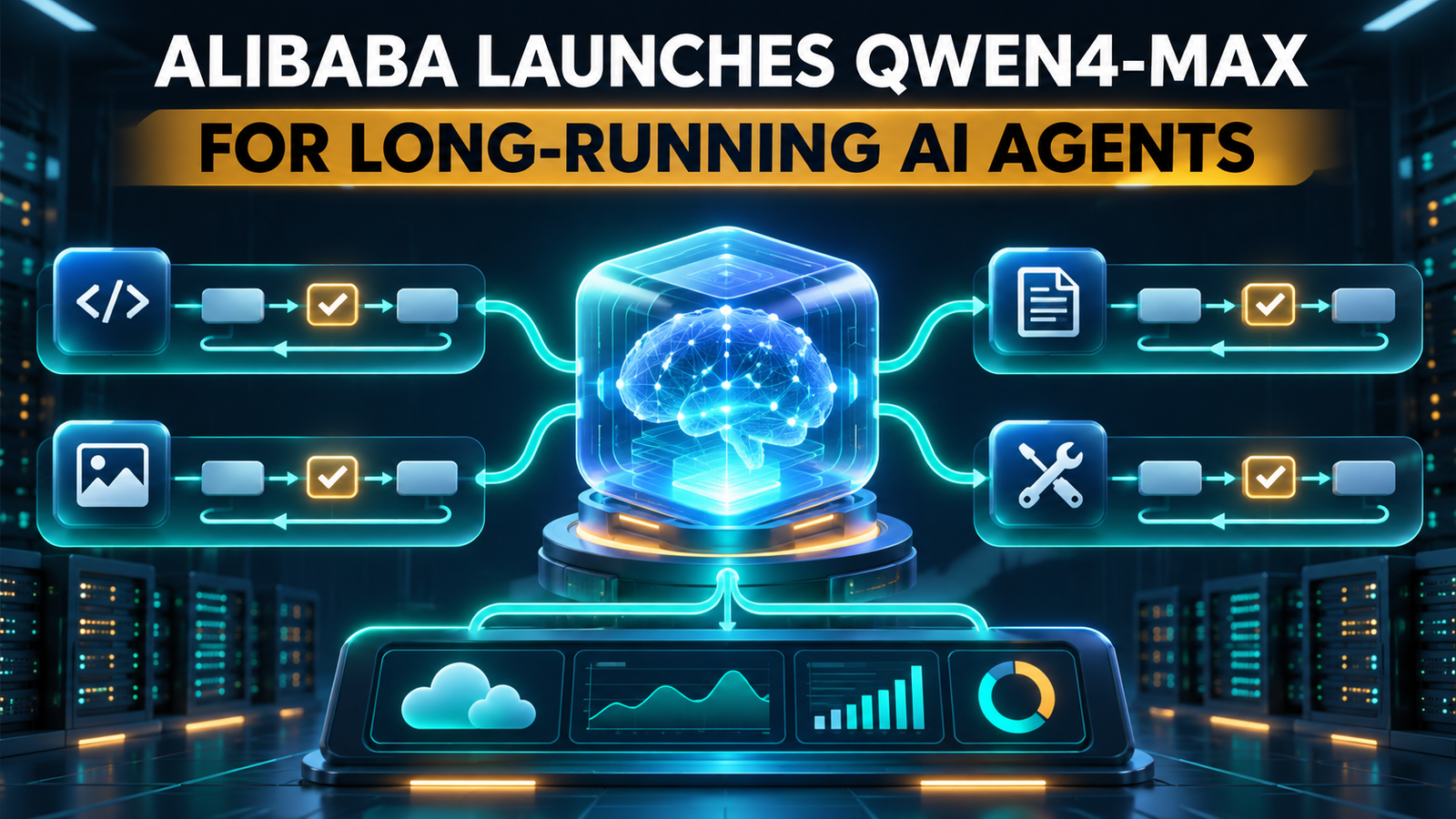

NEW DELHI, 16 November 2026, 4:40 p.m. IST — Alibaba’s Qwen team has released Qwen4-Max, a new flagship multimodal model aimed at coding, professional work and long-running agent tasks, moving the model from a limited preview into pay-as-you-go API availability.
The release matters for engineering teams because it combines a one-million-token context window, native image and video understanding, tool calling and compatibility with familiar API formats. It also arrives with production limits that teams need to account for: Alibaba’s documentation says batch inference, fine-tuning and customer-managed model deployment are not supported.
What Alibaba confirmed
According to the Qwen launch announcement, Qwen4-Max is built on a new mixture-of-experts architecture with a 2.4-trillion-parameter backbone. The company positions it for work that spans code, documents, visual inputs and extended tool use. Those scale and performance claims come from Alibaba and have not yet been independently validated across production workloads.
The QwenCloud model changelog lists the production model identifier as qwen4-max and confirms support for text, image and video understanding, reasoning, coding, agent tasks, tool calls, structured outputs, explicit caching and chain-of-thought summaries. The earlier qwen4-max-preview remains a separate model.
Alibaba’s developer documentation says the model accepts up to one million tokens of context and can produce up to 131,072 tokens in non-thinking mode. Thinking is enabled by default, with a default budget of 131,072 tokens and a combined thinking-and-answer ceiling of 262,144 tokens.
The model is available through QwenCloud endpoints in Singapore, Beijing, Frankfurt, Hong Kong, Tokyo and Northern Virginia. Alibaba says developers can call it through Chat Completions, Responses, Anthropic Messages or DashScope interfaces. The Singapore list price is $1.50 per million input tokens and $4.50 per million output tokens, including thinking tokens; prices differ slightly for Beijing and global deployments, according to the official pricing page.
The production question is bigger than context length
A one-million-token window can reduce the need to split a large repository, lengthy incident record or document collection across many requests. It does not remove the need for retrieval design or input governance. Sending an entire corpus can increase latency and cost, expose irrelevant data and make failures harder to trace.
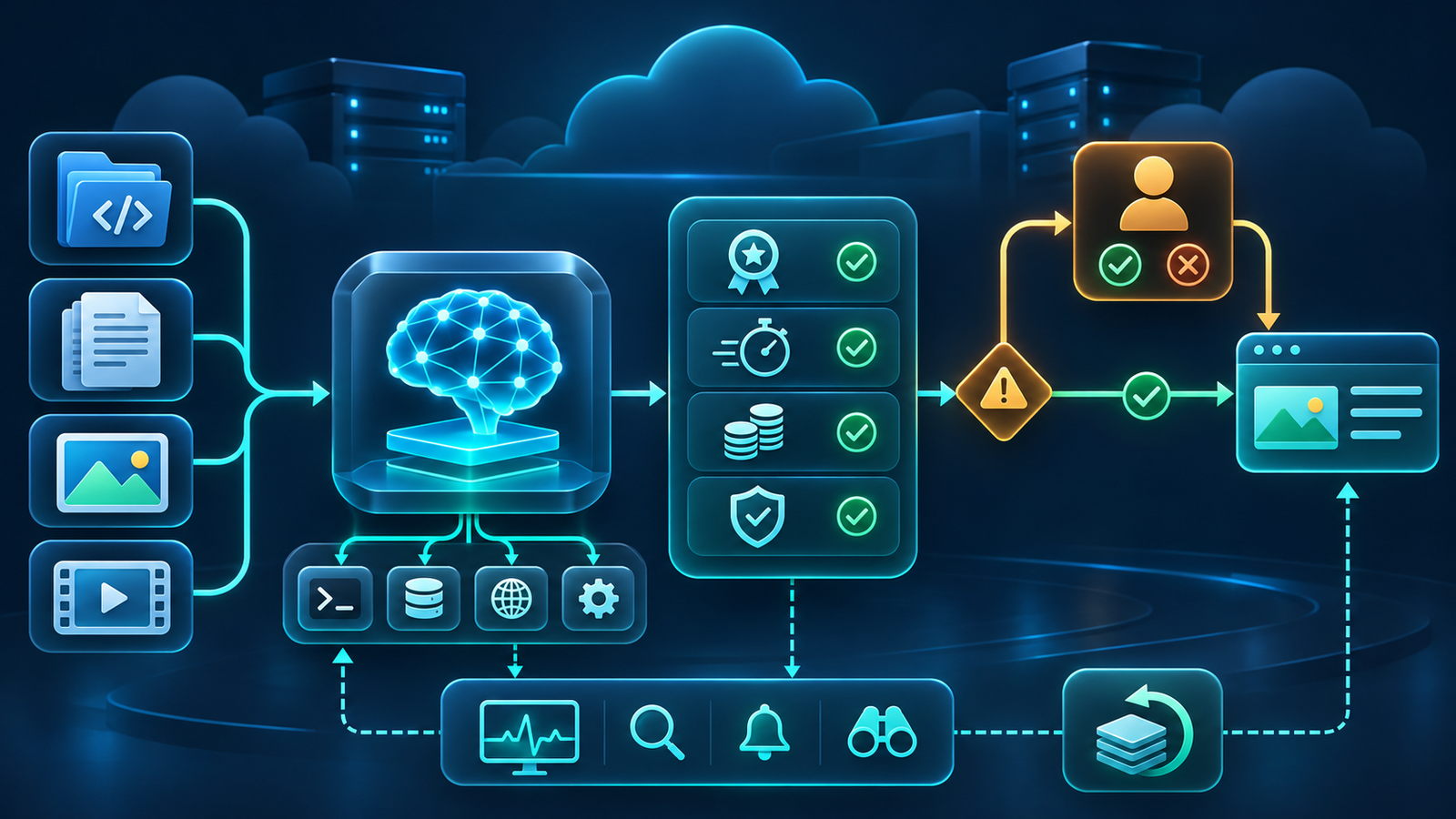
For platform teams, the first test should therefore be workload-specific. Compare Qwen4-Max with the current production model on repository-scale code review, infrastructure-change planning, incident analysis and document-heavy agent tasks. Measure task completion, tool-call accuracy, end-to-end latency, input and thinking-token use, retry rates and human corrections rather than relying on vendor benchmark tables.
The default thinking budget deserves particular attention. Thinking tokens are billed as output, so a broad context and a long reasoning run can change unit economics quickly. Explicit caching may lower repeated-context costs, but teams should verify cache hit rates and data-retention controls in the region they plan to use.
Implications for DevOps and cloud teams
API compatibility can shorten an evaluation, but it is not evidence of identical behavior. Tool schemas, streaming events, reasoning controls, error responses, rate limits and message preservation should be tested in a staging harness before any routing change. Teams using coding agents should also verify repository permissions and isolate tool execution from production credentials.
The lack of batch support is an immediate constraint for offline evaluation or high-volume asynchronous processing. Fine-tuning and model deployment are also unavailable, which means teams that require custom weights or customer-controlled serving infrastructure will need another option. Alibaba’s smaller Qwen4 models are expected later, but the company has not published sizes or release dates; Qwen4-Max itself is not described as an open-weight release.
Regional endpoints give organizations more placement choices, but the documentation does not by itself establish that every workload meets a company’s residency, privacy or sector-specific obligations. Security and legal teams should review the applicable service terms, logging, retention and cross-region behavior before sending sensitive code or operational data.
For teams building an internal model gateway, the practical path is a controlled canary: pin the exact model identifier, cap token and tool budgets, log model and tool versions, require approval for destructive actions and retain a tested fallback. That is consistent with the broader discipline described in GravityDevOps’ guides to LLMOps, retrieval-augmented generation and CI/CD tooling.
What remains uncertain
Alibaba published extensive examples and benchmark comparisons, but independent testing of the final production endpoint is still limited on launch day. Real-world results will vary with prompts, agent harnesses, tool permissions, context composition and regional infrastructure. The release expands the set of models worth evaluating; it does not make a production migration automatic.
Qwen4-Max is available now through QwenCloud’s pay-as-you-go API and supported coding-tool integrations. Engineering teams should treat the launch as an evaluation candidate, with cost, safety and operational reliability gates applied to their own workloads.

