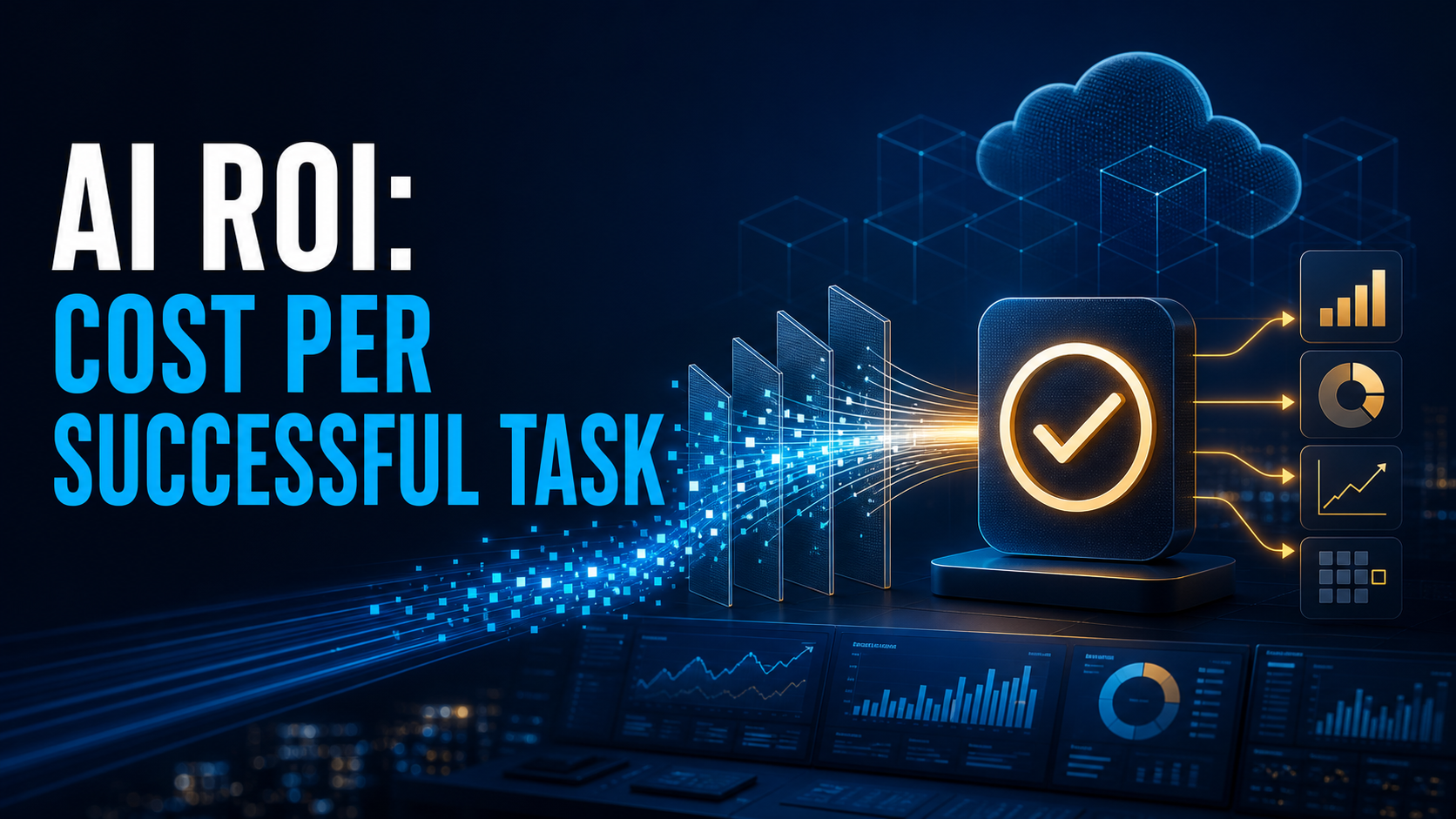

NEW DELHI, July 19, 2026, 6:00 PM IST — OpenAI is urging enterprises to judge artificial intelligence spending by the cost of work that is successfully completed, not by token prices, purchased seats or raw usage. The proposal puts a sharper operational question in front of teams deploying AI agents: what did the system finish, how often was it right, and what did that outcome cost after retries and human review?
In a company post published Friday, OpenAI CFO Sarah Friar described the approach as “useful intelligence per dollar.” The framework asks organizations to measure work completed, cost per successful task, result reliability and whether each AI dollar produces more value as usage grows. Axios reported that the proposal arrives as finance leaders demand clearer returns from fast-growing enterprise AI bills.
The shift matters for developers, platform engineers and cloud teams because it moves AI economics into the same territory as production reliability. A cheap model can become expensive if it needs repeated attempts, long execution time or extensive review. A costlier model may be economical when it completes a task correctly on the first attempt. The relevant unit is therefore not simply an input or output token; it is a verified outcome.
What OpenAI confirmed
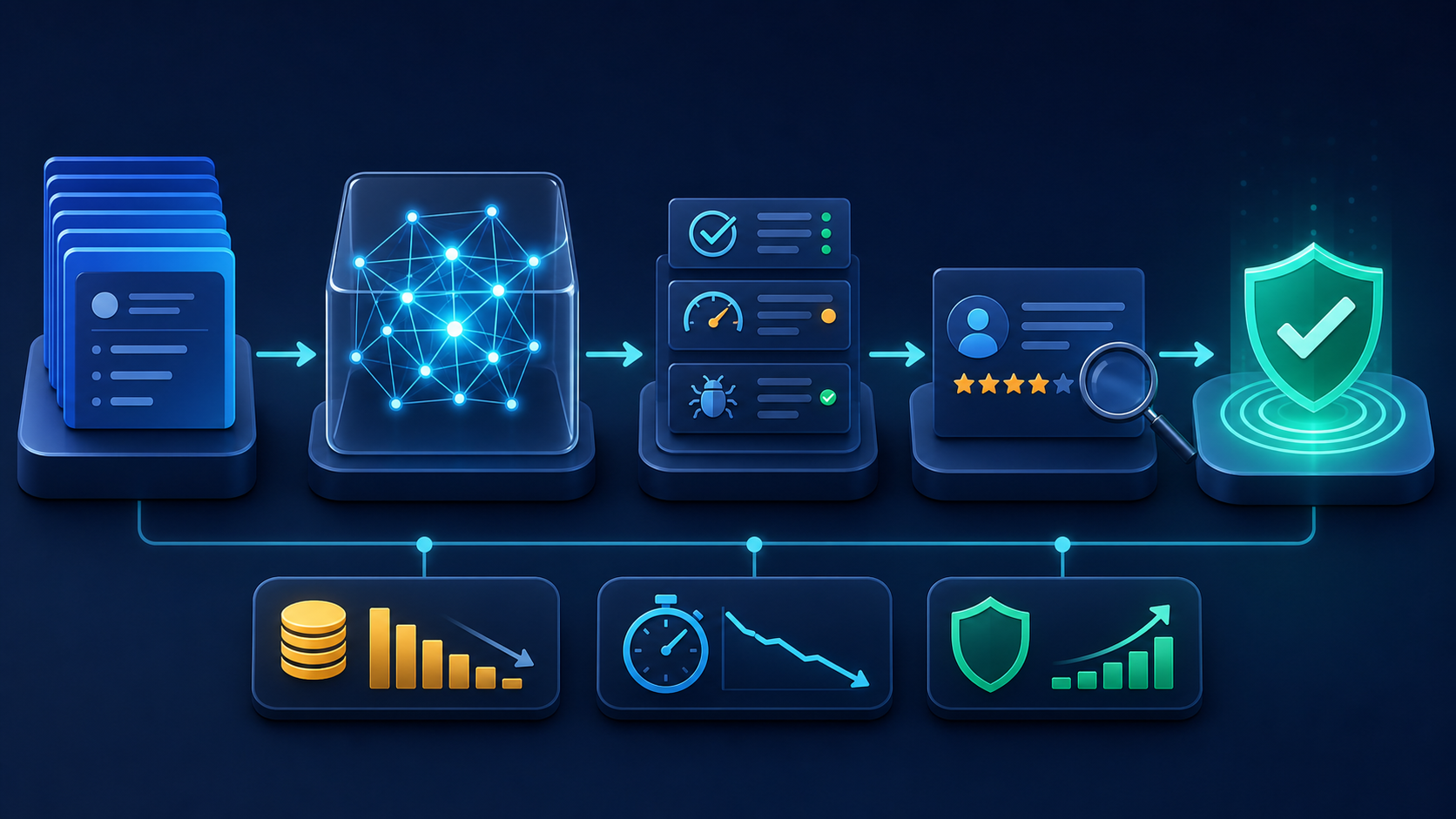
OpenAI’s scorecard proposes four questions for enterprise deployments: whether AI completes work that matters, the full cost of each successful task, whether the result is dependable, and whether value rises as usage expands. For an engineering team, the company suggests that “done” could mean a code change that passes its tests.
That definition is more demanding than tracking API consumption. Full task cost can include model calls, tool execution, retrieval, sandbox or runner time, retries, validation and human intervention. OpenAI argues that this broader measure can explain why a model with higher per-token pricing may still produce a lower cost per accepted result.
OpenAI used its GPT-5.6 Sol model as evidence for the thesis, citing a leading score on the Artificial Analysis Coding Agent Index while using fewer output tokens than another leading system. The benchmark operator’s independent results page confirms that GPT-5.6 Sol with maximum reasoning led its coding-agent index in the tested Codex harness.
That result should not be read as a universal production ranking. Artificial Analysis documents that its public rows represent specific agent variants and settings, while its composite and methodology can change as evaluations evolve. Model choice, repository shape, tools, prompts, caching and acceptance criteria can all change the economics inside a real deployment.
Why token price is an incomplete metric
Token cost remains useful for forecasting and anomaly detection, but it does not show whether an agent’s output was usable. Two runs with the same token spend may have very different value if one passes integration tests and the other triggers a rollback. Likewise, a low-cost model that fails repeatedly can consume more compute and engineering time than a higher-priced model that completes the task once.
The recent DeepSWE research paper underscores the measurement problem. Its authors built long-horizon software-engineering tasks with original repositories and stronger verification, finding that established benchmark tests could disagree substantially with independent review. The practical lesson is not that one benchmark settles model selection, but that verification quality changes what teams count as success.
What platform teams need to instrument
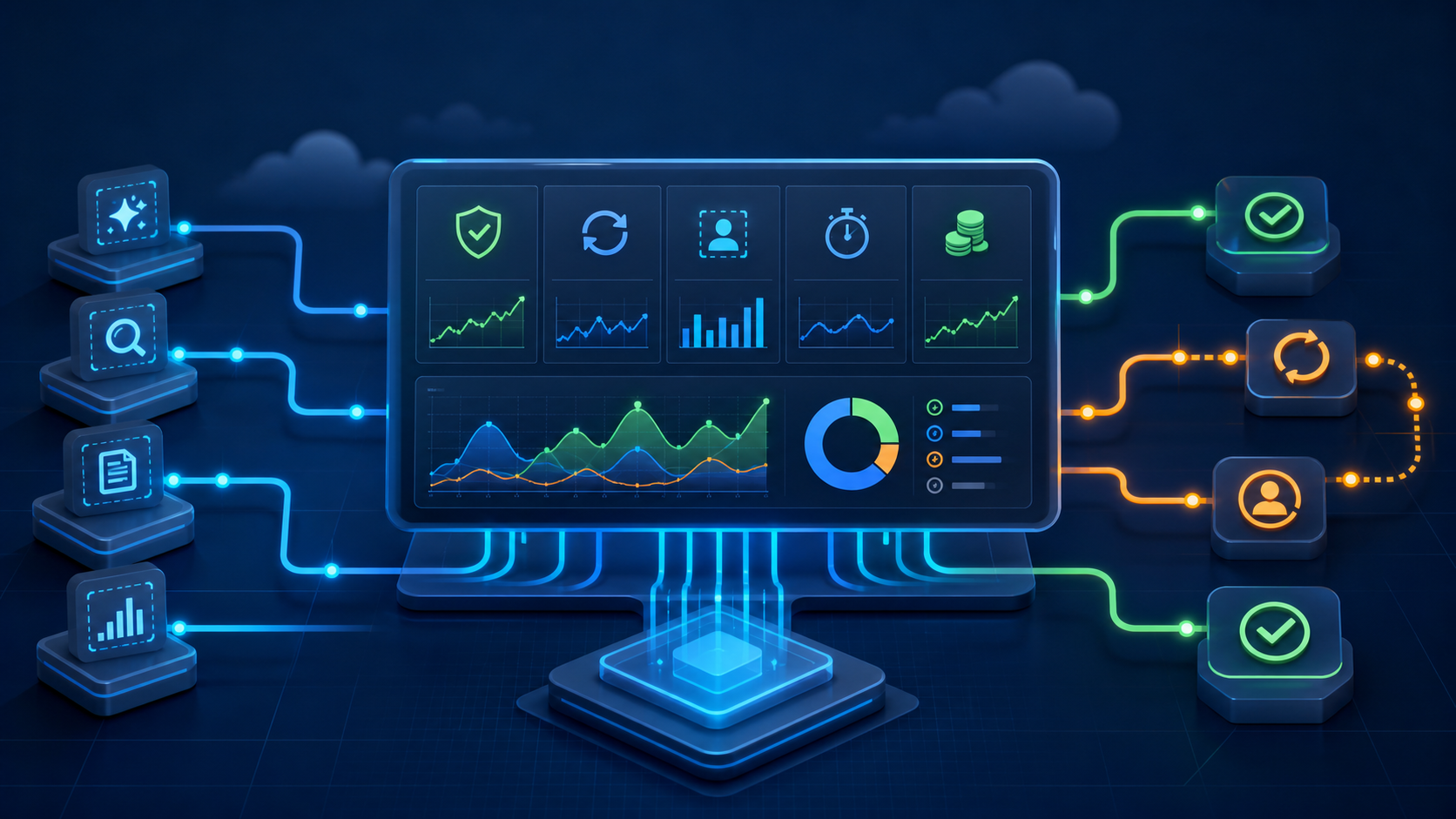
For DevOps and platform groups, a cost-per-successful-task model requires telemetry that joins financial and reliability data. Teams need a stable task identifier across model calls and tools, an explicit acceptance event, and a complete record of retries, latency, compute, failed tests, escalations and review time. Without that linkage, a dashboard can show falling token costs while the cost of accepted work is rising.
A practical scorecard can start with a small set of production measures: accepted tasks per workflow, first-pass success rate, total cost per accepted result, p50 and p95 completion time, retry rate, human-review minutes and rollback or incident rate. Teams running retrieval-heavy systems should also record data-access and indexing costs; GravityDevOps’ backgrounder on retrieval-augmented generation explains why the model call is only one part of that path.
The same approach belongs in release engineering. Agent-generated changes should pass the same policy gates, security scans, tests and deployment checks as human-authored work. Existing CI/CD telemetry can supply much of the acceptance evidence; GravityDevOps’ CI/CD tools comparison provides context for teams deciding where those controls should run. For broader operating practices, the site’s LLMOps guide covers monitoring and lifecycle management beyond the initial model call.
A useful framework with a vendor caveat
OpenAI’s proposal reflects a real enterprise problem, but it is also a vendor’s argument for looking beyond the list price of its models. Axios noted that OpenAI benefits when buyers emphasize outcomes over sticker price. Procurement teams should therefore apply the framework consistently across providers, open models and internal systems, using their own workloads and independent acceptance tests.
Teams should also separate confirmed savings from expected savings. A benchmark score is evidence about a controlled test, not proof of lower cost in a particular repository or support queue. The defensible path is to establish a baseline, shadow-test alternatives, include review and failure costs, and scale only when the production success rate and total economics hold.
The immediate takeaway is less about adopting a new slogan than choosing the correct denominator. For AI agents that write code, investigate incidents or operate cloud systems, usage is not the outcome. Verified, dependable work is.
Sources
Primary and supporting sources: OpenAI’s AI value scorecard; Axios on the enterprise AI cost debate; Artificial Analysis benchmark results; Artificial Analysis methodology; and the DeepSWE paper.


