

NEW DELHI, August 13, 2026, 6:15 PM IST — Anthropic says newly launched Claude models will place machine-readable marks in generated text and attach signed provenance records to supported image files, extending the change across its API, coding tools and major cloud platforms as European Union transparency rules take effect.
The policy reaches well beyond the Claude chat interface. Anthropic says supported models will mark output from Claude Platform, Claude Code, Claude Cowork and Claude Tag, as well as deployments through Amazon Web Services, Google Cloud and Microsoft Foundry. For engineering teams, that turns content provenance into a new concern for application design, document pipelines, observability and data retention.
The immediate significance is operational. Teams that generate release notes, incident summaries, customer reports, documentation, diagrams or marketing assets with Claude may now receive output carrying one of two different provenance signals. Those signals can survive some common workflow steps, but not all of them, and Anthropic has not yet published the promised detection tooling or full technical integration guidance.
What Anthropic has confirmed
In an official support document updated this week, Anthropic said Claude models launched in the EU on or after August 2 will support marking from launch. Earlier models are covered by a transition period and are still being updated, so teams should not assume that every Claude response is already marked.
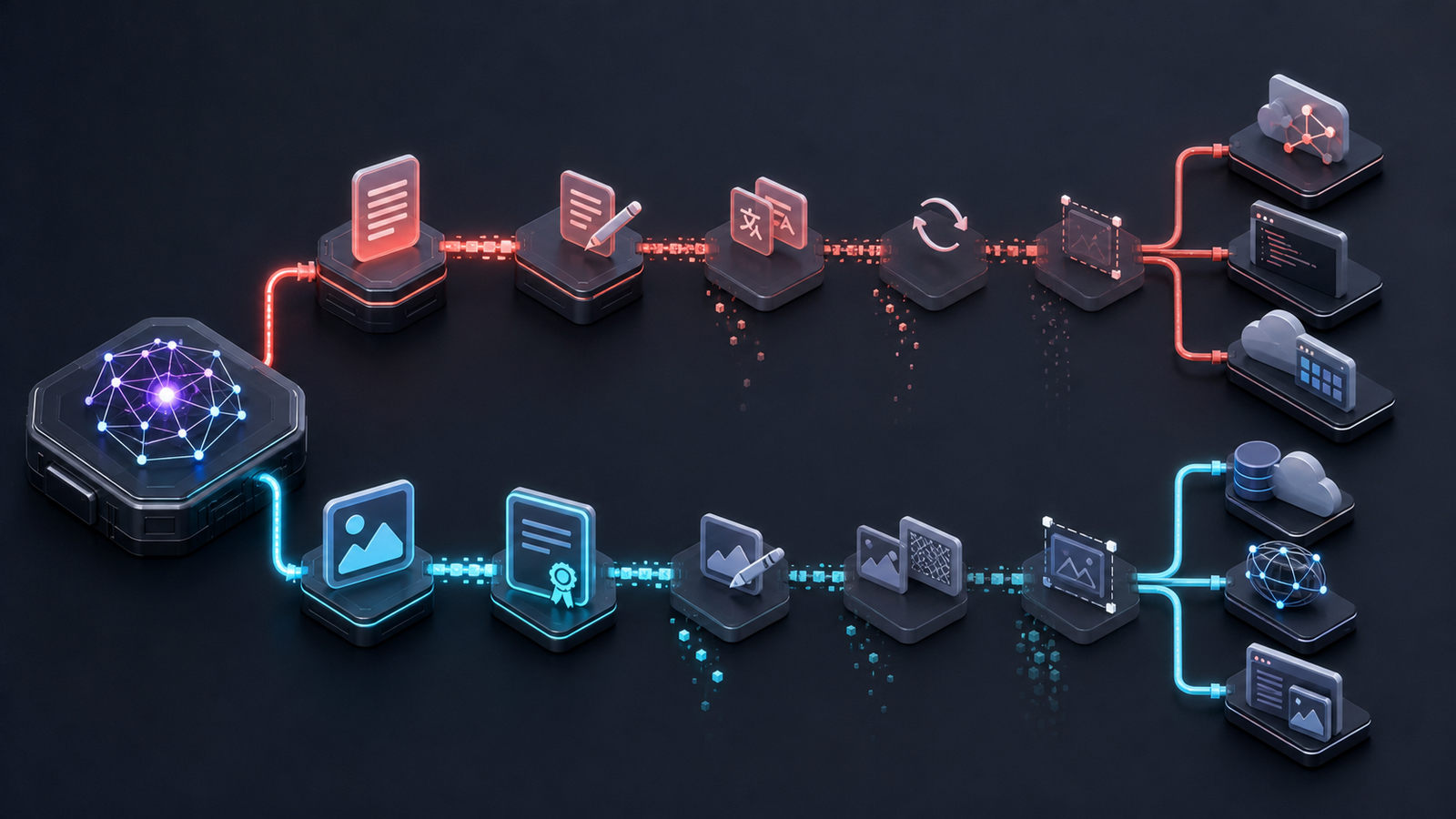
For text, supported Claude models embed an imperceptible statistical watermark in the generated output. Anthropic says the mark is inserted at the model level, can travel with copied text and may remain detectable after light editing. The company says it does not change the meaning, quality or readability of the response.
For supported files such as SVG, PNG and JPG images, Claude will attach digitally signed provenance metadata based on the Coalition for Content Provenance and Authenticity, or C2PA, standard. A valid provenance record can indicate that Claude processed the file and help show whether it was altered afterward. Cloud availability is less uniform: Anthropic says text watermarks will apply through AWS, Google Cloud and Microsoft Foundry for supported models, while signed file metadata may depend on each platform’s features.
Why the EU rules matter now
Anthropic said it signed the EU AI Act’s Article 50 Code of Practice on Transparency of AI-Generated Content. The European Commission’s Article 50 text requires providers of generative systems to make synthetic text, audio, image and video output machine-readable and detectable as artificially generated where technically feasible. The obligations began applying on August 2.
The law also distinguishes provider-side marking from deployer-side disclosure. Organizations publishing AI-generated or manipulated text on matters of public interest may face disclosure duties, although the regulation includes an exception when the material has undergone human review or editorial control and a person or legal entity accepts editorial responsibility. That distinction is important: a machine-readable signal is not automatically the same thing as a visible label, and Anthropic’s implementation does not settle every downstream organization’s compliance duties.
The Commission describes the accompanying code as voluntary, while the underlying Article 50 transparency requirements are legal obligations. Teams operating in or serving the EU should therefore treat Anthropic’s implementation as one input to a broader compliance assessment, not as a complete compliance product.
What changes for developers and platform teams
The most practical response is to map where Claude output enters production workflows. A coding assistant may contribute prose to a pull request, create a diagram for a runbook, summarize an incident or generate a customer-facing status update. Each path has different review, storage and disclosure requirements.
For file pipelines, automatic conversion, screenshotting, optimization and re-encoding can remove provenance metadata. An image CDN or build step that strips metadata may therefore erase a signal that was present at generation time. Platform teams should decide whether preservation is required, test the actual media path end to end and log transformations that can invalidate or remove provenance records.
Text presents a different challenge. Anthropic says heavy editing, paraphrasing, translation or mixing with other writing can weaken detection, while very short passages may not provide enough material for a reliable signal. A positive detection also does not prove that Claude authored the underlying ideas or data, because the model may only have proofread, translated or reformatted human material.
Those limitations mean detection should not become an automated disciplinary or deployment gate on its own. A useful control plane should combine provenance signals with source records, prompt and model logs, human approvals and the organization’s editorial policy. That is consistent with the broader discipline of LLMOps: record model versions, inputs, outputs and approvals instead of relying on a single opaque classifier.
Engineering questions remain open
Anthropic says it will provide tools for users and third parties to detect its marks, but the detection mechanism and production integration details are still forthcoming. The company has not yet published enough information for teams to set thresholds, estimate false-positive and false-negative rates, or design reliable automated policy checks.
Independent coverage from Axios highlighted a particularly relevant edge case: content can carry a Claude signal even when the tool was used only to clean up, translate or format a human-authored document. Tom’s Hardware separately noted that Anthropic’s file approach uses provenance metadata rather than a pixel-level image watermark, which makes preservation through media transformations an important implementation detail.
For now, teams should inventory Claude-dependent publishing paths, preserve original artifacts where provenance matters, and avoid treating either the presence or absence of a mark as conclusive evidence. Organizations building retrieval systems should also decide whether provenance belongs in document metadata alongside citations and source lineage, a natural extension of the controls described in GravityDevOps’ RAG guide.
What to watch next
The next meaningful milestone is Anthropic’s technical documentation for detection. Developers will need to know which models and endpoints are covered, how detectors are accessed, what confidence signals they return, and how support differs across AWS, Google Cloud and Microsoft Foundry.
The broader test will be interoperability. C2PA offers a common foundation for files, but text watermarking remains vulnerable to ordinary editing and transformation. Until vendors publish comparable detection interfaces and independent evaluations, provenance should be treated as a useful signal in a layered governance system—not a definitive authorship verdict.


