
SEO excerpt: Google has moved Demis Hassabis into an Alphabet-wide science role and placed Koray Kavukcuoglu in charge of Google DeepMind’s daily operations, reshaping oversight of Gemini models, APIs and developer products.
NEW DELHI, Aug. 6, 2026, 7:40 p.m. IST — Google has reorganized the leadership of its most important artificial-intelligence unit, moving Google DeepMind co-founder Demis Hassabis out of day-to-day management and giving longtime DeepMind executive Koray Kavukcuoglu operational control of the lab, its Gemini model program and its developer-facing products.
The change is more than an executive reshuffle. It separates Alphabet’s long-range work on artificial general intelligence and science from the immediate job of shipping models, APIs and applications in a fast-moving commercial market. For developers and platform teams building on Gemini, the near-term signal is a sharper emphasis on execution, while the practical response remains the same: treat model roadmaps as external dependencies that require evaluation, observability and fallback plans.
What Google confirmed
In an official message to employees, Google and Alphabet CEO Sundar Pichai said Hassabis will become chair of Google DeepMind and chief scientist of Alphabet. Hassabis will continue to lead Isomorphic Labs, Alphabet’s AI drug-discovery company, and advise Google DeepMind’s model and research teams.
Kavukcuoglu, previously Google DeepMind’s chief technology officer and Google’s chief AI architect, will become senior vice president of Google DeepMind and report directly to Pichai. His remit includes Gemini model development, frontier-AI research, and the Gemini app and developer teams. That combination puts research, model engineering and product delivery under one operational leader.
Google also confirmed that chief scientist Jeff Dean and Google Senior Fellow Sanjay Ghemawat are leaving after long tenures to launch an independent public-benefit corporation focused on machine learning, science and engineering. Axios reported that DeepMind researchers Oriol Vinyals and Quoc Le are joining the venture, called Discovery Loop, and that Google will invest in it and provide cloud services.
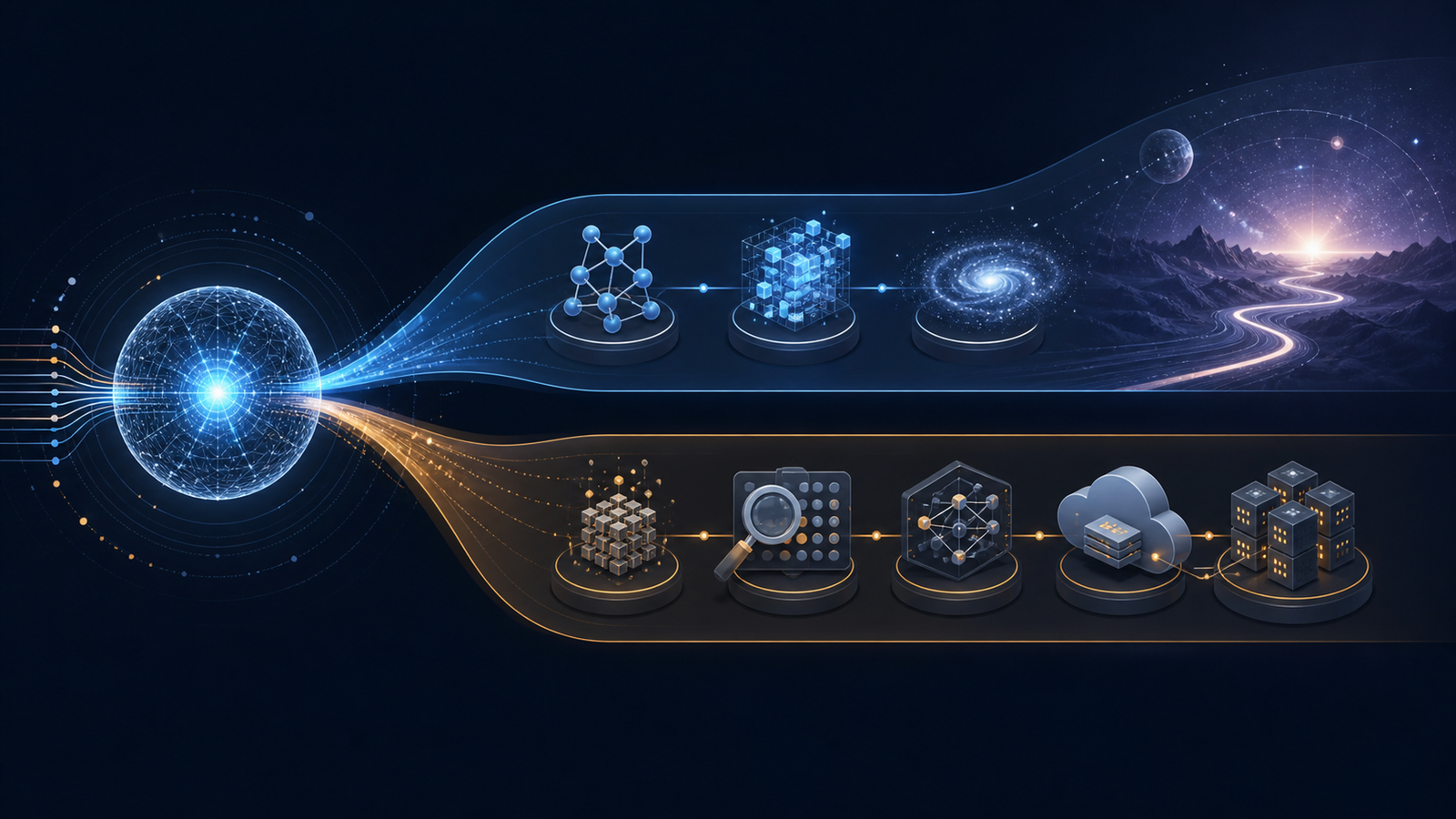
Hassabis described the move as a way to focus on strategic questions around AGI and science while remaining connected to the DeepMind leadership team. Pichai, meanwhile, emphasized speed and said Google must stay focused on the AI frontier. Those are company statements of intent, not guarantees about release dates or product performance.
Why the leadership split matters now
Google created the current Google DeepMind organization in 2023 by combining DeepMind and Google Brain. At the time, the company said the unified group would bring research and engineering closer together. The new arrangement keeps that organization intact but creates a clearer division between scientific stewardship and operating responsibility.
That distinction matters because a frontier-model lab now has two demanding jobs. It must pursue expensive, uncertain research while also operating a production platform with API availability, capacity planning, safety reviews, enterprise support and predictable release processes. The skills and time horizons required for those jobs overlap, but they are not identical.
Axios characterized the change as occurring amid competitive pressure, researcher departures and reported delays to a future Gemini model. Google did not link the reorganization to any delay. That difference is important: the leadership changes and reporting lines are confirmed; their effect on the Gemini roadmap remains uncertain.
Kavukcuoglu’s expanded remit suggests Google wants fewer boundaries between model research and the products developers actually consume. He has been at DeepMind for more than 13 years and was involved in foundational work including DQN and WaveNet. His elevation also places the Gemini app and developer teams alongside model development, which could shorten decision paths when research capabilities move toward production.
What developers and platform teams should watch
No API migration or product change was announced. Teams using Gemini through Google AI Studio, Vertex AI or other Google services do not need to modify production systems because of the leadership transition alone.
The more useful response is to monitor operational evidence over the next several release cycles. Platform owners should watch for changes in model-version cadence, preview-to-general-availability timelines, deprecation windows, regional capacity, quota behavior, price-performance and safety-policy enforcement. Those signals will say more about execution than executive titles.
Organizations with Gemini in critical workflows should also maintain a versioned evaluation suite that reflects their own workloads. Public benchmarks cannot capture retrieval quality, tool-call reliability, structured-output stability, latency at peak traffic or the cost of retries in a specific application. A disciplined LLMOps practice should test new model versions before routing production traffic to them.
For systems that use proprietary or sensitive data, the leadership news does not change the basics of access control, logging and grounding. Retrieval pipelines still need source-level permissions and traceability; GravityDevOps’ guide to retrieval-augmented generation explains that architecture in more detail. Prompt changes should likewise be reviewed and tested as deployable artifacts rather than edited informally in production; see the site’s prompt-engineering guide for developers.
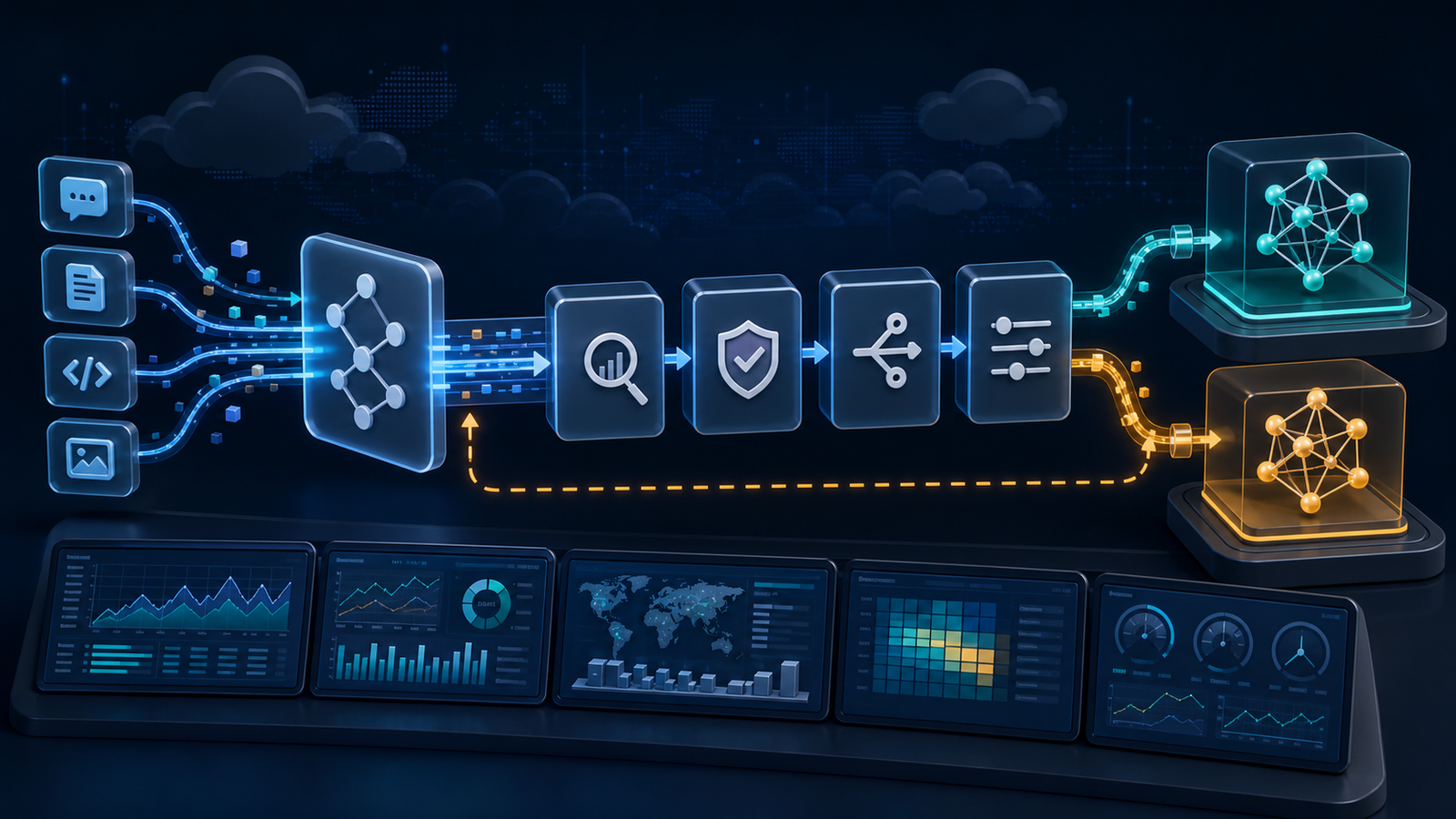
Multi-model portability is useful, but it should not be oversold. Models differ in tool contracts, context handling, safety behavior and output style, so switching providers is rarely a single configuration change. Teams can still lower switching costs by keeping provider-specific code behind an internal interface, storing prompts and evaluation data outside vendor consoles, and rehearsing fallback routes before an incident.
A leadership change, not a product release
The immediate news is organizational. Google has not announced a new Gemini model, a change to API pricing, or a revised service-level agreement as part of the transition. Any claim that the reshuffle will speed releases, improve quality or alter cloud strategy is analysis until Google publishes measurable changes.
There is also a counterweight to the departures. Google retains its global cloud infrastructure, custom TPU stack, distribution through consumer and enterprise products, and a large AI research organization. Google’s investment in the departing researchers’ new company suggests the relationship is not a clean competitive break.
For technical decision-makers, the balanced conclusion is straightforward: Google is tightening operational ownership of Gemini while giving Hassabis a broader scientific and strategic mandate. That may improve focus, but customers should judge the outcome through model quality, release discipline and platform reliability—not the announcement itself.
Sources
This report draws on Google’s official leadership announcement, Axios’ initial report on the transition and follow-up analysis, Google’s 2023 account of combining Google Brain and DeepMind, and Semafor’s June reporting on DeepMind’s talent position.


