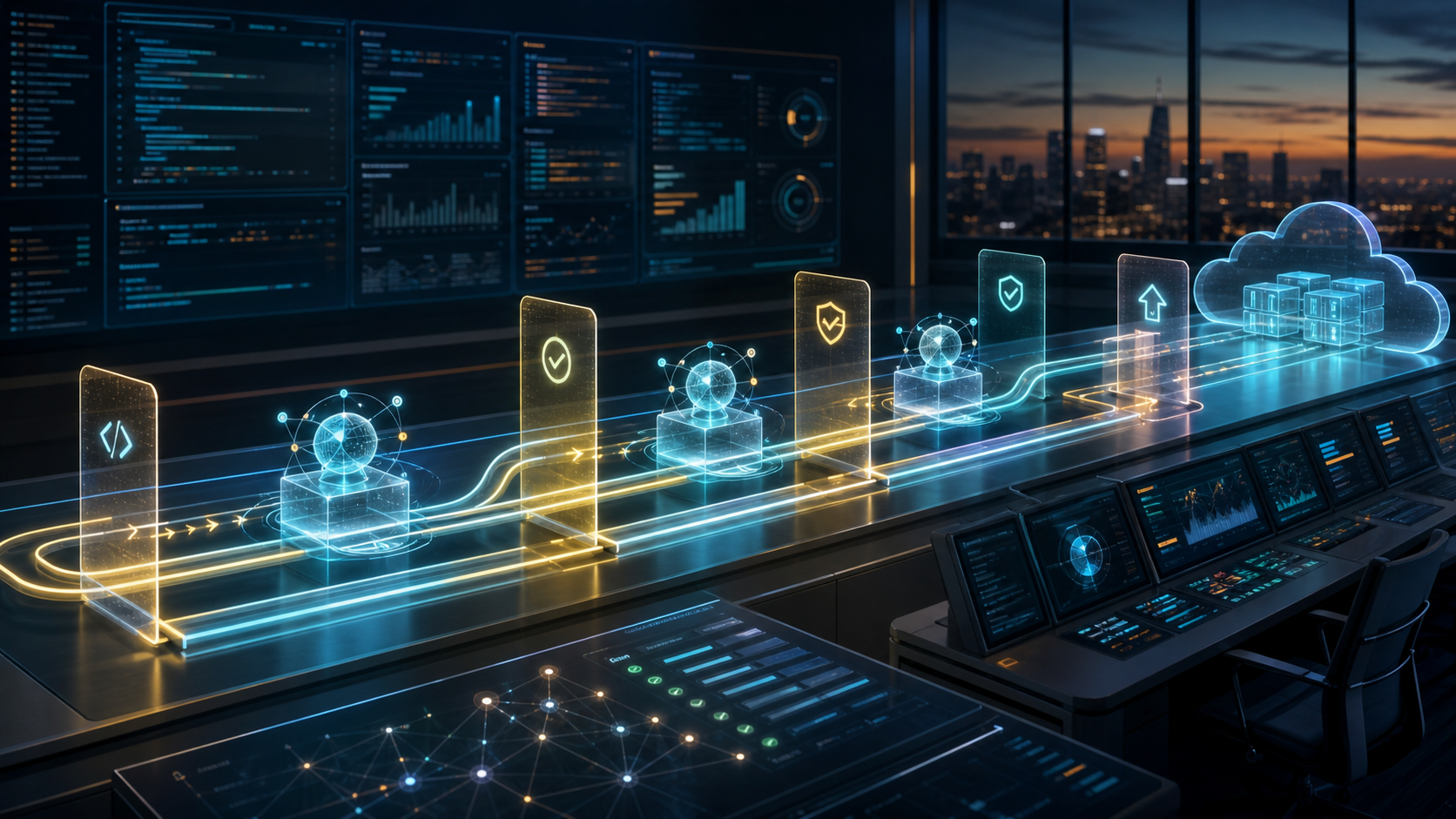

NEW DELHI, July 5, 2026, 9:40 p.m. IST – Harness has launched Autonomous Worker Agents for software delivery, a new set of AI agents designed to run inside enterprise delivery workflows rather than sit beside them as chat assistants or one-off scripts.
The announcement matters because the center of AI adoption in software teams is shifting from code generation to the harder operational work that happens after code is written: builds, tests, security checks, infrastructure remediation, deployment approvals and production recovery. Harness is positioning the new agents as governed pipeline steps, which makes the launch especially relevant for DevOps and platform teams deciding how far agentic AI should be allowed into release systems.
What Harness Announced
In a June 30 press release, Harness said Autonomous Worker Agents and a Harness Agent Marketplace are now generally available to Harness customers. The company says the agents can be used to build and run AI automation for software delivery, including deployment, validation, security and remediation work between a code change and production.
Harness described the agents as pipeline-native steps that inherit the same controls already used for human software delivery. In its technical blog post, the company said each agent runs inside a Harness pipeline on customer-controlled infrastructure, with scoped credentials, Open Policy Agent enforcement, approval gates and audit trails. Harness also says the agents can use the company's Software Delivery Knowledge Graph for context about services, pipelines, deployments, incidents, infrastructure and security findings.
DevOps.com reported that the agents are intended to automate code delivery work in production environments, with sandboxed execution, model-provider flexibility and cost visibility per agent and pipeline.
Why It Matters For DevOps Teams
The useful part of the announcement is not simply that another vendor added AI. The sharper point is where the AI is being placed. Many engineering organizations already use coding assistants in editors and pull requests, but production delivery remains constrained by policy, identity, audit, rollback and change-management requirements. Putting an agent inside a governed pipeline step gives platform teams a more familiar control surface than asking an external chatbot to act across CI, CD, infrastructure and incident systems.
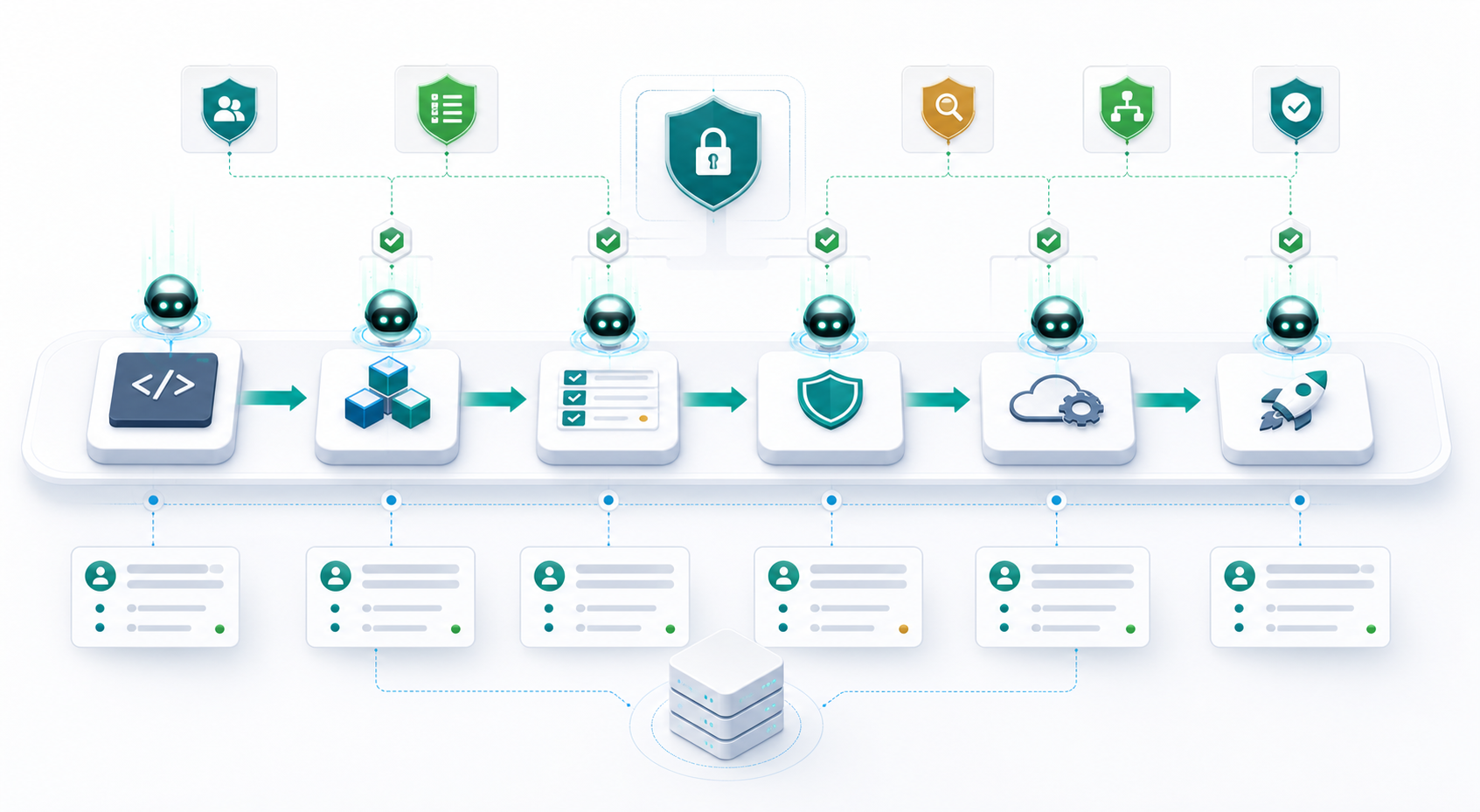
For developers, this could reduce time spent on repetitive delivery failures such as broken builds, stale feature flags, low test coverage or Kubernetes manifest errors. For platform engineers, the bigger question is whether agent steps can be reviewed, versioned, monitored and constrained like the rest of the delivery platform. Harness says agents can be forked, customized and published through a marketplace, and that model selection can vary by agent, environment or pipeline.
Technical Background
The product page for Harness Worker Agents says agents can be triggered by CI failures, pull request events, schedules or AI chat, and can call model providers such as Anthropic, OpenAI or OpenAI-compatible endpoints. Harness also says agents can connect to MCP servers and custom tools, which would let organizations attach delivery agents to systems such as Git, Jira, Slack or internal services.
That design fits a broader industry pattern: agentic AI is moving from conversational interfaces toward controlled execution environments. In a DevOps setting, the difference is material. A coding assistant can suggest a fix; a delivery agent may inspect logs, edit a branch, rerun a build, open a pull request, remediate infrastructure drift or prepare a deployment. Those actions require stronger boundaries than a normal chat session.
Practical Impact
Teams evaluating this class of tooling should start with low-risk, high-volume workflows. Good early candidates include build-failure triage, test coverage suggestions, dependency update validation, feature flag cleanup, deployment manifest checks and infrastructure-as-code drift analysis. Production deployment, incident remediation and security fixes should remain behind human approval until teams have evidence that the agent's outputs are reliable in their own environment.
The announcement is also a reminder that LLMOps and CI/CD governance are converging. A platform team adopting worker agents will need model-routing policy, prompt and tool review, secret handling, runtime isolation, observability, audit retention, cost controls and rollback plans. Existing guidance on prompt engineering for developers and retrieval-augmented generation still applies, but production agents add operational risk because their outputs can change live delivery workflows.
What Remains Unclear
Harness has confirmed general availability for customers, marketplace distribution and several governance controls. What remains to be proven is how well agent steps perform across messy enterprise delivery environments: monorepos, hybrid clouds, legacy deployment tools, fragmented ownership data and strict compliance reviews. The company's claims should be treated as product availability and architecture claims, not as independent proof that autonomous remediation is safe for every production workflow.
The near-term takeaway for GravityDevOps readers is pragmatic: agentic AI is no longer limited to writing code. It is being packaged into the release path itself. Platform teams should respond by defining which delivery tasks are eligible for agent execution, what evidence is required before expanding permissions, and how every agent action will be logged, reviewed and rolled back.


