
NEW DELHI, August 23, 2026, 10:11 AM IST — Google has brought its Antigravity coding agents into more of the development environments enterprises already use, while placing identity, spending, tool access and audit controls under the Gemini Enterprise administration layer.
The expansion, announced Thursday, makes Antigravity available through eligible Gemini Enterprise app subscriptions and adds extensions for Visual Studio Code, Visual Studio, JetBrains IDEs and Zed. Google says Visual Studio, JetBrains enterprise support and Zed enterprise support remain in preview, while the VS Code extension is available across macOS, Linux and Windows.
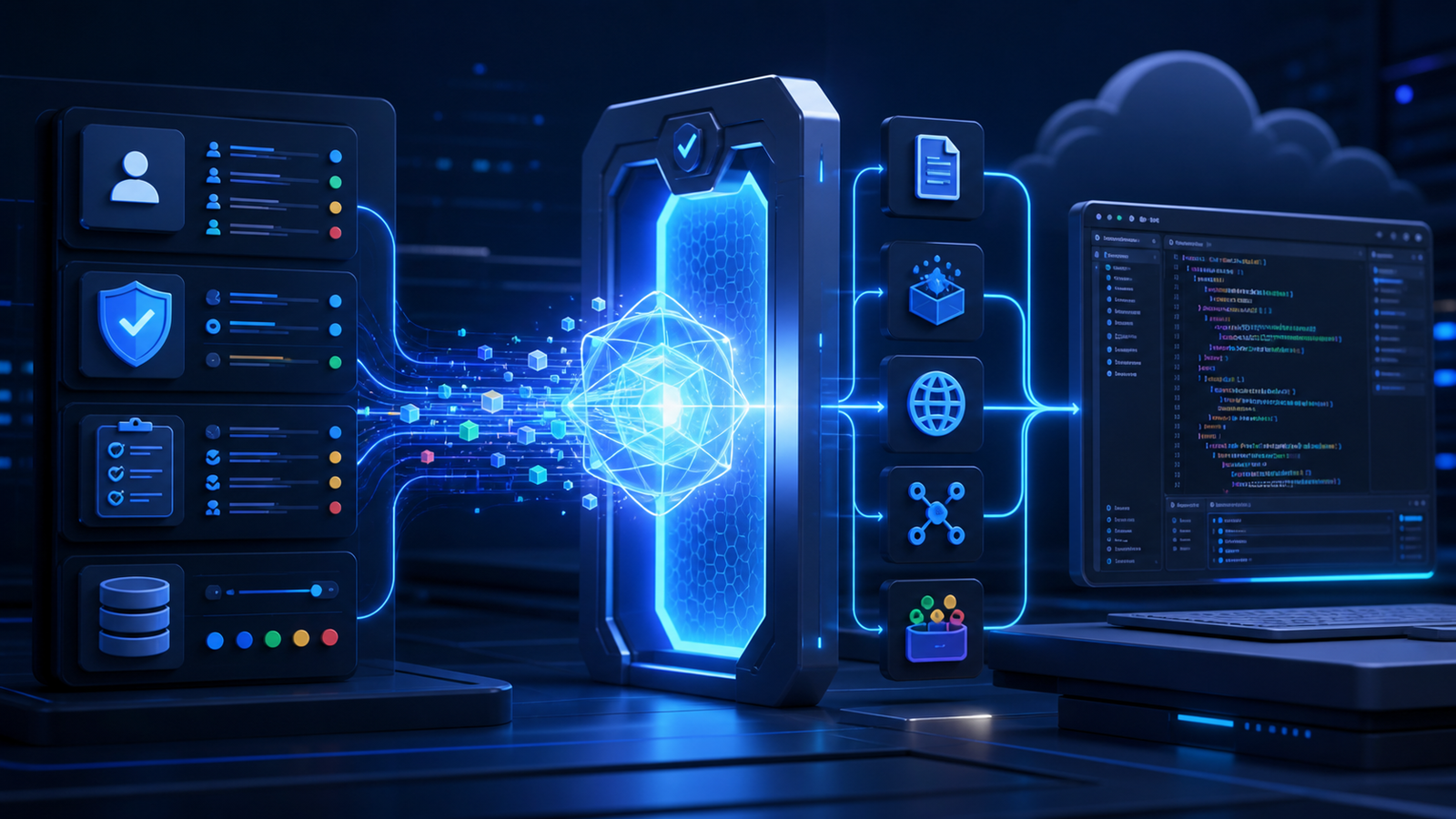
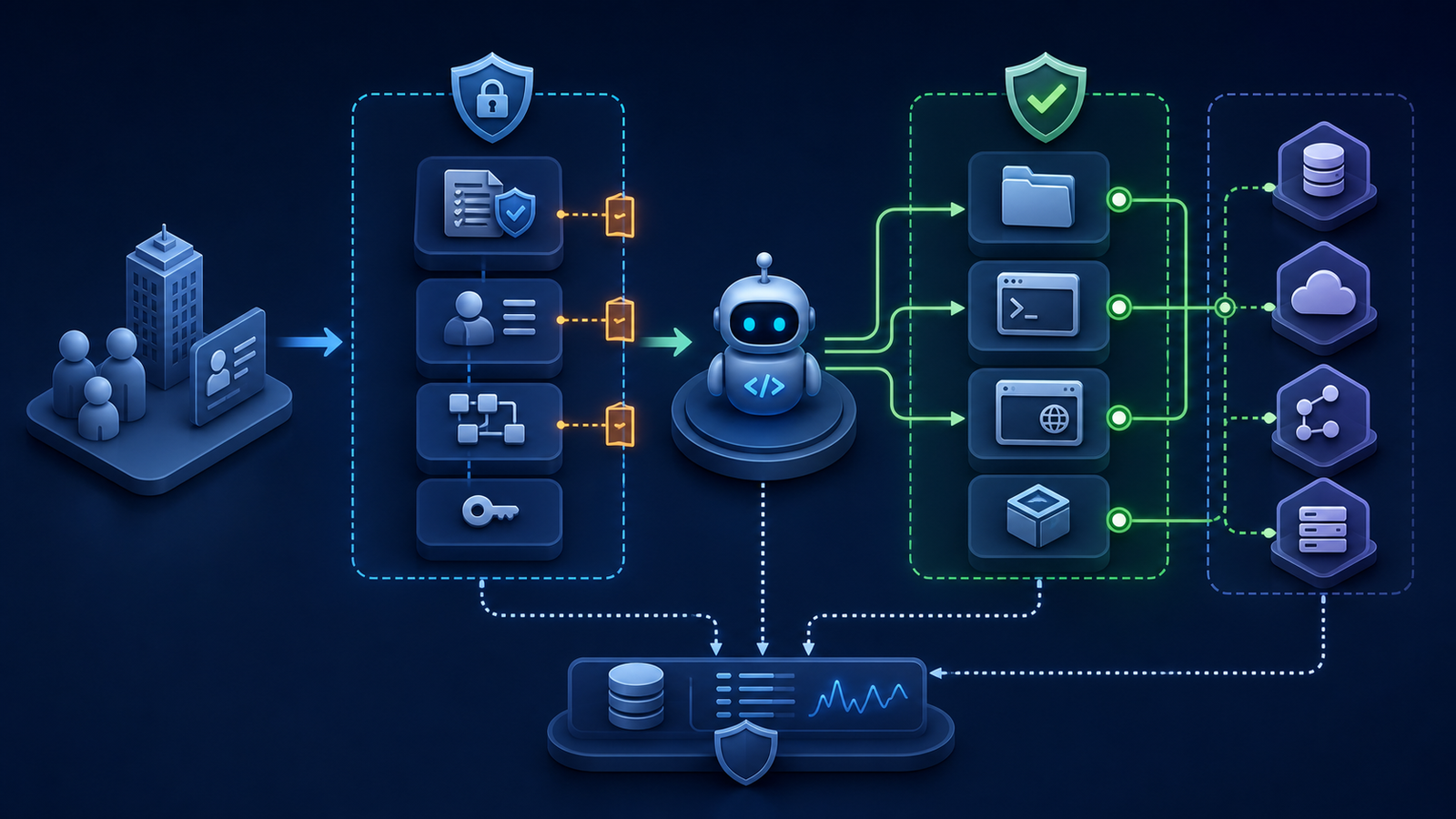
The important change for platform teams is not simply another place to invoke a coding agent. It is the attempt to give one control plane authority over how those agents authenticate, spend shared model quota, reach files and terminals, browse the web, connect to Model Context Protocol servers and record their activity. That turns an individual developer tool into infrastructure that security, FinOps and engineering-governance teams must configure together.
What Google confirmed
Google said Antigravity is now included with eligible Gemini Enterprise Standard, Plus and Standard Emerging Market licenses. Administrators can enable AI developer tools, allocate pooled token quota and set project-level monthly budget caps. Per-user and team-level spending controls are planned for later this year, according to the company, so those finer limits should not be treated as generally available today.
The new IDE extensions share Antigravity’s authentication system with its desktop application and command-line interface. Enterprise users can sign in with Gemini Enterprise or Google Cloud project credentials, including corporate identity through Workforce Identity Federation, then select a project and region. Google says those sessions follow organizational IAM policies and VPC Service Controls and that enterprise code, prompts and transcripts are not used to train its foundation models.
In the editor, developers can review inline diffs, inspect agent plans and run multi-step tasks. Visual Studio support is in preview. JetBrains support covers IntelliJ IDEA, PyCharm, WebStorm, GoLand, CLion, Rider and other IntelliJ-based products from version 2026.2.1, but enterprise use is still in preview. Zed’s enterprise integration is also in preview.
The controls need deliberate configuration
Google’s current administrator documentation exposes policies for file access outside designated working folders, terminal execution, sandboxing, browser access, JavaScript execution and MCP servers. It also allows organizations to authorize specific models and decide whether preview models are available.
The defaults matter. The documentation lists outside-workspace file access as denied by default, but terminal execution as always proceed and sandbox mode as disabled. Browser JavaScript execution is disabled, while browser URL restrictions and MCP server allowlists require configuration. Prompt-and-response logging is also disabled by default.
That means buying or enabling the enterprise subscription does not by itself create a least-privilege coding-agent deployment. Platform teams still need a reviewed baseline that defines which repositories an agent may touch, whether terminal commands require approval or run in a sandbox, which domains and MCP endpoints are permitted, which models are approved and how interaction logs are retained.
Google says administrators can enable centralized logging of prompts, responses and metadata inside the organization’s project. Its Cloud Audit Logs documentation separately confirms that Google Cloud MCP server calls can write Data Access audit logs, but those logs must be enabled for the MCP service and may add logging charges. Access to sensitive Data Access logs also requires the appropriate IAM role.
Why this matters for DevOps and platform engineering
Coding agents cross boundaries that conventional autocomplete tools rarely approach. They can read a repository, run commands, open a browser and call external tools during one task. A unified policy surface can reduce configuration drift when the same agent is used from a desktop app, terminal or IDE, but only if the organization treats those controls as managed platform configuration rather than personal developer preferences.
A practical rollout should start with a small set of low-risk repositories and a dedicated identity boundary. Require review for terminal actions until the team understands the agent’s behavior, restrict external browsing to approved domains, allowlist only necessary MCP servers and route both agent interactions and downstream cloud access into the existing observability pipeline.
Repository protections remain the final delivery boundary. Branch protection, mandatory reviews, signed commits where appropriate, secret scanning, software composition analysis and CI checks should apply to agent-generated changes exactly as they do to human-authored work. GravityDevOps readers planning that layer can use the site’s comparison of CI/CD tools and its guide to LLMOps as complementary operational context.
Shared quota also makes coding-agent usage a FinOps concern. Pooled capacity can reduce stranded allocation across teams, but aggregate usage metrics can hide a single runaway workflow. Until Google’s promised per-user and team controls arrive, organizations should pair project caps with alerts, workload-level tagging and periodic reviews of token consumption and API activity.
What remains uncertain
Google has published customer endorsements, but it has not provided independently reproducible evidence in this announcement that Antigravity improves delivery speed, code quality or technical-debt outcomes across typical enterprise environments. Those claims should be tested against each organization’s own lead time, defect escape rate, review burden, rollback frequency and cost per accepted change.
Preview status also limits the conclusion. Visual Studio, JetBrains enterprise support and Zed enterprise support may change before general availability, and Google has not given a general-availability date in the materials reviewed for this report. Teams with regulatory or residency requirements should validate the exact editor, project, region, logging and retention combination before broad deployment.
The larger signal is clear: competition in AI coding is shifting from model access toward fleet-level governance. For platform teams, the useful question is no longer whether a coding agent can produce a patch. It is whether every tool call, permission, cost and resulting change can be bounded, observed and reversed inside the software delivery system.
Sources
This report is based on Google’s Gemini Enterprise expansion announcement, the Antigravity IDE extensions announcement, the current IDE extension documentation, Google’s AI developer tools administration guide and the Cloud Audit Logs overview. Product availability and security statements are attributed to Google; operational recommendations and risk analysis are GravityDevOps’ synthesis.


