
NEW DELHI, Aug. 7, 2026, 2:25 p.m. IST — Google Cloud says a combination of GKE Agent Sandbox and workload suspend-and-resume features can cut infrastructure cost per intermittent AI agent by as much as 75%, according to a new production-oriented density test published by the company.
The result is not a blanket price reduction or an independent industry benchmark. It comes from Google’s test of OpenClaw-style agents on one n2-standard-48 virtual machine. Even so, it highlights a practical issue that platform teams increasingly face: agent workloads often consume resources in short bursts, then leave CPU and memory reserved while they wait for a person, event or external service.
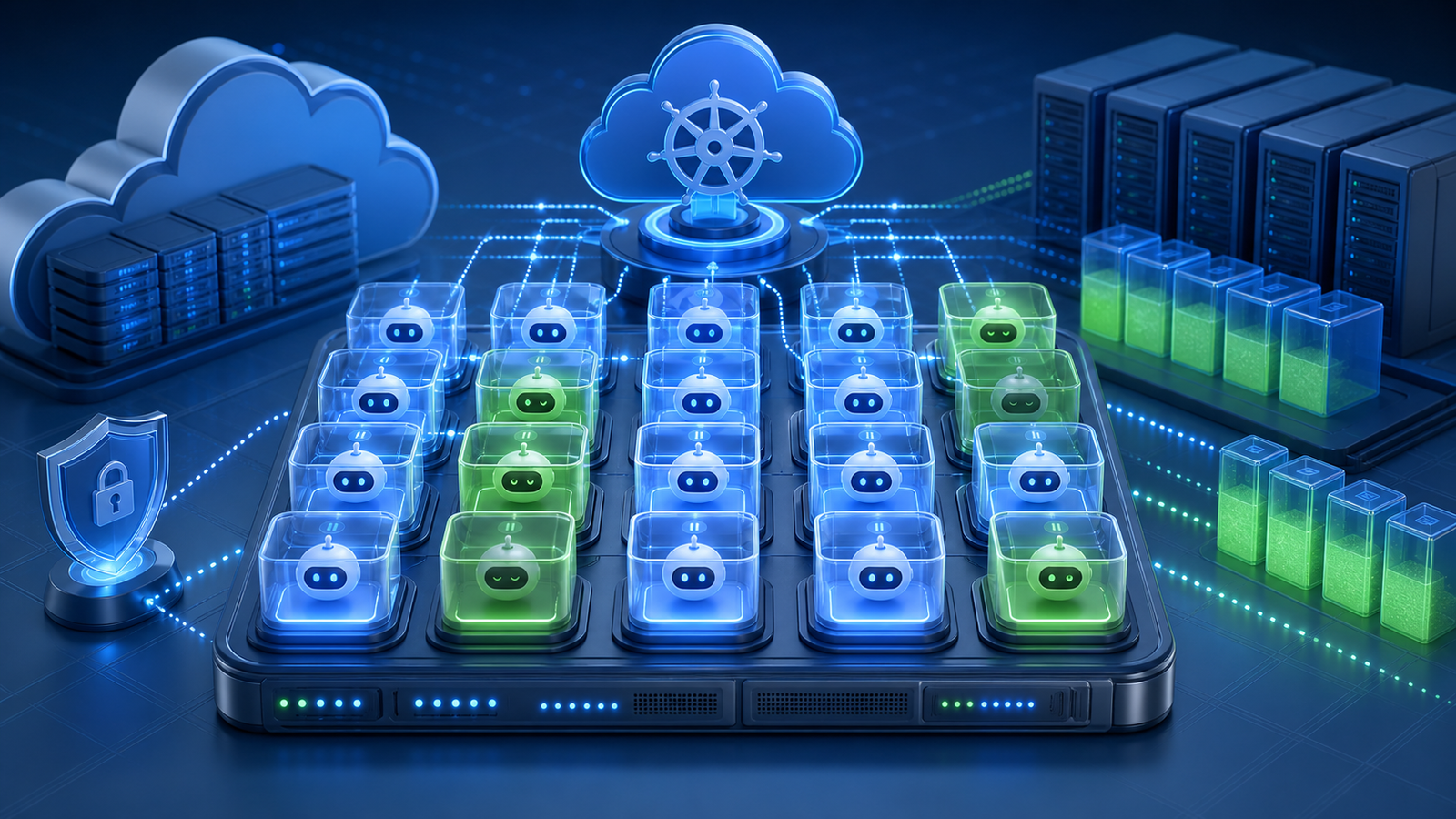
For developers and DevOps teams, the important development is architectural rather than promotional. Google is arguing that AI agents should be treated as lifecycle-managed, isolated workloads—not simply as permanently running services. That shifts part of AI cost control from model selection and token pricing into Kubernetes scheduling, sandbox choice, checkpointing and service-level objectives.
What Google tested
Google began with a baseline that placed each agent in a dedicated microVM using Kata Containers. The company reported that reliability began to fall after 61 agents on the fixed GKE node.
Moving the same workload to GKE Agent Sandbox increased the reported density to 88 agents, a 44% improvement. Agent Sandbox uses gVisor, whose user-space kernel intercepts and filters system calls, to provide a lighter isolation boundary than a full guest operating system. Google said that step alone reduced cost per agent by more than 30% in its test while maintaining a similar performance profile.
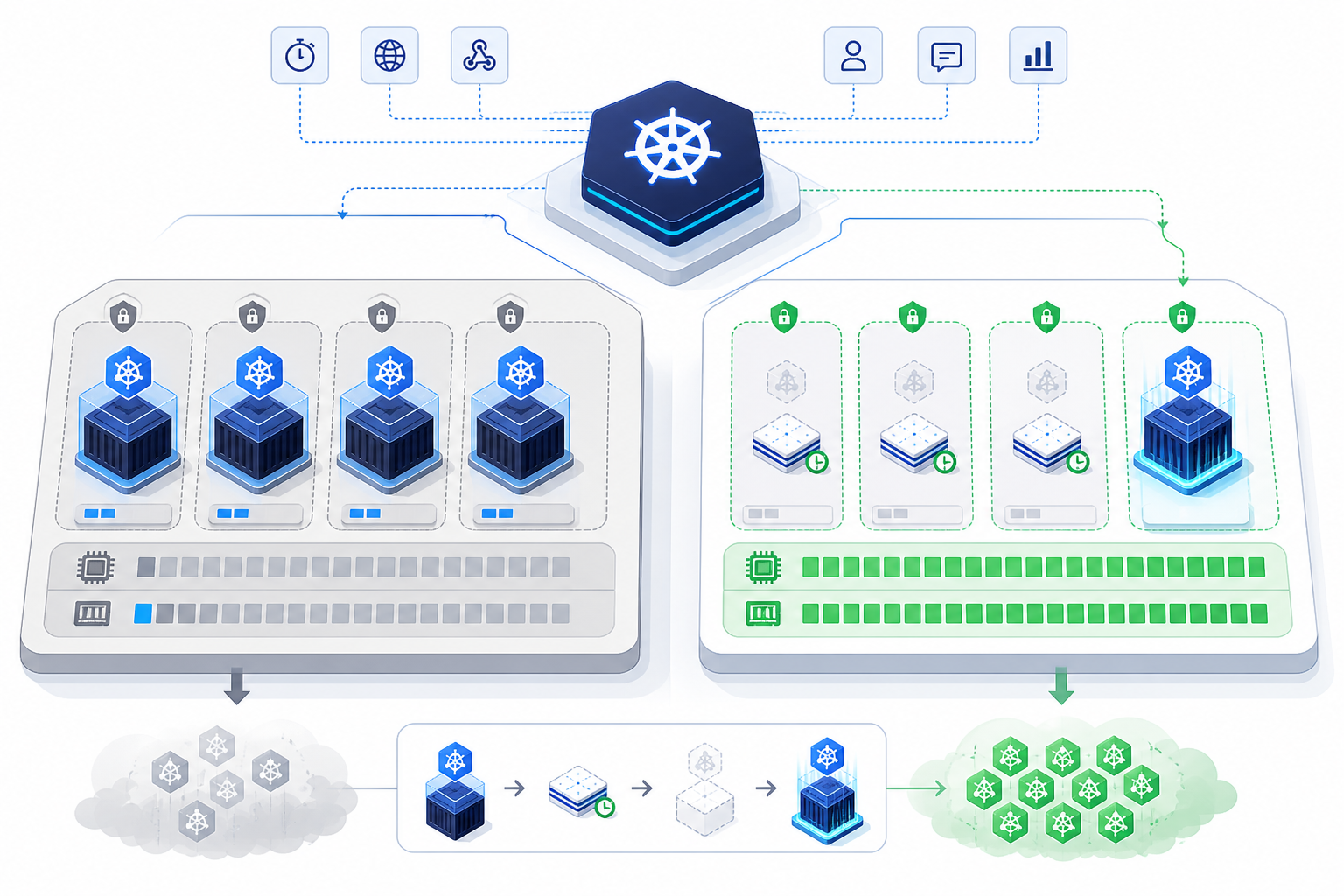
The larger saving came from freezing idle agents to persistent storage through GKE Pod Snapshots, then releasing their CPU and memory for other work. Google reported 133 agents on the node in a performance-oriented configuration using warm pools. In a cost-oriented configuration for latency-tolerant workloads, it reported 274 agents with startup times under five seconds—more than three times the baseline density.
That final scenario produced Google’s headline estimate of up to 3.5 times greater agent density and as much as 75% lower cost per agent. The result depends on intermittent workload behavior and willingness to accept restore latency. A continuously busy coding agent, inference server or customer-facing assistant would not receive the same benefit from being suspended.
Why this matters for platform teams
Agent infrastructure is creating a scheduling problem that differs from conventional web services. Many agents maintain process state, tools and working files while alternating between activity and long waits. Keeping every sandbox warm minimizes latency but can make unit economics deteriorate quickly as the fleet grows.
Google’s proposed answer is to divide workloads by service requirement. Direct developer assistants can use pre-warmed sandboxes for sub-second allocation. Background teammates can tolerate a short restore. Scheduled research or analysis jobs can wait for spare capacity and use more aggressive oversubscription.
This gives platform engineers a concrete set of controls to place behind an internal agent platform: workload classes, maximum wake-up latency, snapshot eligibility, concurrency caps and budget alerts. It also supports a more useful cost metric—cost per completed agent task—rather than raw VM utilization alone. Teams already formalizing model deployment and evaluation through LLMOps practices can extend the same discipline to agent runtime capacity.
The security trade-off also matters. AI agents that execute generated code or call external tools should not share a weak process boundary merely to improve density. Agent Sandbox relies on gVisor and can apply default-deny Kubernetes network policy; Google also says it supports pluggable alternatives such as Kata Containers when teams require a different isolation model.
Important limits behind the benchmark
Google’s current Pod Snapshots documentation makes clear that restoration is not transparent in every respect. A snapshot preserves process memory, threads, CPU registers, open file descriptors and parts of the container file system. External network connections are terminated, however, and a restored pod receives a new IP address and hostname.
Secrets and certificates created before the snapshot may need to be recreated. Applications must also refresh identity-sensitive state, random seeds or environment values when necessary. Google notes that initial memory accesses can experience brief latency while state streams back from storage, and GPU-backed workloads may appear running before model memory is fully restored.
Those constraints mean suspend-and-resume should be tested as an application behavior, not enabled as an invisible infrastructure toggle. Readiness probes, time-to-first-token measurements, dependency reconnection tests and thundering-herd exercises should be part of rollout. Teams should also compare snapshot storage and restore costs with the idle compute they expect to eliminate.
The benchmark is therefore best read as evidence that orchestration can materially change agent economics under the right workload pattern—not proof that every agent deployment will become 75% cheaper. Platform teams should reproduce the test with their own agent harness, tool latency, state size, concurrency distribution and reliability targets before changing capacity plans.
What happens next
GKE Agent Sandbox became generally available in May, and Google says usage grew more than sevenfold in the following four weeks. The company is also developing Agent Substrate as an open-source effort aimed at agent fleets that could exceed the practical control-plane limits of conventional Kubernetes patterns.
For now, the immediate opportunity is smaller and more operational: identify which agents are actually idle, classify their latency tolerance and test whether snapshot-based suspension reduces cost without breaking state, identity or network assumptions. Teams designing retrieval-heavy agents should apply the same care to their data path; GravityDevOps’ RAG overview explains the grounding layer, while this GKE development addresses the runtime underneath it.
Sources
Google Cloud’s agent-density test and cost analysis; Google Cloud’s GKE Agent Sandbox general-availability announcement; and the current GKE Pod Snapshots documentation.


