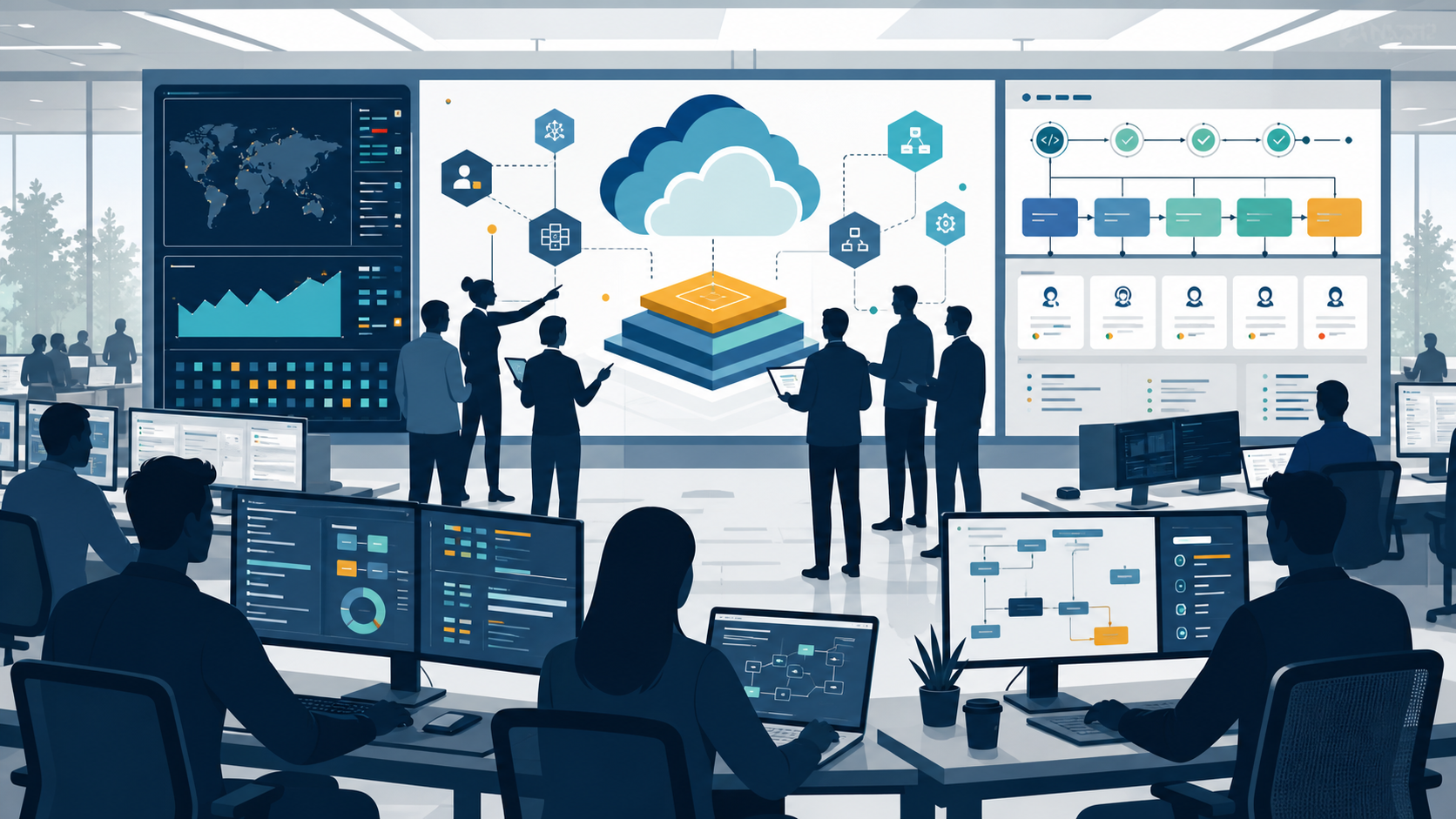

SEO excerpt: Microsoft is putting $2.5 billion and 6,000 industry and engineering experts behind a new Frontier Company unit for enterprise AI deployments. For DevOps and platform teams, the news signals that the hard part of AI adoption is shifting from model access to production engineering, governance and handoff.
Bengaluru, July 3, 2026, 10:27 a.m. IST – Microsoft has launched a new operating business called Microsoft Frontier Company, committing $2.5 billion and 6,000 industry and engineering experts to embed with customers and help build AI systems inside enterprise operations.
The announcement, made by Judson Althoff, CEO of Microsoft Commercial Business, is not another model release. It is a bet on the next bottleneck in enterprise AI: turning pilots, copilots and agent demos into governed production workflows that run against real data, existing systems and measurable business outcomes.
What Microsoft Announced
Microsoft said the Frontier Company will focus on “Frontier Transformation,” its term for deploying AI into customer workflows with enterprise-grade engineering, industry knowledge, change management and continuous improvement. The unit will be led by Rodrigo Kede Lima, a longtime Microsoft executive who most recently led Microsoft Asia.
According to Microsoft, the group will embed experts with customers to co-design, deploy and improve AI systems. The company said early work includes London Stock Exchange Group, where AI has been built into LSEG Workspace to help finance professionals query structured and unstructured financial content, along with work involving Land O’Lakes, Unilever and Novo Nordisk.
Microsoft also emphasized two platform themes that matter to technical buyers: an “intelligence platform” where a company’s proprietary data, workflows and decision processes can compound over time, and a trusted platform for observing, governing, managing and securing AI systems across the technology stack.
Why It Matters Now
The timing is important because Microsoft is not alone. Amazon Web Services announced a $1 billion AWS Forward Deployed Engineering organization earlier in the week, saying it will embed thousands of experts with customers to co-develop and deploy agentic AI systems. TechCrunch, CIO Dive and GeekWire all framed Microsoft’s launch as part of a broader push by large AI vendors to solve the “last mile” of enterprise AI adoption.
For GravityDevOps readers, the practical takeaway is that AI implementation is becoming an engineering delivery model, not just a software subscription. Cloud and platform teams should expect vendors to arrive with models, agents, reference architectures, semantic layers, observability hooks and implementation staff. That can compress delivery timelines, but it also changes how organizations should think about ownership, lock-in and production support.
The Confirmed Developments
- Microsoft announced Microsoft Frontier Company on July 2, 2026, as a new operating business inside Microsoft focused on enterprise AI deployment.
- The company said it is making a $2.5 billion investment and will put 6,000 industry and engineering experts behind the effort.
- Microsoft said the work will involve co-designing, co-innovating, deploying and continuously improving AI systems with customers.
- The company named partner ecosystem support from Accenture, Capgemini, EY, KPMG, PwC and others.
- CIO Dive reported that the launch follows AWS’s $1 billion forward-deployed engineering effort, while TechCrunch noted similar deployment-oriented ventures from OpenAI and Anthropic.
Technical Background
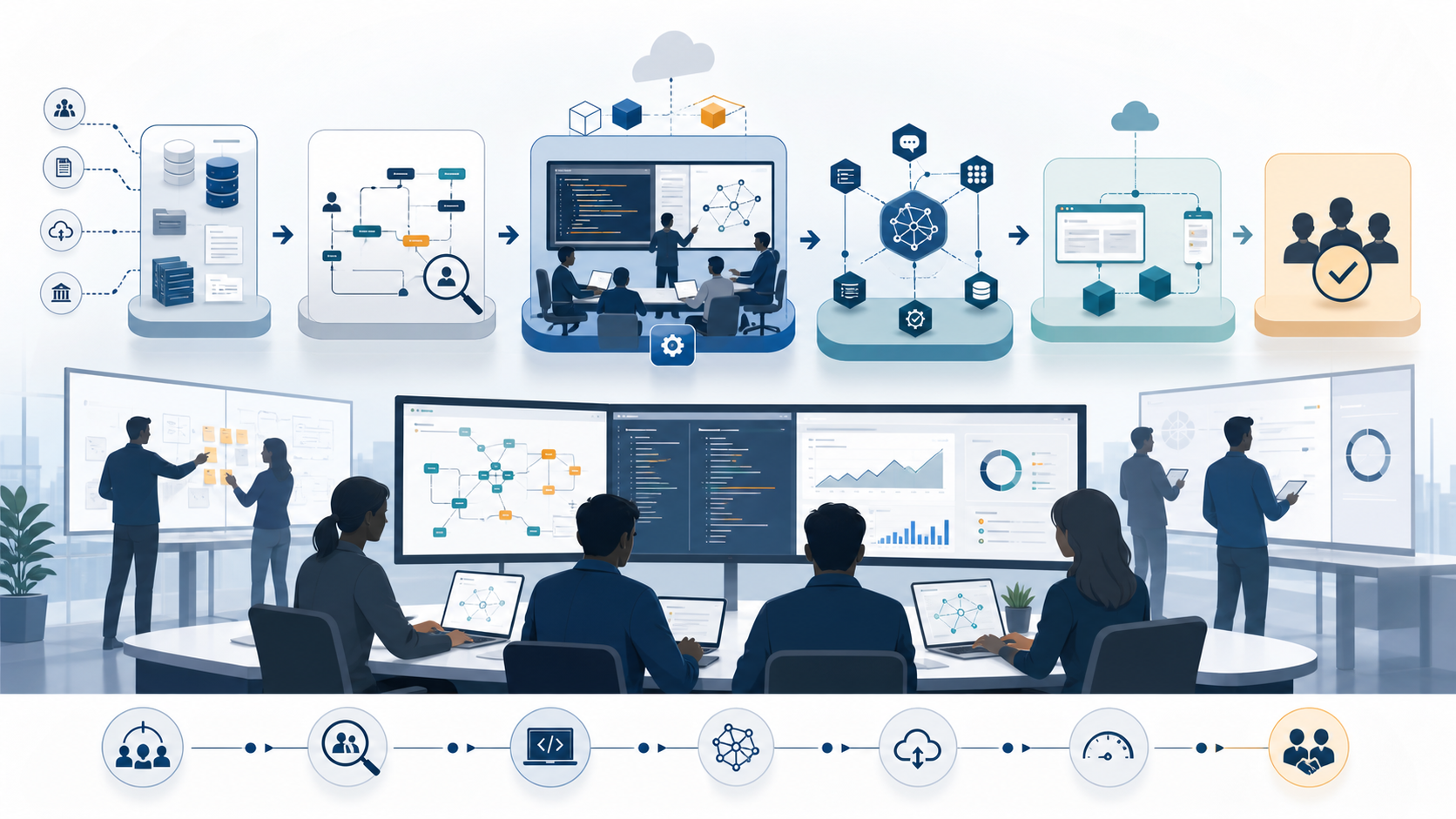
Forward-deployed engineering is a model in which engineers from a vendor work directly inside a customer’s operating environment to build and deploy systems, rather than handing over a generic product and leaving implementation to a traditional integration project. The approach is associated with companies such as Palantir, but it has become more relevant as enterprises try to move agentic AI systems from demos into production.
In AI, this model usually has a different shape from classic consulting. It may involve model selection, retrieval pipelines, data connectors, agent tools, permission design, evaluation harnesses, workflow redesign and operations handoff. The difficult work is often not the model call. It is deciding what the system may see, what it may change, how it is monitored, how cost is controlled and who owns it after the vendor team leaves.
What DevOps and Platform Teams Should Watch
The biggest opportunity is speed. If a vendor team can pair with internal engineers, domain experts and security teams, a stalled AI project may move faster than it would through a conventional procurement and implementation cycle. Microsoft and AWS both say their programs are designed to leave customers with lasting internal capability rather than permanent dependency.
The biggest risk is the opposite outcome: a bespoke AI workflow that works during the engagement but becomes expensive to maintain, hard to audit or tightly coupled to a vendor’s platform. CIO Dive cited Gartner analysis warning that organizations need a clear exit plan, internal ownership and full integration estimates before committing to forward-deployed engineering engagements.
Platform teams should therefore treat these programs as production engineering engagements from day one. That means defining success metrics, source-code ownership, access boundaries, model and tool inventories, logging requirements, evaluation criteria, incident procedures, cost limits and handoff responsibilities before a pilot becomes business-critical.

Balanced Analysis
Microsoft’s move is a serious signal because it puts a large services and engineering commitment behind enterprise AI deployment. It also reflects an important market reality: many organizations do not lack AI tools; they lack the engineering capacity and operating model to make those tools reliable in real workflows.
Still, buyers should separate confirmed commitments from vendor ambition. Microsoft has announced the investment, staffing scale and early customer examples, but the measurable value of these programs will depend on whether they produce durable systems that customer teams can run independently. For DevOps leaders, that makes handoff quality, documentation, observability and internal skill transfer as important as model performance.
The broader trend is clear. Hyperscalers and frontier AI labs are moving closer to the customer’s production environment. That can be useful for complex AI projects, especially in regulated or data-heavy industries, but it also means DevOps, SRE, security and platform teams need a stronger voice in AI vendor selection. The team that inherits the system should help design it.
FAQ
Is Microsoft Frontier Company a separate company?
Microsoft describes it as a new operating business. GeekWire reported that it is not a separate legal entity and that most of the 6,000 people already work at Microsoft.
How is this relevant to DevOps teams?
These engagements are likely to touch production data, cloud accounts, CI/CD processes, observability, access control and incident response. That puts them squarely in the platform and DevOps governance surface, even when the business sponsor is outside engineering.
What should teams ask before starting an AI deployment engagement?
Ask who owns the code and prompts, where data flows, how model outputs are evaluated, what actions agents can take, how costs are capped, how logs are retained, and what internal team will run the system after the vendor leaves.
Sources: Microsoft announcement, CIO Dive, TechCrunch, GeekWire, and AWS’s forward-deployed engineering announcement.
Related GravityDevOps reading: What Is LLMOps?, What Is RAG?, Prompt Engineering for Developers, What Is Generative AI?, and Best CI/CD Tools Compared.

