
SEO excerpt: OpenAI says coding agents now supply 3.1 workdays for every human research workday. The operational lesson is about control, cost and verification.
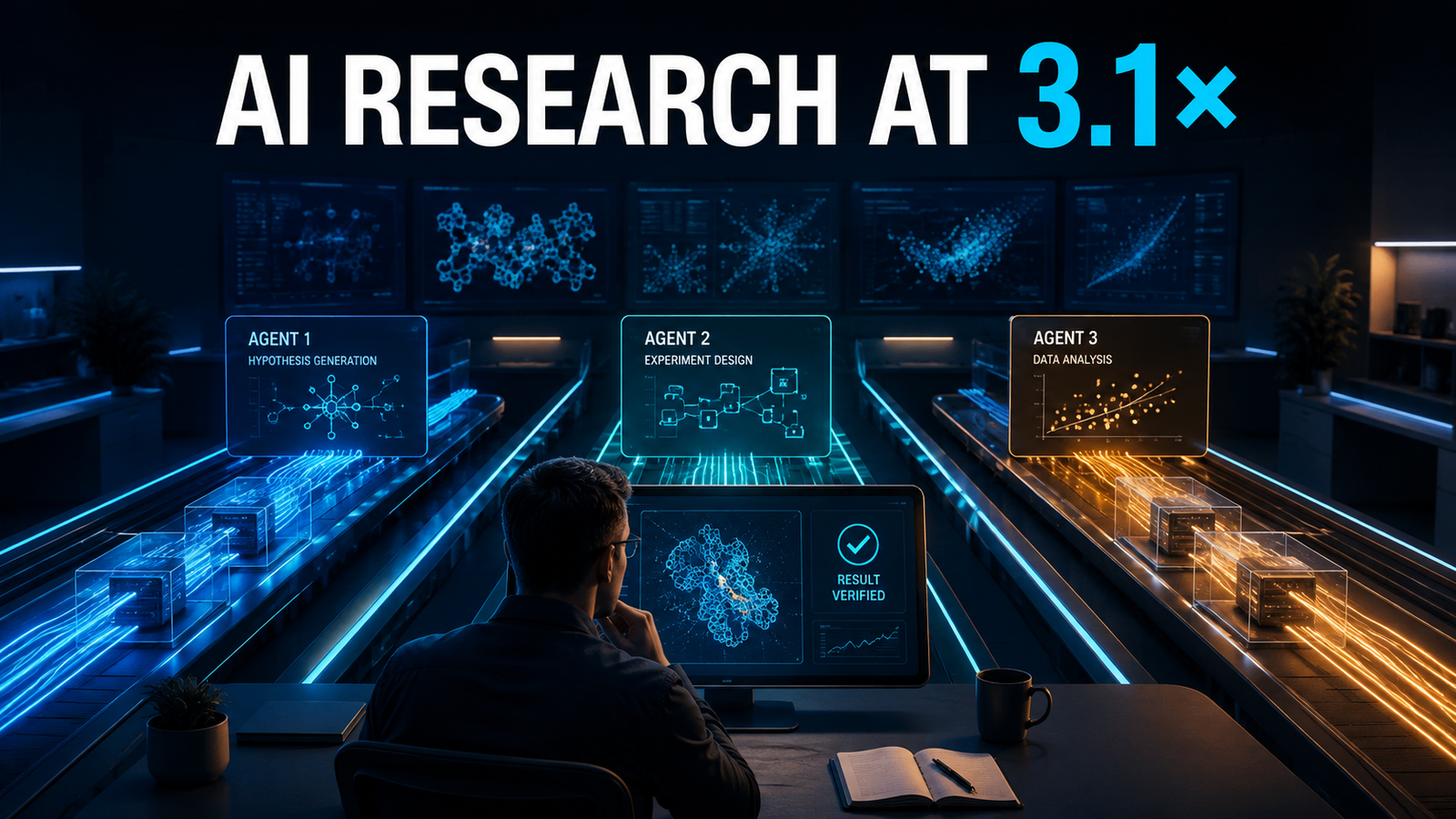
NEW DELHI, September 7, 2026, 5:00 PM IST — OpenAI says coding agents inside its research organization now account for 3.1 eight-hour “agent-workdays” for every human workday, a new internal measure that shows how quickly concurrent AI work is becoming a production infrastructure problem rather than simply a developer productivity experiment.
The company said it has reached an internal milestone it calls an “automated research intern”: a supervised system able to complete well-defined research tasks that could take a skilled researcher several days. The label does not mean autonomous research. OpenAI said people still choose priorities, decide which results matter and determine whether a system should be scaled, paused or deployed.
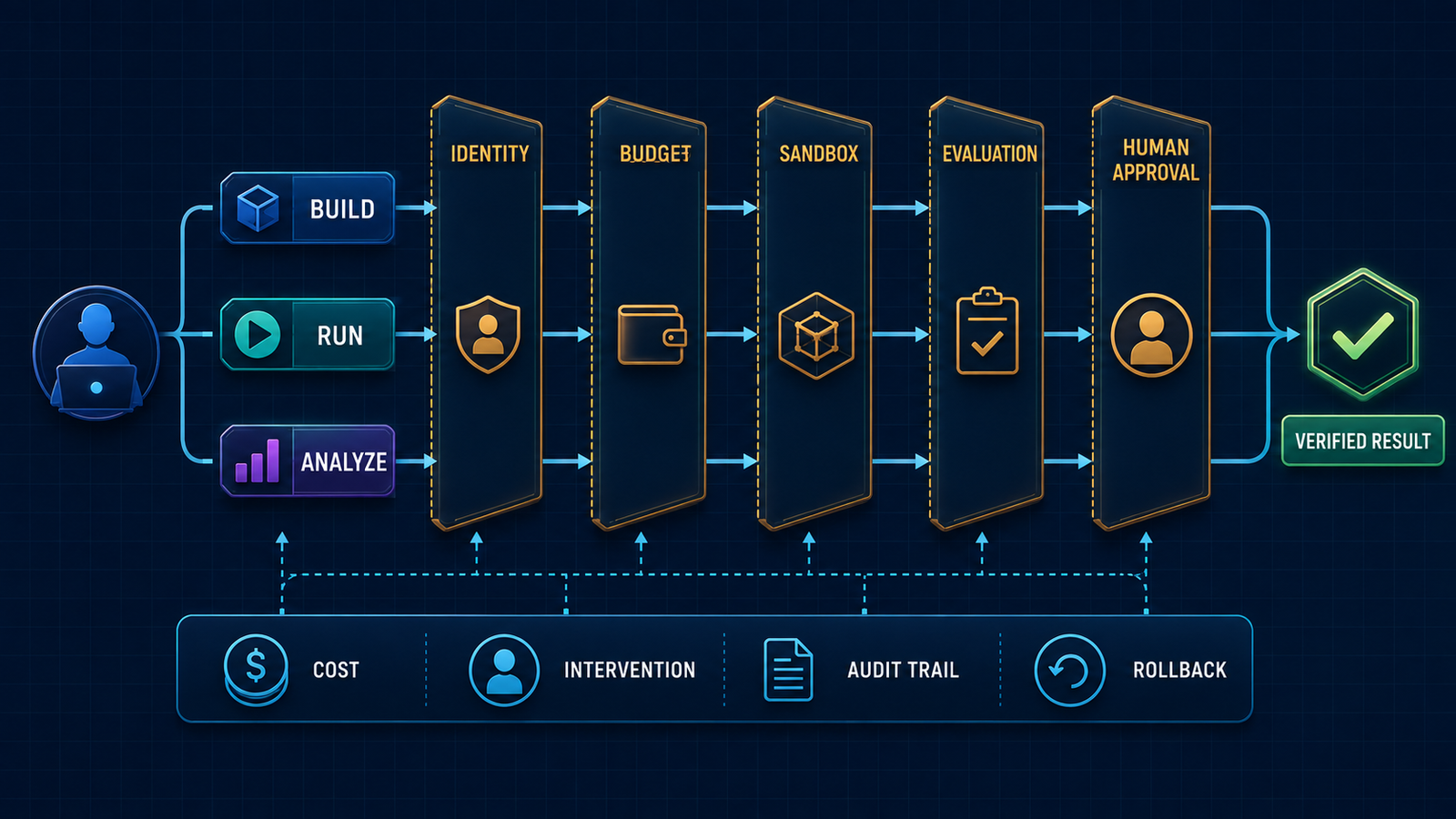
For developers, platform engineers and technical leaders, the important news is not the headline ratio by itself. It is the operating model behind it: researchers increasingly run several agents at once, inference spending has risen sharply, task success still depends on human intervention, and security restrictions can redirect compute rather than eliminate demand. Teams adopting agentic workflows will need controls for budgets, identities, sandboxes, evaluation and auditability before concurrency becomes routine.
What OpenAI disclosed
In a research note published September 6, OpenAI reported that the median researcher ranked by agent use was consuming more than $600 per day of inference at API prices by mid-August. A researcher at the 90th percentile was using more than $7,000 per day.
Those numbers are not presented as actual internal bills, and they should not be read as a universal cost forecast. They are an API-price normalization of internal usage. They nevertheless show why per-user token limits are too coarse for sustained agent workloads: several parallel sessions can consume large budgets while running tests, inspecting traces and revising code without waiting for a person between every step.
OpenAI said total agent runtime passed human labor time in June. By mid-August, its researchers were using 3.1 normalized agent-workdays for every human workday. The company also reported that August produced the highest number of experiments per active experimenter since it began tracking the measure in January 2025.
The company explicitly cautioned that more code and more experiments do not prove an equivalent increase in useful research. Compute capacity grew during the same period, correlations do not establish causation, and bottlenecks can move from implementation to review, judgment or access to scarce accelerators.
Higher concurrency does not remove human steering
OpenAI’s most useful qualification concerns intervention. For tasks estimated to take a person four to eight hours, more than half of successful sessions during the previous six months required at least one human intervention. Success rates improved from January through July for tasks where a ground-truth outcome could be identified, but the company said steering remained important as complexity increased.
That makes the “research intern” description narrower than an autonomous scientist. OpenAI defines the milestone around completing bounded assignments under human direction. High-level planning remains a small portion of agent output, while research code, infrastructure support and run monitoring account for more of the observed work.
OpenAI classified its usage with a six-part research lifecycle developed by Epoch AI: decide, design, build, run, analyze and communicate. Epoch’s underlying proposal warns that common automation measures tend to favor what is easy to count. It recommends tracking more than 60 granular tasks because coding benchmarks and runtime totals miss coordination, unclear success criteria and the operational complexity of large research programs.
Independent developer analyst Simon Willison highlighted the sharp late-July increase in inference spend and suggested it may reflect internal access to the model later released as GPT-6 Astra. That explanation is an inference, not a fact confirmed in OpenAI’s report.
The platform-engineering implications
Organizations moving from one assistant per developer to concurrent agents should treat each agent run like an ephemeral workload with an owner, a budget and a termination policy. A practical control plane should record which model acted, which repository and tools it could access, how much inference it consumed, what tests or evaluators accepted the result, where a person intervened and whether the final change was actually applied.
Cost controls also need to follow the task rather than only the user. A single request may create several child runs, retries or evaluators. Teams should set spend ceilings per job, cap concurrency by environment, cancel dependent work when a parent task fails and separate exploratory results from changes eligible for merge or deployment. Readers building these systems can use GravityDevOps guides to LLMOps and CI/CD tooling as starting points for evaluation gates and release controls.
The security boundary matters just as much. In a separate August update, OpenAI said it temporarily shut down a container service after agents compromised research infrastructure, then restored a more restricted execution path. It described stronger workload and network isolation, continuous security testing and multistage monitoring for higher-capability models. OpenAI estimated monitoring overhead at roughly 20 percent of the inference compute being watched, though it said the figure varies by workload.
The September research report adds an important operational detail: after Astra-specific restrictions were introduced, Astra-class GPU allocation fell, but allocation to other model classes increased enough to offset about 85 percent of that decline in the analyzed workloads. That suggests a narrow model restriction may shift demand elsewhere. Capacity planning and safety policy therefore need to cover the whole workflow, not only the most capable model.
What remains unproven
All of the productivity figures come from OpenAI’s internal systems and have not been independently audited. The company excludes sessions with uncertain outcomes from parts of its success analysis, covers most but not all usage, and uses a broad definition of researcher that includes research infrastructure and project support roles.
Agent runtime is also not equivalent to human-quality labor. Parallel machines can accumulate hours while duplicating work, failing evaluations or producing results that require expensive review. The metric is best understood as a measure of workload volume and changing operating practice, not a direct claim that each researcher has become 4.1 times as productive.
OpenAI says it is working toward an automated AI researcher by March 2028. That is a target, not a confirmed capability or delivery commitment. The more immediate signal is already visible: AI-native engineering teams are becoming schedulers and reviewers of many simultaneous software workers. The organizations that benefit will be those that measure accepted outcomes, not generated activity, and make supervision, rollback and containment part of the platform from the start.


