

Reported U.S. government review of OpenAI’s next major model release highlights a practical shift for technical teams: frontier AI access, auditability and fallback plans are becoming production-readiness concerns.
NEW DELHI, June 26, 2026, 6:12 p.m. IST – OpenAI’s next major model release is reportedly moving into a limited, government-vetted preview instead of a broad public launch, a development that would make model access governance a near-term issue for developers, DevOps teams and cloud platform owners.
Axios, The Verge and TechCrunch reported that the Trump administration has asked OpenAI to initially restrict GPT-5.6 access to a small group of approved partners because of security concerns. The reports cite The Information and people familiar with the matter. OpenAI had not published a public GPT-5.6 release announcement by Friday evening in India, so the rollout mechanics should be treated as reported, not officially confirmed by OpenAI.
The operational signal is bigger than one model launch. If the reported arrangement holds, teams building products on frontier models may have to plan for staged access, customer-level approval, limited-preview rules and possible cloud-provider constraints before a model becomes broadly available. That changes how engineering leaders should think about model upgrades, procurement, reliability, compliance and incident response.
What is confirmed
The policy backdrop is documented. A June 2 White House executive order directs federal agencies to design a voluntary framework in which AI developers can give the government access to covered frontier models before release and collaborate on trusted early-access partners. The same order says it does not create a mandatory licensing, preclearance or permitting regime for AI model publication.
NIST’s Center for AI Standards and Innovation, known as CAISI, says it works with private-sector AI developers through voluntary agreements and leads unclassified evaluations of AI capabilities that could pose national security risks, including cybersecurity, biosecurity and chemical weapons risks.
There is also a recent commercial precedent for sudden model-access disruption. Anthropic said on June 12 that it received a U.S. government directive to suspend access to Claude Fable 5 and Claude Mythos 5 for foreign nationals and that it had to disable those models for all customers to comply. Anthropic said it disagreed with the basis for the directive and argued that model safety decisions should be transparent, fair and grounded in technical facts.
OpenAI, meanwhile, has already been building differentiated access lanes for higher-risk defensive work. In its GPT-5.5 Trusted Access for Cyber announcement, OpenAI described access levels that separate general-purpose use from verified defensive security workflows and more specialized authorized cyber work, paired with stronger account and verification controls.
Why it matters for DevOps and cloud teams
For platform teams, the practical issue is not whether GPT-5.6 is more capable than existing models. The issue is whether a frontier model can be treated like a normal API upgrade. The answer is increasingly no.
Teams that depend on frontier AI for code generation, security triage, incident analysis, knowledge search or agentic workflows should expect model launches to look more like controlled infrastructure rollouts. Access may start with a limited preview. Eligibility may depend on customer identity, geography, security posture or use case. Safety requirements may include phishing-resistant authentication, scoped permissions, retention rules, stronger monitoring and clearer proof that the work is defensive or authorized.
That puts model choice inside the same operating model as LLMOps, CI/CD and cloud governance. Teams need model routers, fallback paths, evaluation suites, audit logs and release gates. A product that breaks when one model is delayed, regionally restricted or temporarily suspended is not production-ready.
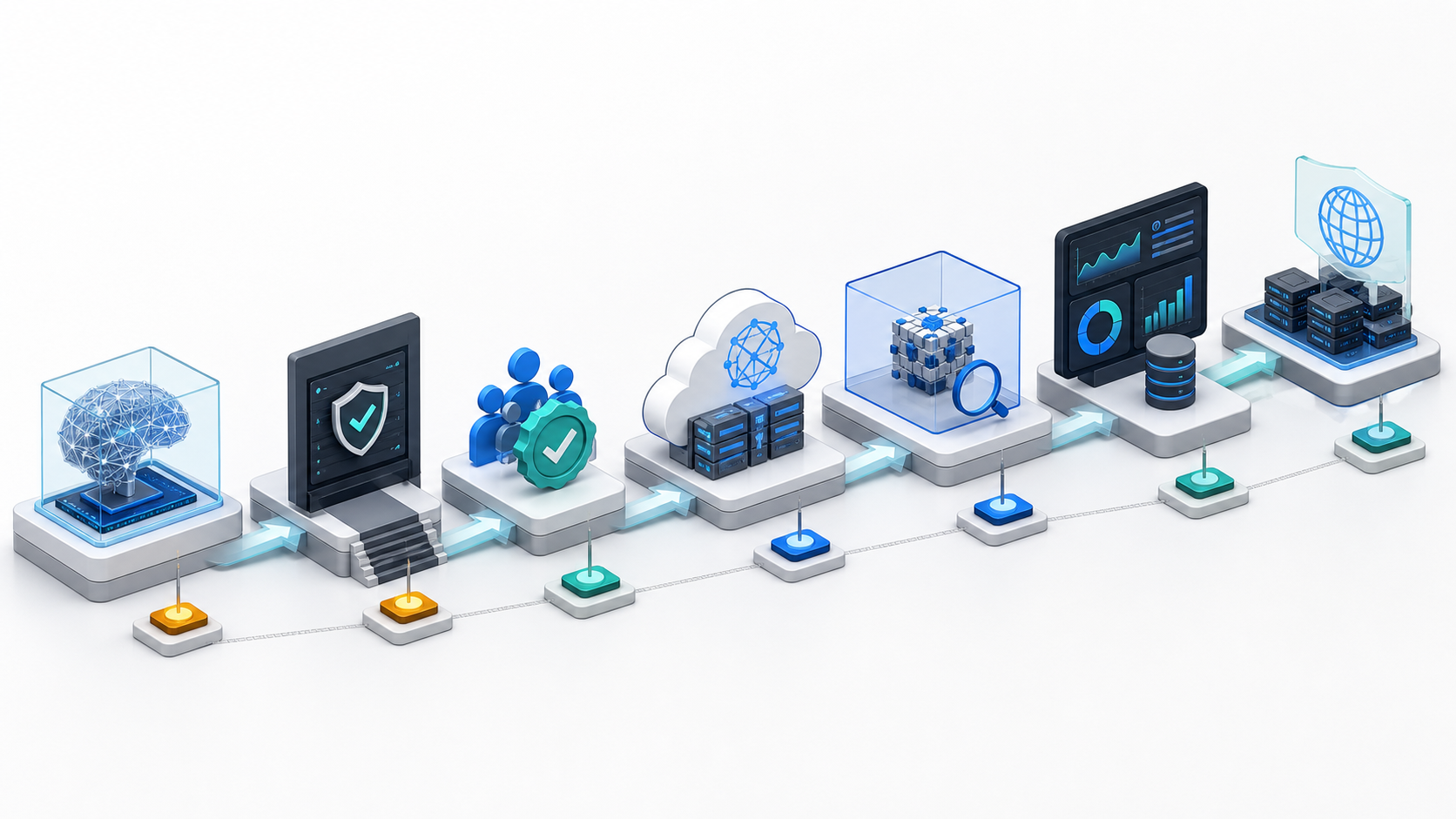
There is a vendor-management angle as well. If early access is tied to a small set of partners or cloud channels, enterprise buyers will need clearer answers on where inference runs, who approves access, what happens to logs, which users are eligible and how fast a workload can move to another model. The same questions apply to teams already using retrieval-augmented generation, internal coding agents or security copilots. The integration should make it possible to switch models without rewriting the whole workflow.
The technical background
Frontier models are now being evaluated not only for chat quality but for long-horizon software engineering, cyber reasoning, autonomous tool use and scientific analysis. Those capabilities are valuable for defenders and builders. They are also dual-use, which is why cyber safeguards, trusted access and pre-release evaluations have moved from policy discussion into product-launch mechanics.
This is already visible in developer workflows. A coding agent that can scan a large codebase, propose patches and run tests may also need repository permissions, secrets boundaries and human approval. A security model that can help validate a vulnerability in a controlled lab may also require stronger controls than a general text model. For teams using prompt engineering, RAG and automated delivery pipelines, the lesson is to design around explicit policy boundaries instead of assuming all model capabilities are always available.
What to watch next
The immediate question is whether OpenAI publicly confirms GPT-5.6, its access terms and any government-review process. The reports say a broader rollout could follow after the limited preview, but the timing and eligibility criteria remain uncertain.
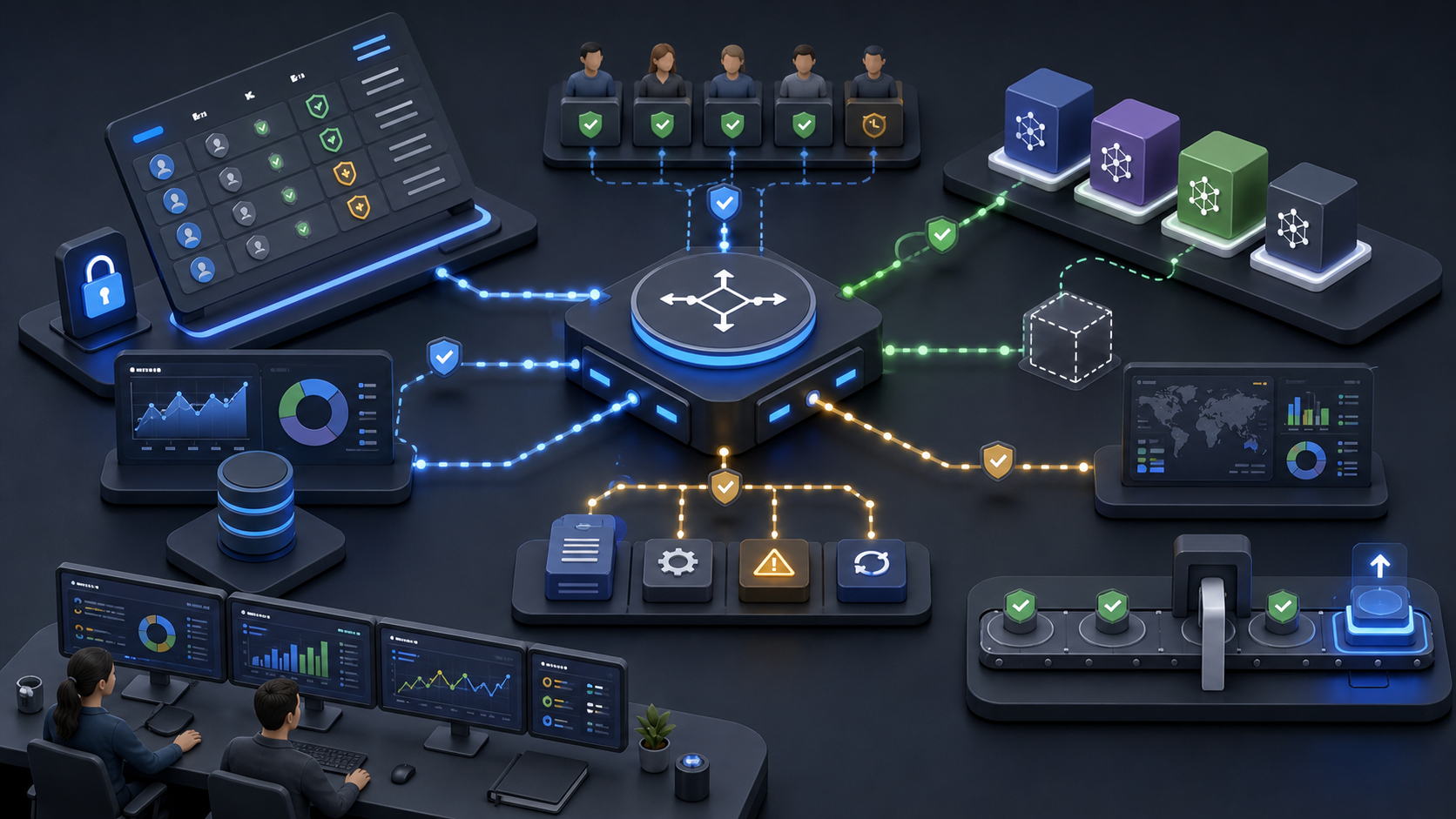
Technical teams should watch for four details. First, whether access is approved at the organization level, the cloud-account level or the individual-user level. Second, whether the rollout differs by geography or citizenship. Third, whether cloud providers publish separate access controls, audit terms or service-level conditions. Fourth, whether model providers give customers a documented path to appeal refusals or demonstrate that a workflow is authorized and defensive.
The policy balance is still unsettled. A narrow pre-release review could reduce real misuse risk for highly capable dual-use systems. But unclear criteria can also create roadmaps that are hard to plan, especially for multinational engineering teams, startups and non-U.S. customers that need predictable access to build products. The White House order says the framework is voluntary and not a licensing regime. The industry will now be watching whether the reported OpenAI process stays narrow and temporary or becomes the template for future frontier AI launches.
Practical takeaway
For GravityDevOps readers, the action item is straightforward: treat advanced model access as an operational dependency, not just a feature flag. Maintain at least one tested fallback model, keep evaluation datasets versioned, log model and prompt changes, review user identity and access controls, and make sure AI-assisted workflows can degrade gracefully if a preferred model is delayed or restricted. The same engineering discipline used for CI/CD tooling now belongs in AI model release planning.
Sources
- Axios: Trump administration asks OpenAI to limit next model release
- The Verge: OpenAI will delay GPT-5.6 after Trump administration request
- TechCrunch: The White House is asking OpenAI to slow roll the release of its new model
- White House executive order on advanced AI innovation and security
- NIST Center for AI Standards and Innovation
- Anthropic statement on Fable 5 and Mythos 5 access
- OpenAI: GPT-5.5 with Trusted Access for Cyber


