

Quick Answer: For most platform and DevOps teams in 2026, OpenTofu is the safest default when you want Terraform-compatible infrastructure as code with an open-source license. Choose Terraform if your organization is already standardized on HCP Terraform, Terraform Enterprise, Sentinel policy, or HashiCorp’s commercial workflow. Choose Pulumi if your team wants to define infrastructure with TypeScript, Python, Go, C#, Java, or YAML and is comfortable treating infrastructure code like application code.
Infrastructure as code is no longer just a way to avoid clicking around a cloud console. It is now part of platform engineering, compliance, cost control, disaster recovery, and developer self-service. That makes the tool decision more important than it looks. Terraform, Pulumi, and OpenTofu can all provision AWS, Azure, Google Cloud, Kubernetes, SaaS tools, and network infrastructure, but they differ sharply in language model, governance, commercial packaging, and long-term risk.
This guide compares the three tools from a practical DevOps perspective: what they are best at, where they create friction, what they cost, when migration makes sense, and how to choose one without turning your IaC platform into a future rewrite.
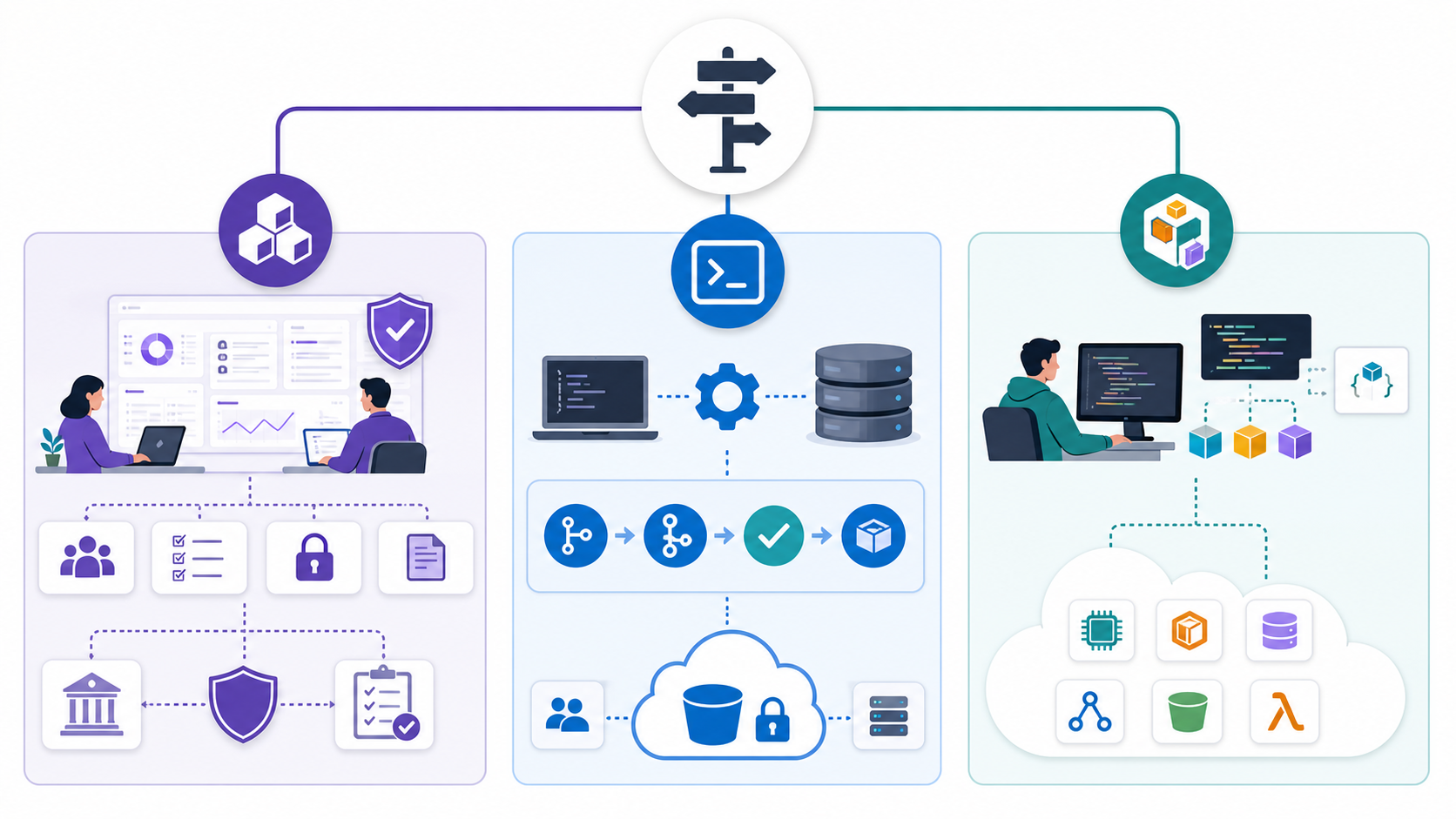
Terraform vs Pulumi vs OpenTofu: High-Level Comparison
| Area | Terraform | OpenTofu | Pulumi |
|---|---|---|---|
| Primary model | Declarative HCL configuration | Terraform-compatible declarative HCL | General-purpose programming languages plus IaC SDKs |
| Best fit | Organizations already invested in HashiCorp workflows | Teams that want Terraform compatibility with open-source governance | Engineering-heavy teams that prefer real languages and reusable code |
| License posture | Terraform 1.6+ is under the Business Source License | MPL-2.0 open-source fork under Linux Foundation governance | CLI and SDKs are Apache-2.0; Pulumi Cloud adds commercial features |
| Learning curve | Moderate; HCL is purpose-built | Moderate; familiar to Terraform users | Higher if operations teams are not comfortable with programming languages |
| Provider ecosystem | Very mature provider and module ecosystem | Strong compatibility with Terraform providers and modules | Broad provider support, many bridged from Terraform providers |
| State and collaboration | Local, object storage, HCP Terraform, Terraform Enterprise | Local, object storage, and compatible workflows | Pulumi Cloud, self-managed backends, object storage options |
| Policy and governance | Strong commercial governance through HCP Terraform and Enterprise | Open ecosystem; governance depends on your chosen platform | Strong policy-as-code options in Pulumi Cloud and SDK workflows |
| Cost driver | Open CLI use plus HCP Terraform managed-resource pricing for cloud workflow | Free open-source CLI; costs come from hosting, automation, and third-party platforms | Free CLI for individuals; paid Pulumi Cloud team/enterprise features |
What Changed Since Terraform Became Source-Available?
Terraform became the default IaC language for many DevOps teams because HCL is readable, providers are broad, and modules made cloud patterns reusable. The big shift came when HashiCorp changed the license for Terraform 1.6 and later to the Business Source License. For many internal users, daily usage did not immediately change: teams can still run Terraform in their own environments. The change matters most for vendors, managed-service providers, platform teams with legal review requirements, and organizations that prefer OSI-approved open-source dependencies in core infrastructure tooling.
OpenTofu exists because a large part of the community wanted a Terraform-compatible path that remained open source. It started from the last MPL-licensed Terraform code line and moved under Linux Foundation stewardship. The practical question is no longer “Does OpenTofu exist?” It is “Can my team operate OpenTofu with the same confidence we have in Terraform?” For many teams, the answer is yes, especially where workflows are CLI-driven and backed by remote object storage, CI/CD, and existing Terraform modules.
Pulumi is different. It is not a Terraform fork. Instead of writing HCL, you write infrastructure using languages such as TypeScript, Python, Go, C#, Java, or YAML. That changes the way teams model infrastructure, test code, build abstractions, and review pull requests.
Terraform: Strengths, Weaknesses, and Best Use Cases
Terraform remains the most recognized IaC tool in the market. It has a large ecosystem, mature documentation, many tutorials, extensive provider coverage, and a deep pool of engineers who already know HCL. If you are hiring DevOps engineers, SREs, cloud engineers, or platform engineers, Terraform skills are still easier to find than OpenTofu or Pulumi skills.
Where Terraform Works Best
- Your company already uses HCP Terraform or Terraform Enterprise.
- You need commercial support, private module registry workflows, policy enforcement, audit controls, and centralized runs.
- Your infrastructure team prefers HCL because it limits over-engineering and keeps configuration readable.
- You want the broadest mindshare and third-party learning resources.
Terraform Pros
- Large provider and module ecosystem.
- Readable HCL syntax for infrastructure declarations.
- Strong enterprise workflow through HCP Terraform and Terraform Enterprise.
- Easy to teach to beginners compared with a full programming-language approach.
- Excellent fit for standardized platform modules and cloud landing zones.
Terraform Cons
- Terraform 1.6+ is source-available under BUSL, not classic open source.
- Commercial HCP Terraform pricing can become a governance and forecasting topic at scale.
- Complex HCL modules can become hard to read when teams simulate programming patterns.
- Some teams may need legal approval before standardizing on a BUSL-licensed core tool.
OpenTofu: Strengths, Weaknesses, and Best Use Cases
OpenTofu is the most direct alternative for teams that like Terraform’s workflow but do not want Terraform’s current license posture. In day-to-day work, OpenTofu feels familiar: init, plan, apply, providers, modules, state, workspaces, and HCL all map closely to what Terraform users already know.
That compatibility is OpenTofu’s biggest advantage. You are not asking teams to relearn IaC from scratch. You are mostly asking them to validate provider behavior, CI/CD commands, state handling, module registries, and edge cases. For many organizations, that is a manageable migration project.
Where OpenTofu Works Best
- You want Terraform-style IaC but prefer an OSI-approved open-source license.
- You run IaC from GitHub Actions, GitLab CI, Jenkins, Atlantis, Spacelift, env0, or custom pipelines.
- Your modules are mostly standard HCL modules and providers.
- You want to reduce long-term licensing uncertainty without changing your whole IaC model.
OpenTofu Pros
- Open-source MPL-2.0 license and Linux Foundation governance.
- Familiar workflow for Terraform users.
- Compatible with many Terraform providers and modules.
- Lower migration effort than moving from Terraform to a language-based IaC tool.
- Good fit for teams that already run IaC through CI/CD instead of relying on a proprietary control plane.
OpenTofu Cons
- You still need to validate provider, module, and backend behavior before migrating production stacks.
- Some enterprise buyers may still prefer a single commercial vendor contract.
- HCP Terraform-specific features such as Sentinel workflows, private registry behavior, and managed runs may require replacement planning.
- Teams using advanced Terraform Cloud integrations should test before assuming a drop-in switch.
Pulumi: Strengths, Weaknesses, and Best Use Cases
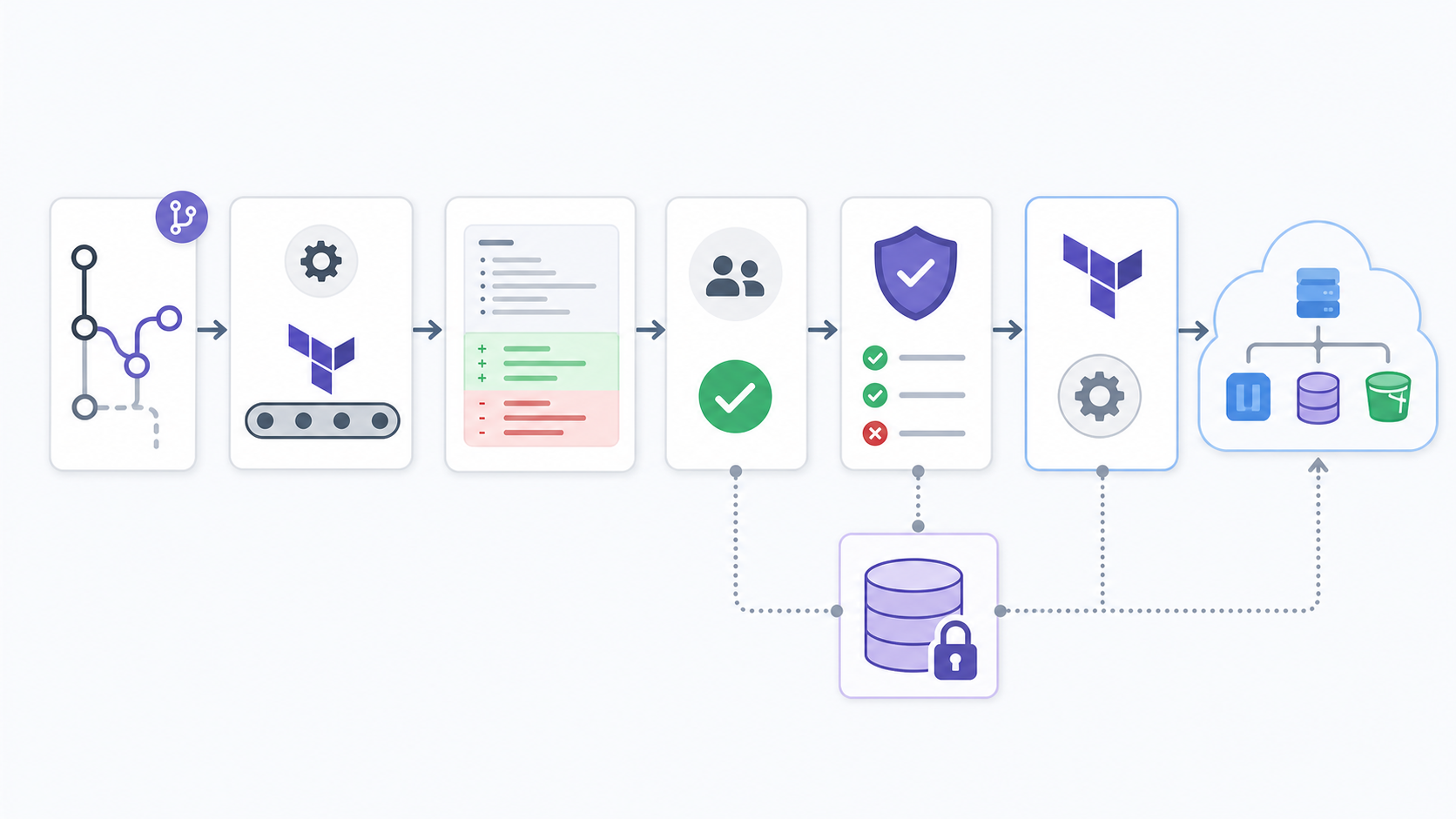
Pulumi is attractive when infrastructure is complex enough that HCL starts fighting the team. If you need loops, classes, packages, tests, strong typing, reusable libraries, or application-style abstractions, Pulumi can feel natural. A platform team can publish an internal TypeScript or Python package that creates a production-ready VPC, Kubernetes cluster, database, monitoring stack, and IAM boundary with clean defaults.
The tradeoff is that general-purpose languages give teams more power and more ways to create unreadable infrastructure code. A clear style guide matters. Without it, a Pulumi codebase can become as hard to reason about as any other application codebase.
Where Pulumi Works Best
- Your developers and platform engineers already work heavily in TypeScript, Python, Go, C#, or Java.
- You want to package infrastructure abstractions as reusable software libraries.
- You need richer unit testing and code reuse than HCL modules provide.
- You want infrastructure definitions to live close to application code.
Pulumi Pros
- Uses real programming languages instead of a configuration-specific language.
- Strong fit for software engineering practices such as packages, tests, type checking, and code review.
- Good for dynamic infrastructure patterns where HCL becomes awkward.
- Pulumi Cloud adds collaboration, state management, policy, audit, and secrets features for teams.
Pulumi Cons
- Higher learning curve for operations engineers who are not comfortable writing software.
- Codebases can become over-abstracted without strict standards.
- Hiring is easier for Terraform/HCL than for Pulumi-specific experience.
- Pulumi Cloud pricing and enterprise features need review before standardizing at scale.
Pricing and Licensing Caveats
Pricing comparisons can be misleading because the CLI is only one part of a production IaC platform. You also need remote state, secrets, run logs, policy checks, audit trails, approval workflows, drift detection, and support. Those needs often decide the real cost.
| Tool | What is free? | What usually costs money? | Important caveat |
|---|---|---|---|
| Terraform | Local CLI usage is broadly available. | HCP Terraform paid plans, Terraform Enterprise, advanced governance, managed runs, support. | Terraform 1.6+ uses BUSL. Legal/commercial review may matter even when usage is free internally. |
| OpenTofu | Open-source CLI under MPL-2.0. | CI/CD runners, storage, secrets tools, policy engines, third-party IaC platforms, internal support effort. | Lower license risk does not remove operational responsibility. |
| Pulumi | CLI and SDKs are open source; individual use is available without a paid platform plan. | Pulumi Cloud team/enterprise collaboration, policy, audit, RBAC, managed state, and support. | Costs depend on team scale, resources, and platform features, not just the language choice. |
If your company is cost-sensitive, estimate three layers separately: the IaC tool subscription, the platform operations cost, and the human cost of maintaining modules, policies, and pipelines. A free CLI can become expensive if every team builds its own workflow. A paid platform can be cheaper if it reduces audit and operational overhead.
Buyer-Intent Selection Criteria
Use these criteria before choosing a standard IaC tool for your organization.
- License and procurement: Does your legal team accept BUSL for core infrastructure tooling, or do you need an open-source license such as MPL-2.0?
- Team skill set: Are your IaC maintainers mostly operations engineers, software engineers, or a mixed platform team?
- Existing investment: Do you already have Terraform modules, Sentinel policies, HCP Terraform workspaces, or Pulumi packages?
- Governance needs: Do you need audit logs, policy-as-code, SSO, RBAC, cost estimation, drift detection, and approvals?
- Cloud scope: Are you provisioning one cloud, multi-cloud infrastructure, Kubernetes, SaaS, identity, DNS, observability, and security tools?
- Migration risk: Can you test non-production stacks before switching tools, or do you need a vendor-supported path?
- Abstraction style: Do you prefer readable declarative modules or full software libraries?
Practical Recommendation by Team Type
| Team situation | Best choice | Why |
|---|---|---|
| New DevOps team learning IaC | OpenTofu or Terraform | HCL is easier to teach, examples are abundant, and the workflow is familiar across the industry. |
| Enterprise already using HCP Terraform | Terraform | Changing tools may not be worth it if managed runs, policy, support, and governance are already embedded. |
| Company requires open-source governance | OpenTofu | It preserves the Terraform-style workflow while avoiding the BUSL concern. |
| Software-heavy platform team | Pulumi | Real languages make reusable platform packages, tests, and typed abstractions more natural. |
| Startup with limited ops capacity | Terraform, OpenTofu, or Pulumi Cloud depending on skills | The best option is the one your team can operate consistently, not the one with the longest feature list. |
| Managed-service or IaC platform vendor | OpenTofu or Pulumi | License and commercial restrictions need careful review before building around Terraform releases. |
Tutorial: The Same AWS S3 Bucket in Terraform, OpenTofu, and Pulumi
A simple example shows the workflow difference clearly. Terraform and OpenTofu use the same style of HCL. Pulumi uses a programming language.
Terraform or OpenTofu HCL Example
terraform {
  required_providers {
    aws = {
      source  = "hashicorp/aws"
      version = "~> 5.0"
    }
  }
}

provider "aws" {
  region = "us-east-1"
}

resource "aws_s3_bucket" "logs" {
  bucket = "example-platform-logs-2026"
}

resource "aws_s3_bucket_versioning" "logs" {
  bucket = aws_s3_bucket.logs.id

  versioning_configuration {
    status = "Enabled"
  }
}
The commands are nearly identical:
terraform init
terraform plan
terraform apply

# or

tofu init
tofu plan
tofu apply
Pulumi TypeScript Example
import * as aws from "@pulumi/aws";

const logs = new aws.s3.Bucket("logs", {
  bucket: "example-platform-logs-2026",
});

const versioning = new aws.s3.BucketVersioningV2("logs-versioning", {
  bucket: logs.id,
  versioningConfiguration: {
    status: "Enabled",
  },
});

export const bucketName = logs.bucket;
Pulumi’s equivalent commands look like this:
pulumi stack init dev
pulumi preview
pulumi up
The HCL version is easier for beginners to scan. The Pulumi version is easier to combine with application code, package managers, tests, and typed abstractions. Neither style is automatically better; the right choice depends on who will maintain the code in six months.
Migration Guidance: Terraform to OpenTofu
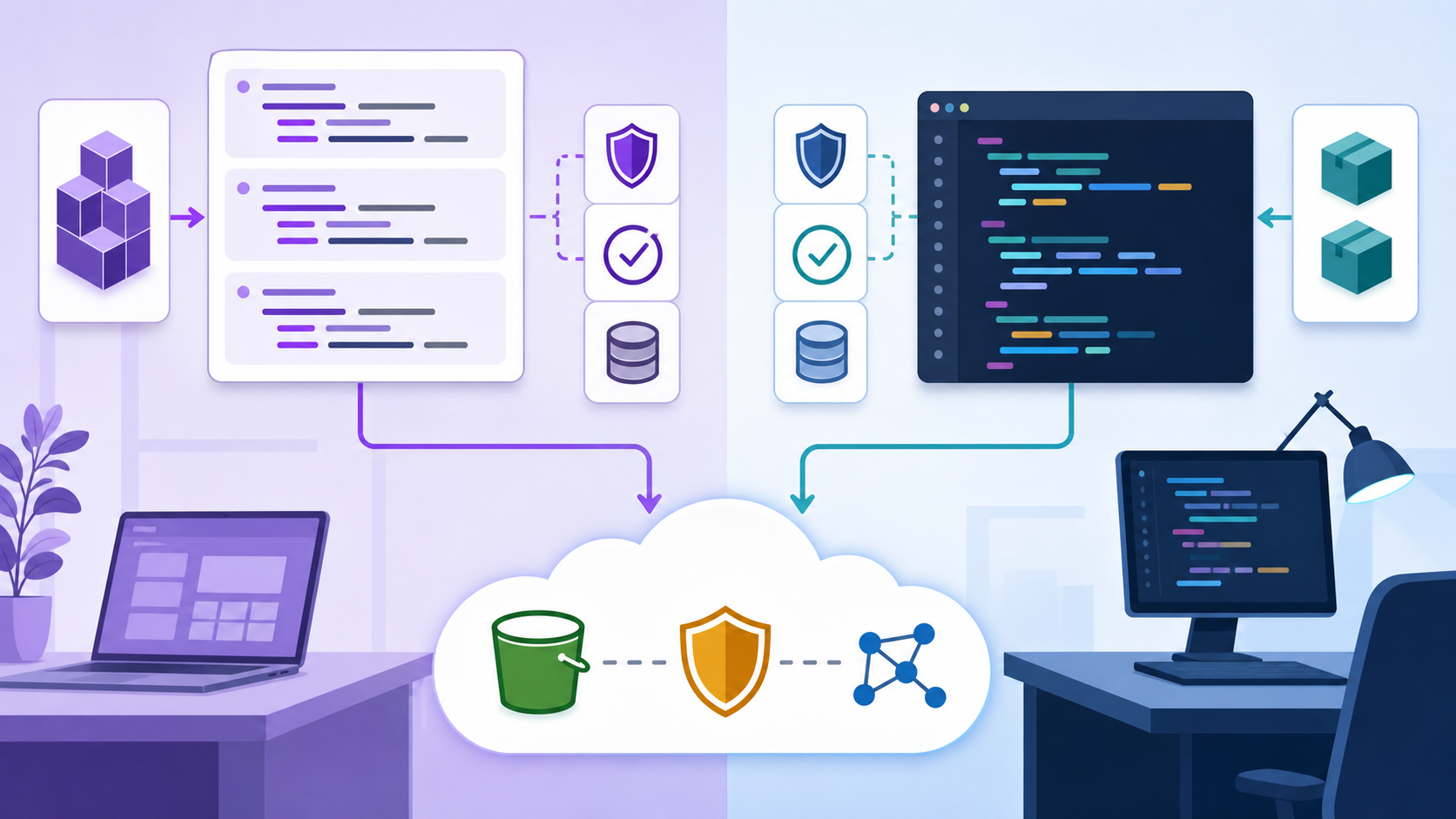
If your team is considering OpenTofu, do not start with your most critical production stack. Start with a low-risk environment and prove the workflow.
- Inventory Terraform versions, providers, modules, backends, and CI/CD integrations.
- Pick a non-production stack with representative providers and remote state.
- Run
tofu initandtofu planwithout applying changes. - Compare the OpenTofu plan with the Terraform plan.
- Validate provider lock files, backend access, credentials, and module sources.
- Update CI/CD command names and caching paths.
- Roll out stack by stack, keeping rollback notes for each environment.
The most important migration rule is simple: a clean plan matters more than a successful command. If OpenTofu proposes unexpected resource replacement, stop and investigate before applying.
Common Mistakes When Choosing an IaC Tool
- Choosing only by popularity: Terraform mindshare is useful, but license, governance, and workflow fit still matter.
- Choosing only by license: Open-source licensing is important, but your team still needs reliable operations, security, and support.
- Overusing abstraction: HCL modules and Pulumi packages can both become unreadable when teams hide too much behavior.
- Ignoring state management: Most IaC incidents involve state, credentials, drift, or manual changes, not the syntax itself.
- Skipping policy early: Tagging, encryption, network exposure, IAM boundaries, and cost controls should be part of the platform from the start.
Neutral Recommendation
If you are starting fresh and want a conservative IaC standard, choose OpenTofu unless you specifically need HCP Terraform’s commercial workflow. It gives you Terraform-style ergonomics, strong ecosystem compatibility, and a clearer open-source governance story.
If your organization is already mature on Terraform Enterprise or HCP Terraform, do not migrate just because OpenTofu exists. Build a small proof of concept, estimate the operational cost of replacing managed features, and decide based on risk rather than trend pressure.
If your platform team is mostly software engineers and you want infrastructure abstractions that behave like internal libraries, Pulumi deserves a serious trial. The best Pulumi users usually have strong code review culture, testing discipline, and clear ownership boundaries.
Internal Link Suggestions
- AWS Cost Optimization: A FinOps Guide for teams using IaC to control spend.
- Platform Engineering & Backstage: A Guide for building developer self-service workflows around IaC.
- GitOps with Argo CD: Tutorial for Kubernetes delivery patterns that pair well with IaC.
- Best CI/CD Tools in 2026 for choosing the pipeline layer that runs plans and applies.
- What is Generative AI? for readers exploring how AI-assisted platform engineering changes infrastructure workflows.
FAQ: Terraform vs Pulumi vs OpenTofu
Is OpenTofu better than Terraform?
OpenTofu is better if your priority is Terraform-compatible infrastructure as code with open-source governance. Terraform may be better if your company depends on HCP Terraform, Terraform Enterprise, Sentinel policy, or HashiCorp’s commercial support.
Is Pulumi better than Terraform?
Pulumi is better for teams that want to write infrastructure in programming languages and build reusable software-style abstractions. Terraform is usually easier for mixed DevOps teams that prefer a declarative configuration language and a larger hiring pool.
Can OpenTofu use Terraform providers?
OpenTofu is designed for strong Terraform compatibility and commonly works with Terraform providers and modules. Production teams should still test provider versions, lock files, backends, and plans before switching critical stacks.
Should beginners learn Terraform, OpenTofu, or Pulumi first?
Beginners should usually learn Terraform-style HCL first because the workflow is widely used and easy to recognize in job descriptions. OpenTofu is a good open-source path for the same style. Pulumi is a strong second step for developers who want to apply programming-language skills to infrastructure.
What is the safest IaC choice for 2026?
For a new team with no existing commercial dependency, OpenTofu is a safe default because it keeps the Terraform-style workflow while reducing license uncertainty. For an enterprise already standardized on HashiCorp tooling, Terraform may remain the lowest-risk operational choice.


